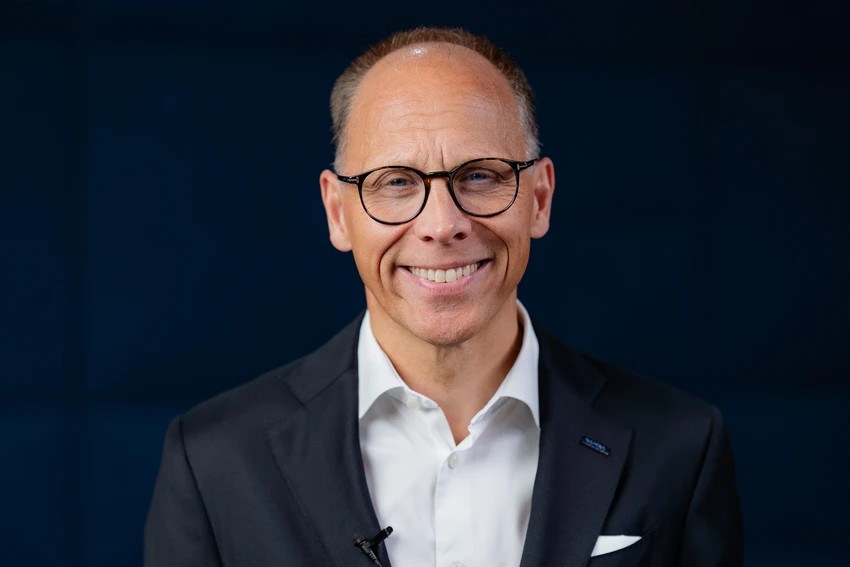
Frank Vang-Jensen
President and Group CEO.
Follow on LinkedInDenne siden findes ikke på norsk
Bli værende på denne siden | Fortsett til en lignende side på norskFrank Vang-Jensen
We entered the second quarter with confidence and optimism even as markets remained unsettled amid uncertainty caused by the conflict in the Middle East. That confidence proved well placed as the second quarter turned out to be a strong one for Nordea.
We drove momentum across the business, attracted new customers, deepened existing relationships and achieved strong growth in savings and investments – all of which resulted in us returning to year-on-year growth in total income.
In fact, total income exceeded EUR 3bn, which is a level of quarterly income we last reached during 2024, when policy interest rates were at their highest. This highlights not only the strength of our diversified business model but also our focused, growth-orientated 2030 strategy.
Of course, the world around us remains uncertain. The conflict in the Middle East has raised risks for the global economy. However, European countries in general, and the Nordics in particular, have so far navigated higher energy costs and other challenges remarkably well.
Perhaps most encouragingly, we are seeing a greater willingness among Nordic corporates to invest. The structural changes underway in Europe's economy are creating significant opportunities, and our region’s businesses are well positioned to capture them – in technology, energy and defence, as well as industries that have long been a mainstay of the Nordic economies – like forestry, mining and steel.
Nordea itself is well placed to support our customers – using our large balance sheet, Nordic scale, sector expertise and customer offering.
We did just that in the second quarter, driving strong growth in business volumes. Corporate lending and deposits both grew by 9% year on year, building on the strong start to 2026.
Lending to households also increased as the Nordic housing markets kept up their gradual recovery, although the pace remains slow. Mortgage volumes were up 2% year on year, led by Sweden and Norway, two strategic growth markets for Nordea. Retail deposits were up 4%.
Demand for our savings and investment products was likewise robust. Customers put more money to work through our retail funds and pension products, and we welcomed a significant number of new private banking customers – leading to solid net flows. Assets under management (AuM) increased by 16%, to a record-high EUR 505bn.
Return on equity was strong at 15.9%. And with costs flat year on year excluding foreign exchange effects, we grew income faster than costs, which is always our aim.
Credit quality remains very strong and our capital position gives us flexibility to support profitable growth while continuing to deliver attractive returns to shareholders. As previously communicated, we will move to paying dividends twice a year and the board of directors has decided to pay a mid-year dividend in August.
We enter the second half of 2026 with confidence. The business is performing well and our strategy execution is on course, with visible progress across all initiatives.
Our ambition is to become the undisputed best-performing financial services group in the Nordics. The progress we made in the second quarter shows that we are moving steadily in that direction.
/ Frank
President and Group CEO.
Follow on LinkedIn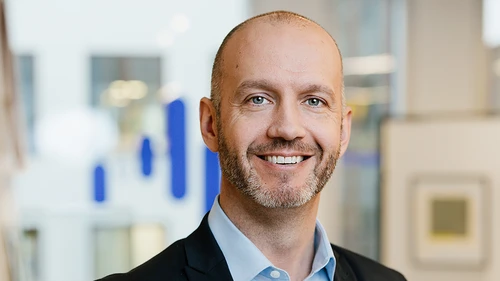
About us
Christian Fink Karas has been appointed new CEO of Nordea Life & Pension replacing Per Långsved, who has been appointed new Head of Personal Banking and a member of Nordea’s Group Leadership Team.
Read more
Investor News
Nordea held a retail investor event in Helsinki on 20 May 2026, collaborating with local shareholder associations to engage over 100 participants in discussions about Nordea's strategy, financial performance, and market outlook.
Read more
Savings
In our 2030 strategy, we have set a clear direction: to be the leading Nordic partner for savings, supporting customers with expertise, strong offerings, and award-winning customer experiences. The focus is to be the financial partner for you and your dreams.
Read more