Economic Outlook
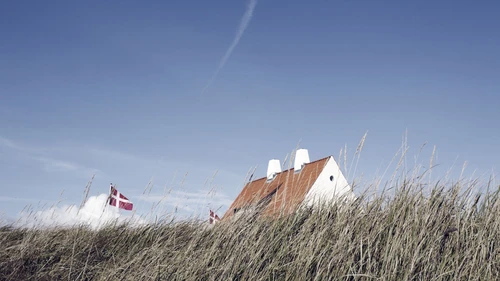
Danish economy stands on solid foundation
The war in the Middle East challenges the resilience of international and Danish economies, but the foundation for continued growth is quite solid.
Read moreNordic Compass – a new Nordic industry-led initiative – brings together major industrial actors to mobilise the Nordic region’s shared societal, innovative and industrial strengths in new ways.

The Nordic countries face a new economic reality. Heightened geopolitical tensions, growing trade frictions and rapid technological change are reshaping global competition at unprecedented speed. In this environment, competitiveness and resilience are no longer just economic matters – they are strategic imperatives.
In response, leading Nordic industrial companies and foundations have announced the launch of Nordic Compass – a new Nordic industrial initiative aimed at strengthening long-term growth, innovation and economic resilience across the region.
Nordea is a founding partner and sees the current political momentum for closer Nordic cooperation as significant. In a period of uncertainty, this also resonates with our customers – both retail and corporate – across the Nordic region. By taking responsibility as an integral part of Nordic societies, we aim to contribute to positive long-term outcomes for citizens across the Nordics.
As the financial service group of choice for many Nordic corporates and institutions, Nordea focuses particularly on how the region's business environment can be strengthened:
“Nordic Compass is designed to help realise opportunities for the Nordic countries by supporting closer cooperation between governments and corporates. By facilitating joint efforts to shape markets, set standards, reduce barriers and advance innovation in key sectors, the initiative addresses important prerequisites for the region’s continued growth,” says Petteri Änkilä, Head of Large Corporates & Institutions.
Nordic Compass will focus on developing concrete, joint Nordic initiatives that can secure jobs, scale new industries and ensure that Nordic economies remain capable of financing future societies and ways of living. The work will be carried out in in close dialogue with the governments of the Nordic countries, explains Jyrki Katainen, Chair of the Nordic Compass Board and Head of Group Public & Regulatory Affairs at Nordea:
“Europe is focused on restoring competitiveness, but European-level processes take time. The Nordics can act faster, drawing on a deep tradition of cooperation between business and policymakers. Heightened geopolitical risks have further strengthened the focus on self‑reliance and resilience, and with Nordic Compass we are now turning this into a clear competitive advantage.”
During its first year, Nordic Compass will focus on four strategic areas that require ambitious development if the Nordics want to remain competitive and resilient globally: Capital Markets, Deep Tech, Defence & Security and Energy. Experts will identify industry-backed initiatives in each area that can expand through Nordic coordination.
For more information about these areas, visit the Nordic Compass website.
Economic Outlook
The war in the Middle East challenges the resilience of international and Danish economies, but the foundation for continued growth is quite solid.
Read more
Economic Outlook
The overall impact of the Middle East conflict on activity in the Norwegian economy is likely to be limited. Even so, the outlook is somewhat weaker than in previous forecasts because of higher, not lower, interest rates.
Read more
Economic Outlook
The Finnish economy has finally returned to broad-based growth, with both private consumption and industrial output picking up. Growth is also beginning to support the labour market and public finances. However, higher energy prices and rising interest rates in the wake of the Middle East crisis are expected to weigh on economic activity later in the year.
Read more