1. Electrification moves to the centre of the transition
The COP31 Presidency has placed electrification at the heart of its Action Agenda, with a new objective to increase electricity's share of final energy consumption from 23% today to 35% by 2035. The initiative aims to shift transport, buildings and industry away from direct fossil fuel use towards electricity.
According to the Electrification report from the International Energy Agency (IEA), published ahead of COP31, the age of electricity has begun. Electrification is growing globally and the Nordic countries are above the global average. But faster investment in grids, storage and flexibility will be essential to meet growing demand. Permitting, grid access and stable investment conditions will all affect delivery.
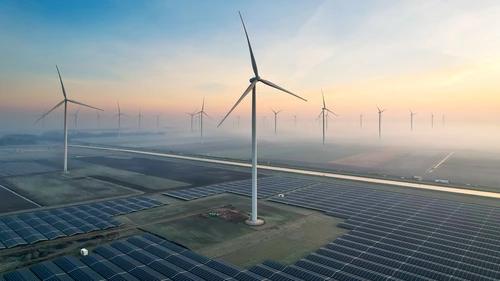
Mobilising the capital needed to deliver this expansion is therefore critical. Nordea’s Renewable Energy and Infrastructure Financing initiative is one example. It supports wind and solar parks, battery storage, smart grids and Power-to-X – strengthening the Nordic energy system and accelerating Nordea’s active role in this space.
2. Climate finance is growing – but not fast enough everywhere
Global energy investment is expected to reach USD 3.4 trillion in 2026, with USD 2.2 trillion going to clean energy – almost twice the amount going to fossil fuels – according to the IEA's World Energy Investment 2026 report.
These figures, however, mask significant differences. Clean-energy investment is forecast to grow by 7% in advanced economies and China, compared with 4% in other emerging markets. Investment in renewable electricity is also flattening, while fossil-fuel spending continues in response to energy-security concerns.
The challenge is not simply to mobilise more capital, but to direct it towards the sectors, technologies and markets where it can make the greatest difference to the transition. Companies also need regulatory certainty: clear, consistent policies can lower financing costs and give them – and their banks and investors – the confidence to make long-term investment decisions.
Transition finance is particularly important. High-emitting sectors need credible plans, measurable milestones and access to financing so they can invest in lower-emission technologies and shift away from high-carbon activities. For Nordea, supporting customers through this transition is a central part of our approach to sustainable finance. We are also actively involved in the UN Environment Programme Finance Initiative’s (UNEP FI) work on transition finance, including guidance that will be launched at COP31.
3. Physical climate risks become an immediate financial issue
Weather- and climate-related extremes caused an estimated EUR 822 billion in economic losses in the EU between 1980 and 2024. A quarter of those losses occurred between 2021 and 2024 alone – a sign of how rapidly the impact is intensifying. Yet private insurance covered less than 20% of total losses, leaving households, businesses and governments to bear much of the cost.
The European Commission has developed an integrated framework for climate resilience and risk management with priorities including harmonised risk assessments, resilience by design and stable long-term adaptation finance.
For financial institutions, physical climate risk affects both risk management and lending decisions. Flooding, heat and water scarcity can reduce property values, disrupt operations and weaken supply chains. Banks can help customers assess their exposure and finance protective measures – from flood defences and resilient infrastructure to nature-based solutions. Well-designed adaptation investments can reduce future losses and protect asset values. They can also help prevent costly disruptions and strengthen long-term resilience.