Energy efficiency investments deliver savings and a better shopping experience at Minimani
Nordea and Caverion collaborate to promote and finance energy efficiency projects of buildings. The aim is to help companies identify opportunities to reduce energy consumption, improve the energy efficiency of properties, and find the right investment solutions. The Finnish retail chain Minimani is one of Nordea’s customers that has benefited from Caverion’s expertise.
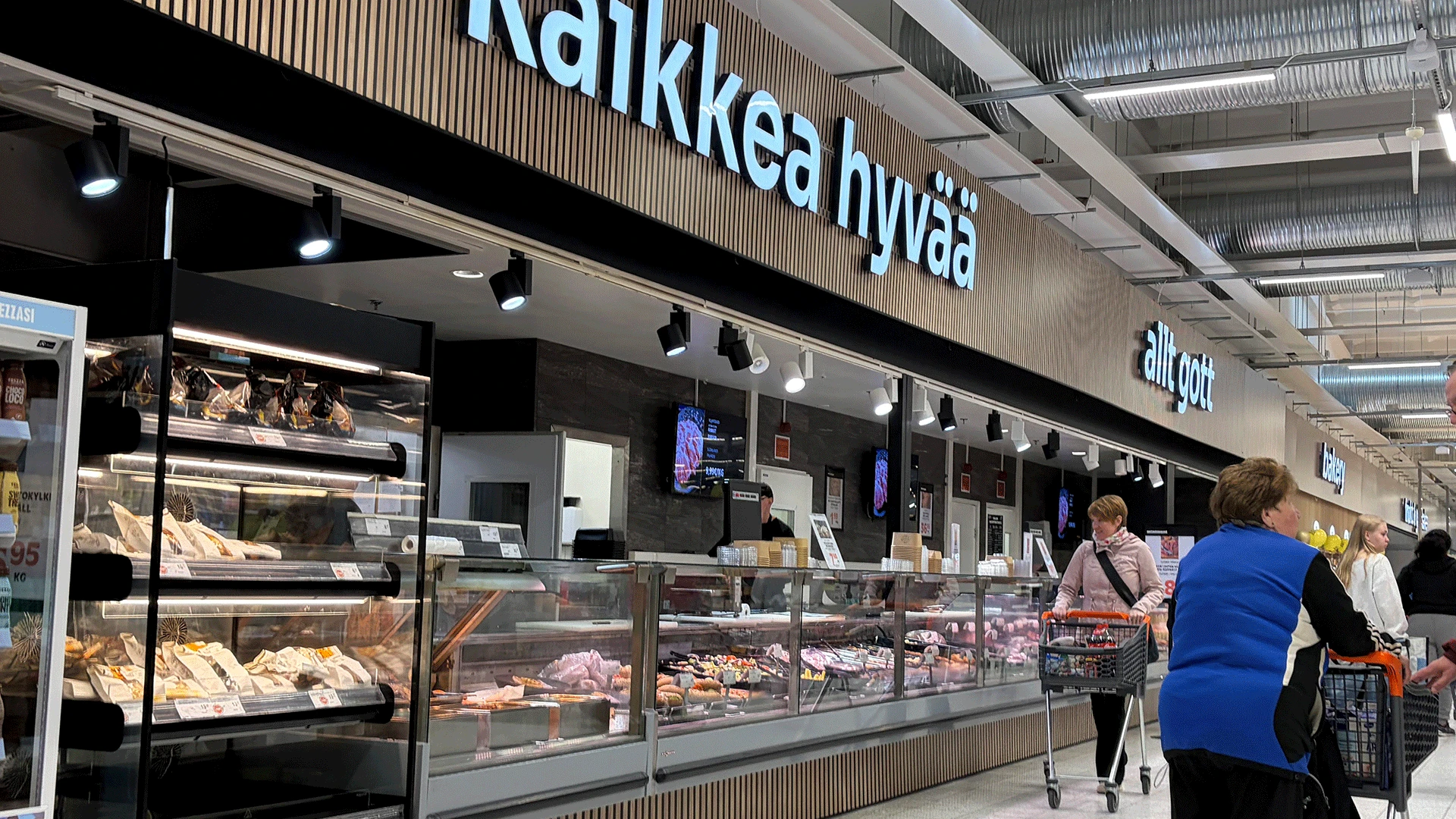
Energy efficiency of buildings has become an increasingly important competitive driver of Nordic businesses. Minimani, a Finnish family-owned retail chain, has in recent years made determined investments in energy efficiency of its properties. By investing in geothermal heating, more energy-efficient refrigeration systems and LED lighting, Minimani has cut energy consumption significantly.
According to Pekka Haapanen, in charge of Minimani's properties, the energy efficiency investments have improved both profitability and the in-store customers' and staff experience. He points out that the starting point for energy efficiency projects is always the economic benefit.
"Investments must be financially viable, but at the same time we must reduce energy consumption and environmental impacts."
Long-term investments in energy efficiency
In 2019, one of the most significant investments was made when a geothermal heating system was built for the new hypermarket in Rovaniemi. The system provides both heating and cooling, eliminating the need for district heating. Following positive experiences, similar solutions have been implemented in Minimani’s stores in Kokkola and Seinäjoki, with Vaasa next in line.
Minimani has also modernised its refrigeration systems to meet changing requirements. In grocery stores, refrigeration equipment often accounts for the biggest electricity consumption. As older refrigerants are phased out, the company has transitioned to carbon dioxide-based systems, added doors to refrigeration units, and now uses waste heat from refrigeration equipment for heating.
Energy efficiency has been taken even further in Minimani’s stores. Heat generated by the refrigeration systems is directed into boreholes during summer, allowing the energy to be stored in the ground and used for heating later.
"The goal is to utilise energy as efficiently as possible rather than letting it go to waste," Pekka Haapanen says.
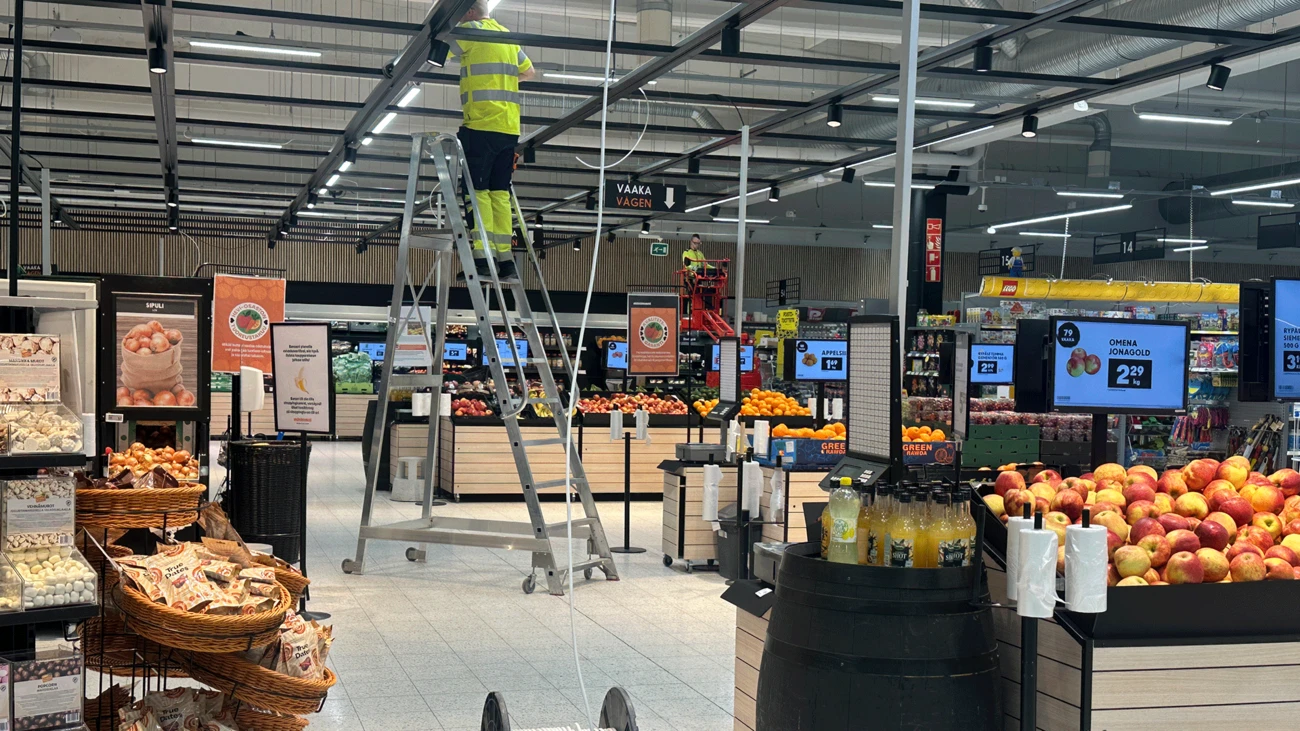
Lower energy use and operating costs
The impact of the investments is clearly visible in energy consumption. According to Haapanen, Minimani's electricity consumption has fallen annually by approximately 10 per cent during the past 3 years, despite the use of electrically powered heat pumps.
For example, the payback period for LED lighting can be less than 2 years, while larger energy renovation projects typically have a payback period of around 5 years. The estimated payback period for the Rovaniemi geothermal system was approximately 6 years, and the investment has since paid for itself.
"Energy efficiency should be considered a long-term investment. Savings accumulate year after year," Pekka Haapanen points out.
In addition to the economic benefits, the energy renovations have improved conditions in the stores for both employees and customers. Doors on refrigeration units reduce the spread of cold air into the store and help maintain more consistent temperatures. LED lighting, in turn, has improved lighting conditions while reducing electricity consumption.
Partnership supports successful projects
Caverion has played an important role in the projects, participating in the design, dimensioning, and implementation of solutions, as well as helping to identify available investment subsidies.
According to Pekka Haapanen, the key to a successful energy efficiency project is careful preparation and understanding the big picture.
"In projects like these, it is important to have skilled partners involved. The better you understand both the technical solutions and their financial impact, the easier it is to make an investment decision."
Pekka Haapanen encourages companies to look at their energy use as a whole and to proceed step by step.
"You don't need to do everything at once – and you can't. It's worth starting by finding out where energy is being consumed and what will bring the greatest benefit. Many investments pay for themselves surprisingly quickly."
According to him, improving energy efficiency does not only mean large investments. Savings can also come from improving daily operations, for example by optimising ventilation or reducing unnecessary energy use. Based on their experience, energy efficiency is an investment that supports both business profitability and a more responsible future.
Want to learn more about how Nordea supports customers
Read moreFacts about Minimani
- Family-owned Finnish retail chain
- 11 properties across Finland, of which five are hypermarkets
- Energy efficiency investments includes: geothermal heating, LED lighting, and refrigeration system upgrades
Insights

Markets and investment
Dollar strength in focus: What's driving FX markets now
The US dollar is riding a wave of positive momentum. But how long will it last, and what does it mean for the euro, Norwegian krone and Swedish krona?
Read more
Business growth
Fraud is the fastest-growing form of organised crime. Is your company ready?
Lasse Karner, Fraud Prevention Expert, Nordea in Denmark, argues that fraud prevention is not a finance department issue – it is a board responsibility that runs from the top of the organisation to the frontline.
Read more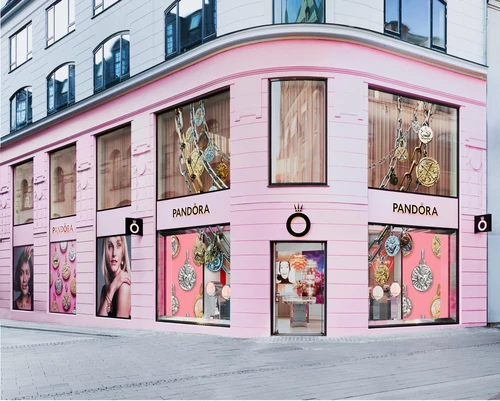
Corporate insights
How Pandora turned a silver crisis into a resilience story
Financial hedging can buy valuable time when markets move rapidly. Pandora’s treasury team used that time to support a broader business response, combining risk management, pricing initiatives and structural change, as the price of silver rose.
Read more