Our 14th annual AAA Seminar brought together around 200 Nordic and international investors, alongside government and covered bond issuers, for a full day of dialogue, insights and networking. Against a backdrop of geopolitical tension, rapid technological change and rising investment needs, the discussions underlined the importance of the AAA bond market in financing Europe’s future.

A central highlight of the day was a fireside chat between Margrethe Vestager, former Executive Vice President of the European Commission, and Jyrki Katainen, Head of Group Public Policy & Regulatory Affairs at Nordea. Their conversation explored Europe’s position in a shifting global order and the choices facing policymakers, companies and financial institutions in the years ahead.

Katainen opened by pointing to a long-term, fundamental shift in global politics, marked by power politics, nationalism and growing self-interest among major global players. The discussion turned to Europe’s ability to respond. Vestager emphasised that the EU often underestimates itself while overestimating others. Pushing back against the saying that “Americans innovate, Chinese copy and Europeans regulate,” she warned that such thinking is not only inaccurate but risky.

“China is a genuine force of innovation, and Europe has strong innovation ecosystems of its own,” she said. “The danger lies in underestimating some, overestimating others and not seeing ourselves for who we are.”

 

We need countries willing to move first and show it can be done. Scandinavia can play a crucial role.

Margrethe Vestager, former Executive Vice President of the European Commission


Leveraging Europe’s strengths

A recurring theme was Europe’s untapped potential – particularly in capital markets, technology and defence. Vestager argued that many of the policy answers are already known, pointing to renewed momentum behind initiatives such as Mario Draghi’s report on European competitiveness and the need for practical progress on a deeper European capital market.

“We don’t need more talking points,” she said. “We need countries willing to move first and show it can be done. Scandinavia can play a crucial role.”

The conversation also addressed AI, the EU’s regulatory approach and Europe’s reliance on foreign technology and energy sources. Vestager defended Europe’s approach to AI governance, stressing that the EU’s framework focuses on how technology is used, not on stifling innovation itself. “Regulation creates trust,” she said.

Closing the discussion, both speakers highlighted the importance of resilience – in technology, energy and financial systems – and of being clear about Europe’s values in an increasingly contested world. As Vestager put it: “In a world driven by passion, you need to know yours.”

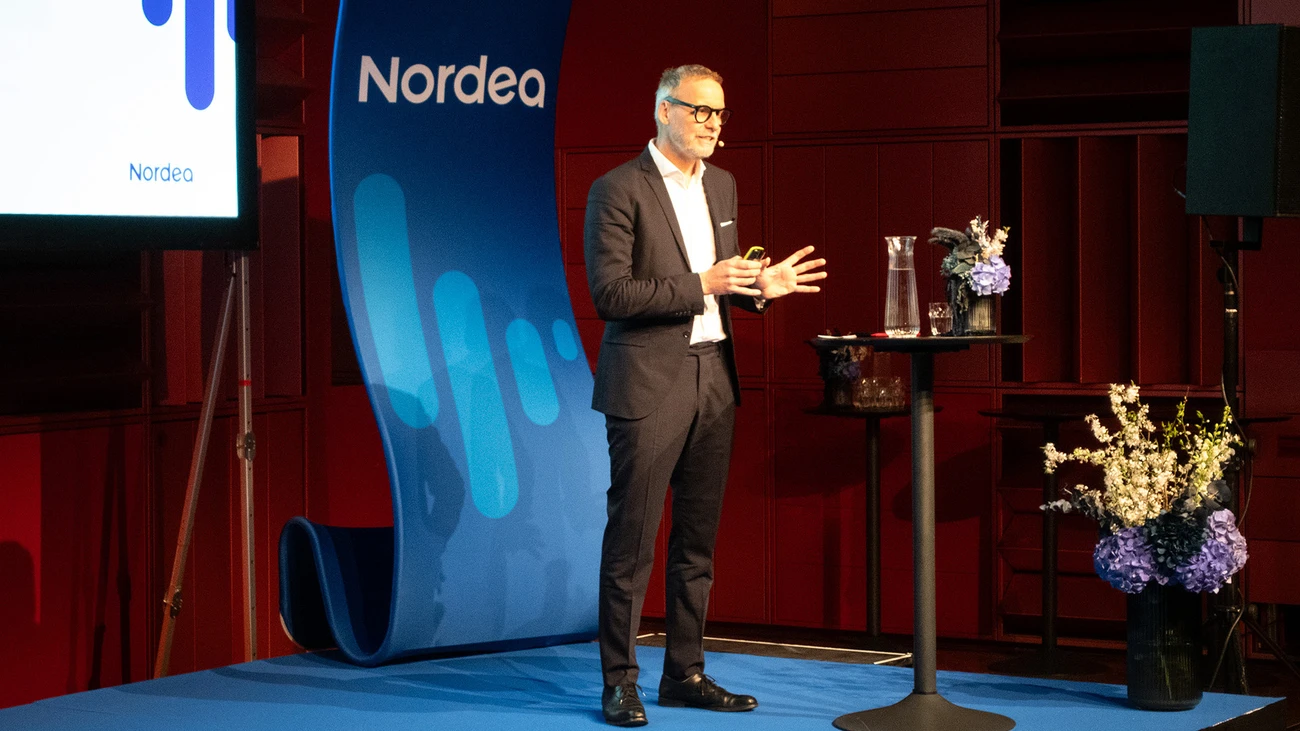
Mark Kandborg, Chief Risk Officer and member of Nordea’s Group Leadership Team, on how to handle geopolitical risks, including cyber risk and the use of AI.

Other seminar highlights

Beyond the fireside chat, the seminar featured a digital bonds panel with speakers from the European Investment Bank, KfW Group, Archax Group and LBBW; insights from Nordea’s Chief Risk Officer Mark Kandborg on managing geopolitical and cyber risks, and the traditional Nordea Economist Battle. The day concluded with 300 investor-issuer speed meetings and evening networking.

The seminar highlighted how the AAA bond market plays a key role in financing Europe’s future challenges and why European integration and innovation are more important than ever.

Events
Insights
After reading this article, is your perception of Nordea? (Required)
* Required fields are shown with an asterisk.
Containers and cranes in industrial shipyard

Corporate insights

Navigating the new era of supply chain resilience

The era of hyper-efficient, lean supply chains is over. In today’s geopolitically volatile world, businesses are discovering that true agility comes not from speed alone, but from building resilience and strategic flexibility into their global networks.

Read more
Wind turbines in sunset in front of smoke

Sustainability

Scope 3 emissions: the next big test for corporate climate action

Companies that proactively engage with their Scope 3 emissions are finding opportunities to deliver business value beyond compliance, from more strategic procurement decisions to greater supply chain resilience.

Read more
Wind turbines with container terminal in background

Sustainability

The Middle East war and Europe’s energy dependence

The strategic rationale for renewable energy and electrification has never been clearer for the EU, now that the second energy crisis in four years has reminded us of the value of energy self-sufficiency.

Read more