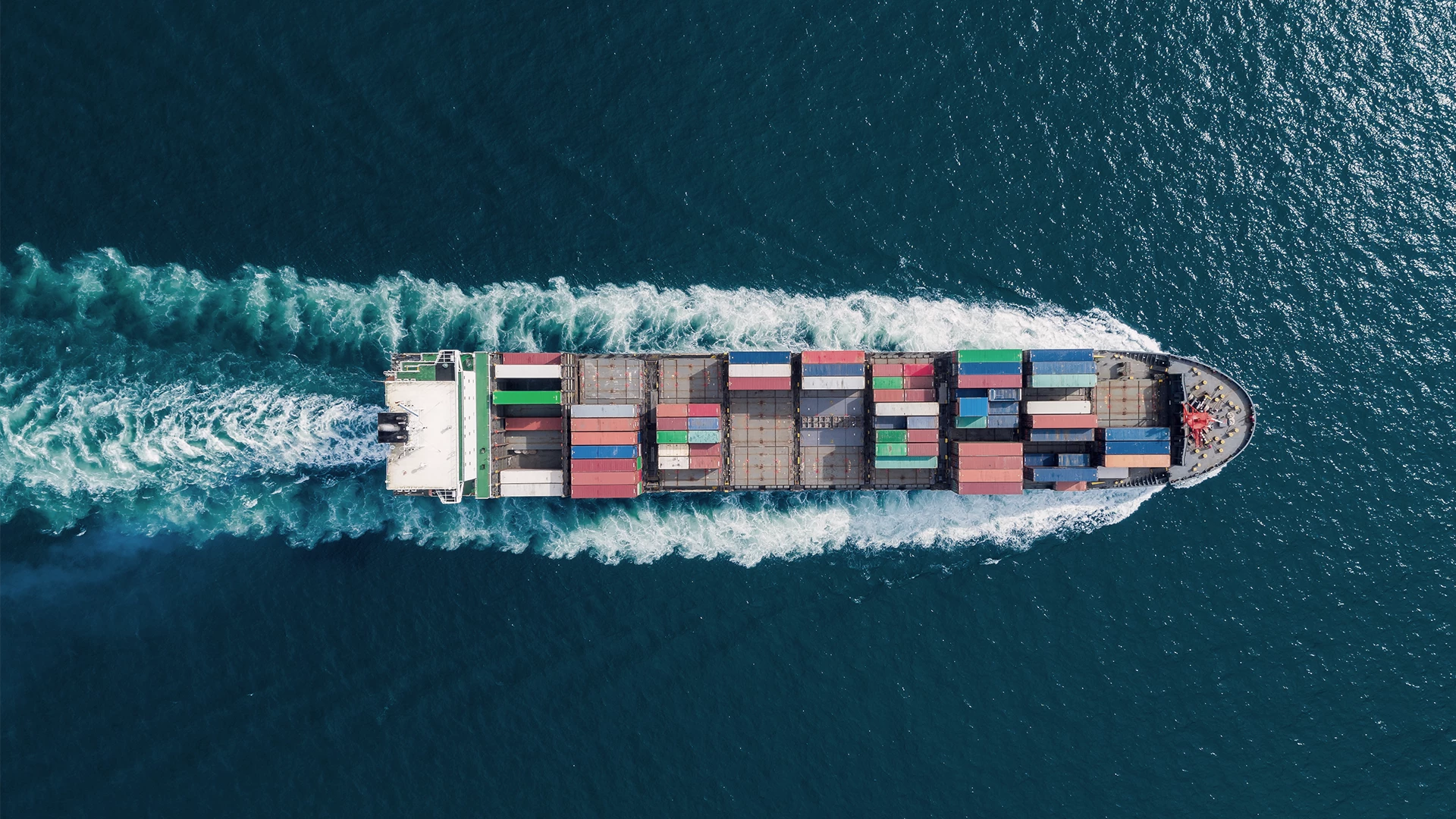
Global trade is proving more resilient than many expected. World merchandise exports grew 7% year-on-year in July, compared with 5% a year earlier. Because this measure tracks volume, the increase reflects more goods moving, not just higher prices. Yet the headline masks a deeper shift. Trade is being rerouted, and the economies positioned between the major powers are becoming more important.

In our recent Trade Trends webinar, I describe this as "Globalisation 2.0," a system in which economics, technology and national security are increasingly inseparable. Trade that once followed economics first and geopolitics second now responds to all three at once.

AI Is now a macro trade driver

Investment in AI infrastructure has reached $1.1 trillion, and this one product ecosystem contributes around 45% of total trade growth. Much of this activity is physical: semiconductors, memory, servers, networking, data centres, power and cooling. These components are highly trade-intensive and often cross borders several times before installation.

This concentration creates risk. The International Monetary Fund (IMF) has cautioned that AI supply chains rely on relatively few countries and sectors, creating potential strategic chokepoints. Key corridors link the United States, the centre of hyperscaler investment and chip design, to several key suppliers. Taiwan leads in advanced semiconductors and AI servers, Korea in memory, and Japan and the Netherlands in specialist materials and equipment. China and the Association of Southeast Asian Nations (ASEAN) anchor electronics components and final assembly.

Where trade is flowing

Analysis of ten years of IMF data across roughly 60 major trading relationships reveals striking shifts. Vietnam–US trade is up 301%, Mexico–US up 66%, and ASEAN–China up 129%. Some of these relationships are genuinely new. Others reflect single-commodity demand or supply chains extended through intermediate countries such as Vietnam and Mexico.
Three patterns stand out:

  • Substitution: US trade with China fell from around $580 billion in 2016 to around $415 billion in 2025, while US–ASEAN trade rose by roughly $347 billion over the same period. The US is redistributing trade rather than withdrawing from it.
     
  • Rebalancing: China is expanding relationships rather than retreating. China–Russia trade is up 226% over ten years, China–GCC (Gulf Cooperation Council) up 157%, and China–Africa up 129%.
     
  • Dilution: EU–UK trade has grown 4% over the decade, yet the UK's dependence on the EU has fallen by nearly 10 percentage points. Headline values can hide a relationship that is becoming less important relative to each economy's total trade, a shift linked to Brexit.

The rise of the middle

Connector economies, including ASEAN members, the GCC states, Singapore, Morocco and Korea, are using their position to trade with multiple centres of economic power. Singapore hedges between China and the US. Morocco is emerging as a nearshoring hub for European automotive and aerospace manufacturing. Korea plays a central role in batteries, electronics and semiconductors.

These groupings are increasingly formalised. The Future of Investment and Trade Partnership (FITP), with around 20 members, mostly small and middle-sized economies, aims to facilitate trade among its members without competing with the World Trade Organization (WTO). Fragmentation does not necessarily mean deglobalisation. It can create new networks of countries seeking to stay connected.

What to watch

Three signals will show whether this shift is durable:

  1. Trade restrictions: Will rules of origin, local content requirements or transshipment enforcement limit connector economies such as Vietnam, Malaysia, the UAE, Turkey and Morocco?
     
  2. Investment: Trade data shows where flows are moving today. Foreign direct investment (FDI) shows whether the change is permanent. Watch semiconductors, batteries, data centres and automotive investment.
     
  3. Rule-making: Will groups such as FITP shape standards and interoperability, moving their members from rule-taking to rule-shaping?

The answer will determine whether Globalisation 2.0 is shaped by new arrangements or by traditional government structures. The middle is no longer simply in between.

Watch our recent Trade Trends webinar on Globalisation 2.0 from 12 November 2026.


Author

Name:
Richard Hayes
Title:
Chief Strategist, Transaction Banking
Morten Ristvedt

Meet our experts

Meet our people: Morten Ristvedt on building, banking and the road ahead

He never planned on a career in banking, but Morten Ristvedt found his way there by chance. Today, he is helping drive Nordea’s growth ambitions in Norway, a market he sees offering significant opportunities for both the bank and its corporate clients.

Read more
Teija Nousiainen at Slush 2025

Entrepreneurship

Unlocking Nordic capital to fuel growth

While the Nordic region produces world-class growth companies that attract investors from around the world, a common belief is that we lack the volume of venture capital needed to make them stay in the region. At Nordea, we see significant untapped potential in creating a more integrated Nordic capital market.

Read more

Markets and investment

AI regulation fears hit the stock market

The Democrats' sweeping midterm victory has rattled global markets, sending technology and AI stocks sharply lower on fears of tighter regulation. We believe the market reaction may be too categorical given the underlying fundamentals.

Read more