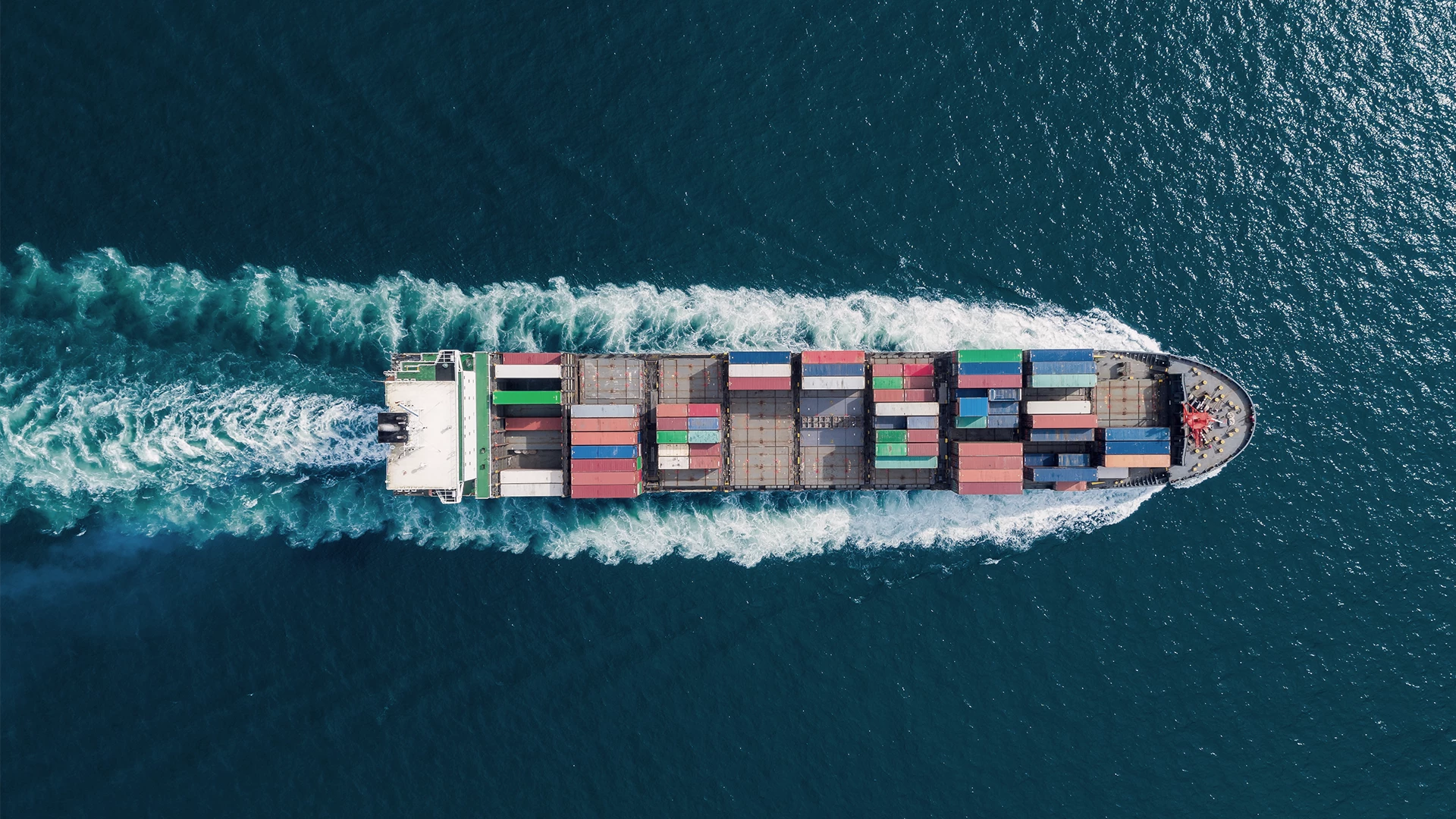
Global trade is proving more resilient than many expected. World merchandise exports grew 7% year-on-year in July, compared with 5% a year earlier. Because this measure tracks volume, the increase reflects more goods moving, not just higher prices. Yet the headline masks a deeper shift. Trade is being rerouted, and the economies positioned between the major powers are becoming more important.
In our recent Trade Trends webinar, I describe this as "Globalisation 2.0," a system in which economics, technology and national security are increasingly inseparable. Trade that once followed economics first and geopolitics second now responds to all three at once.
AI Is now a macro trade driver
Investment in AI infrastructure has reached $1.1 trillion, and this one product ecosystem contributes around 45% of total trade growth. Much of this activity is physical: semiconductors, memory, servers, networking, data centres, power and cooling. These components are highly trade-intensive and often cross borders several times before installation.
This concentration creates risk. The International Monetary Fund (IMF) has cautioned that AI supply chains rely on relatively few countries and sectors, creating potential strategic chokepoints. Key corridors link the United States, the centre of hyperscaler investment and chip design, to several key suppliers. Taiwan leads in advanced semiconductors and AI servers, Korea in memory, and Japan and the Netherlands in specialist materials and equipment. China and the Association of Southeast Asian Nations (ASEAN) anchor electronics components and final assembly.
Where trade is flowing
Analysis of ten years of IMF data across roughly 60 major trading relationships reveals striking shifts. Vietnam–US trade is up 301%, Mexico–US up 66%, and ASEAN–China up 129%. Some of these relationships are genuinely new. Others reflect single-commodity demand or supply chains extended through intermediate countries such as Vietnam and Mexico.