- Name:
- Richard Hayes
- Title:
- Chief Strategist, Transaction Banking
Sivua ei ole saatavilla suomeksi
Pysy sivulla | Siirry aiheeseen liittyvälle suomenkieliselle sivulle3 min to read
Global trade isn’t dying; it’s transforming. And for Nordic businesses embedded in international supply chains, understanding this shift is crucial.
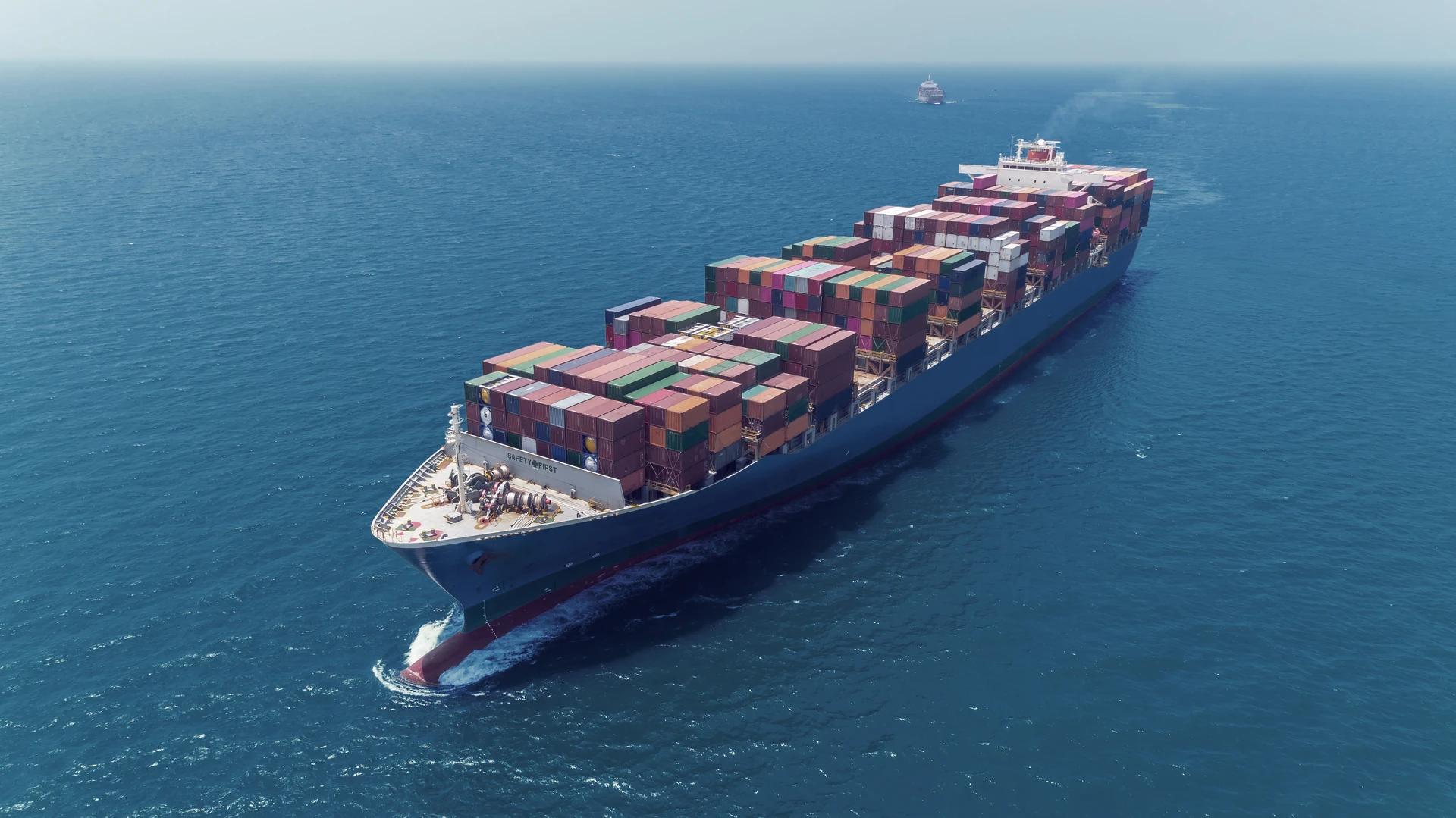
In a recent Trade Trends webinar, we examined a fundamental question facing corporate leaders today: What is happening to globalisation? The answer reveals a complex picture of resilience, reorganisation and risk.
Despite ongoing geopolitical disruption, tariffs and supply chain dislocations, global trade continues to grow in line with long-term trends. Yet while trade volumes remain robust, the architecture of international commerce is fundamentally fragmenting.
The world is moving from a post-Cold War system of globalisation to one of multi-overlapping networks. Trade routes are being rewired: South-South corridors are emerging, and “connector economies” are rising as intermediaries that enable indirect trade flows between geopolitical rivals.
Trade polarisation doesn't mean the end of global commerce. Rather, it represents a fundamental shift in how trade works. Instead of companies trading based purely on cost and efficiency, trade flows increasingly follow geopolitical lines between aligned countries.
Analysis of IMF and World Bank data confirms this trend. Trade within geopolitical blocs is growing significantly faster than trade between competing blocs. The divergence became particularly pronounced after February 2022, when Russia invaded Ukraine. Companies are responding by rerouting flows through third countries rather than trading directly with geopolitical rivals.
The reorganisation stems from three main drivers:
Geopolitics as strategy. Trade is increasingly used as a strategic tool. Countries are asking not who is cheapest to source from, but which country is more aligned with their bloc.
Policy proliferation. Trade-restrictive measures have nearly tripled since 2019. These aren't marginal adjustments. They represent fundamental changes to how the trade system is structured.
The resilience imperative. COVID-19 and the Ukraine war exposed supply chain vulnerabilities. The focus has shifted from efficiency-driven globalisation to resilience-driven regionalism.
The result is a structurally less optimal global system that’s characterised by higher costs and greater volatility.
For Nordic economies, the stakes are particularly high. Denmark leads with a trade-to-GDP ratio of 130%, nearly double the EU average of 68%. All Nordic economies exceed that EU benchmark.
Research by the Danish National Bank suggests that in a worst-case polarisation scenario, Denmark could see short-term GDP fall by as much as 9%. When trade relationships between blocs shift, it's not just exports that suffer, it's the entire production ecosystem.
Forward-thinking corporates are already adapting. Key changes include: redesigning supply chains, shifting from single-source to multi-sourcing models; implementing regional treasury and liquidity management; building greater liquidity flexibility for higher inventory levels; and evolving risk management to create sourcing optionality.
Trade polarisation is not a temporary disruption; it's a structural realignment. For Nordic businesses, the challenge is clear: adapt to a world where resilience matters as much as efficiency, where political alignment shapes commercial relationships, and where supply chain agility is a competitive advantage.
Nordea is launching a new supply chain solution later this year to support corporates navigating these changes.

The Corporate Insights newsletter sums up the top business insights and ideas from Nordea experts and beyond. The newsletter is for business leaders and professionals, ambitious entrepreneurs and for anyone who is interested in the latest financial developments.
Read more
Sustainable finance
Copenhagen Infrastructure Partners acquires Ørsted's onshore renewables portfolio in one of Europe's largest renewable energy platform financings.
Read more
Transaction banking
As payment execution becomes faster and more automated, the real value in transaction banking is shifting from managing individual transactions to orchestrating financial flows in real-time environments.
Read more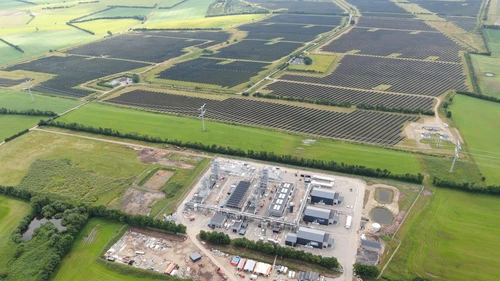
Customers in focus
The collaboration between Nordea and European Energy shows how long-term financial partnerships enable complex renewable energy projects, from solar parks to commercial-scale e-methanol production.
Read more