Today, AI is integrated across our organisation, supporting processes and workflows and helping us work more efficiently. In a recent podcast, Mattias Fras (Head of AI Adoption) and Olof Månsson (Lead AI Engineer) share how we got here and where we started.
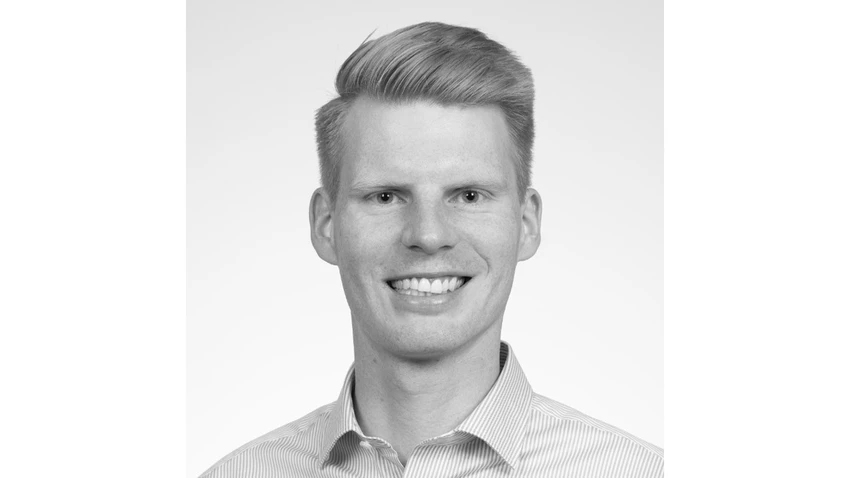
Olof Månsson, Lead AI engineer.
What began as small‑scale chatbot prototypes has grown into a full enterprise capability. This capability was built through close collaboration with experts across the bank.
“The shift has been so fast that in today’s Gen AI times, the era of chatbots feels ancient,” says Olof in the AI After Work (AIAW) podcast.
Instead of scaling individual AI use cases in isolation, Nordea chose to build a shared, flexible platform leveraging Amazon Web Services (AWS) Bedrock that works with different models. This is a managed service from Amazon that provides access to a variety of large language models. This strategic choice avoided vendor lock‑in and enabled flexibility as AI models evolve.
Mattias Fras, Head of AI Adoption.
"Not a magic solution"
Governance is incorporated into every layer. This includes monitoring, access controls, and compliance. This approach makes governance a technical enabler rather than a barrier. As Mattias underlines, “Being modular and agnostic was super important for us.”
“Instead of pitching AI as a magic solution, it was deliberately framed as a systems‑engineering challenge. It required security teams, privacy experts, cloud architects, risk officers and product owners to collaborate from day one,” Olof adds. This way of framing and approaching AI succeeded.
Embedding AI across the organisation
The introduction of the Head of AI Adoption role, which Mattias took on in late 2025, reflects a shift towards integrating AI widely across the organisation. Changing behaviours at scale takes time. At Nordea, the focus is now on transforming workflows rather than building prototypes.
Scaling to more than 10,000 users required discipline and patience. The work moved from laptop pilots to a production‑grade platform. It was delivered in stages.
“Sometimes a release is a breeze, sometimes you sweat. We tried to split it into multiple parts so that if we only got 80%, that 80% still went to production,” Mattias notes.
The experience shows a few simple lessons for leaders:
Start small, but design for growth.
Build governance into the process.
Stay flexible by avoiding model lock‑in.
Involve security, compliance and legal early.
Understand the difference between tools that boost productivity and those that truly transform workflows.
Nordea’s journey shows that responsible AI in banking is built on strong building blocks, built‑in governance and organisational change, even in a regulated environment.
Listen to the full episode in the AI After Work (AIAW) Podcast here
We wanted to show you a Spotify but you cannot see it as you have not enabled cookies
Three ways we use AI to accelerate efficiency and growth
Artificial intelligence is an important tool for driving efficiency and growth at Nordea. Lately, we have sped up several exciting AI-initiatives to help the bank create innovations for the future.
How we use AI to simplify customers’ everyday banking
Banking shouldn't be complicated. That’s why we’re responsibly applying AI to transform how our customers manage their money – from mortgages and loans to savings and payments.
AI Hackathon cutting manual work from days to minutes
Over two days, Nordea colleagues working with payments and financial transactions turned AI curiosity into working solutions. The focus was clear: solve real daily challenges, not just explore cool tech.
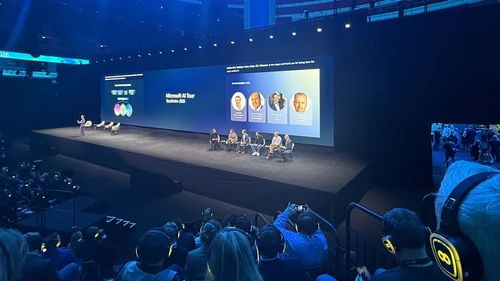
At the Microsoft AI tour in Stockholm in March 2026, thousands of attendees from a wide range of backgrounds connected with experts, explored tangible business applications, and learned how organisations are using AI to drive real impact.