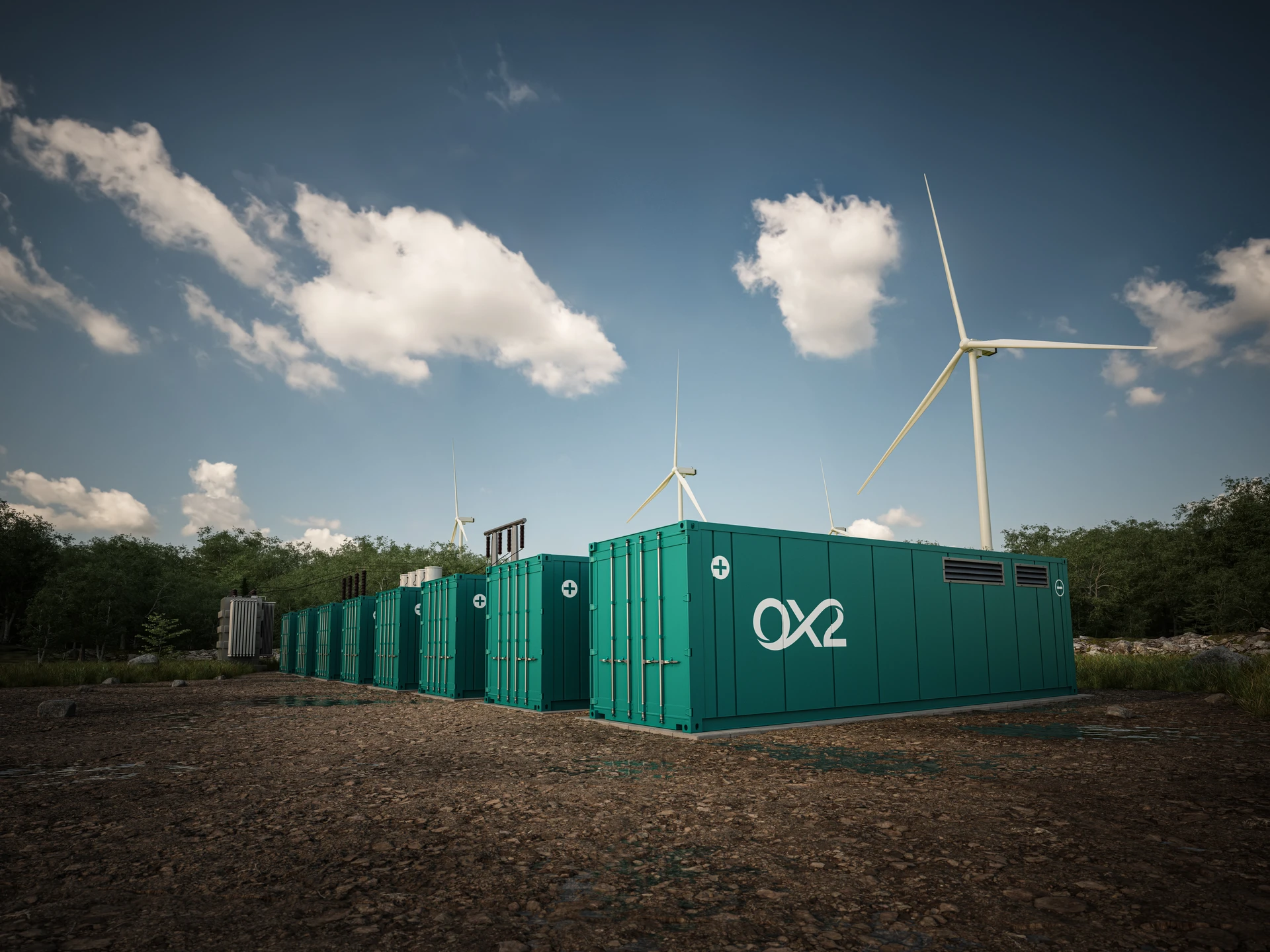
OX2 is a leading developer and operator of large-scale renewable energy solutions across onshore wind power, solar power and energy storage. The addition of battery energy storage systems to OX2's Finnish wind portfolio marks an important milestone in the company's strategy, providing critical balancing power to ensure stable electricity supply when the wind doesn’t blow. With Finland’s data centers and new industry demanding uninterrupted power, storage capacity is becoming a key constraint on renewable energy growth, making battery systems essential infrastructure.

We sat down with two key figures behind the project to discuss the strategic rationale, partnership approach, and the evolving relationship between renewable energy development and finance.

How does this battery storage investment fit with OX2's broader strategy, and what drove the decision to integrate storage with wind power generation?

Gustaf Savin: Battery storage is an integral part of our strategy, including strengthening OX2's portfolio with regard to reliability and revenue stability. In addition, battery is an important step in broadening the value and performance of our renewable energy offering. There is a strong interest from leading offtakers such as Ahold and Statkraft in the Finnish power market.

From a broader Nordic energy system perspective, how do you see battery storage changing the renewable energy landscape, and what role does OX2 aim to play in that transformation?

Gustaf Savin: Both stand-alone as well as co-located batteries will become increasingly important in the broader Nordic energy system going forward, providing critical system services, strengthening grid reliability and complementing the renewable investments by shifting their production. Batteries are a critical part of OX2's strategy going forward.

From a regulatory perspective, what challenges do you see in terms of licensing and approval processes? 

Gustaf Savin: There has been strong support in the broader Finnish energy landscape to enable the battery storage build-out in Finland—and it is important going forward that the right conditions are there to enable continued build-out, such as regulatory frameworks and tax rules.
The biggest opportunities for industry and finance to work together and accelerate the transition to green energy lie in scaling proven technologies.

Laurent Bourgoin, Head of Project Financing, OX2

Why is strong financial backing so critical for these projects at this stage?

Laurent Bourgoin: Renewable projects are capital-intensive, long-term investments with multiple layers of execution and market risk embedded in delivery. Onshore wind and battery projects require significant upfront funding, while revenues depend on securing power purchase agreements with creditworthy offtakers and involve a measure of market exposure given limited subsidies available in the Nordic region. Strong project-level funding ensures sufficient committed liquidity to cover construction costs, manage delivery risk, and support timely completion and commissioning, thereby enabling projects to operate as intended under their contracted revenue framework.

Where do you see the biggest opportunities for industry and finance to work together in accelerating green energy solutions? What areas of development are required in finance?

Laurent Bourgoin: The biggest opportunities for industry and finance to work together and accelerate the transition to green energy lie in scaling proven technologies: industry supplying high-quality, ready-to-build projects, bankable offtake solutions, reliable construction and long-term operatorship; and finance providing standardised frameworks, competitively priced liquidity and nimble execution. 

Commercial lenders can play an even bigger role by, among other things, supporting earlier-stage engagement with developers with a proven track record and expanding the availability of flexible financing solutions that can cater for future energy systems’ multiple revenue streams.

About Nordea's Renewable Energy & Infrastructure Finance

Launched in 2024 within Nordea's Investment Banking division, the Renewable Energy & Infrastructure Finance (REIF) initiative forms a cross-Nordic centre of excellence to support corporate clients with funding and advice in relation to the climate transition. The initiative encompasses renewable energy projects such as wind parks, solar parks, and battery storage, as well as infrastructure projects including smart grids and digital infrastructure.

About OX2

OX2 develops, builds, sells, owns and operates large-scale renewable energy solutions across onshore wind power, solar power, and energy storage. With more than 20 years of experience and operations spanning Europe and Australia, OX2 operates across the whole value chain, from project development to construction, delivery, ownership and management of energy solutions.

 
After reading this article, is your perception of Nordea? (Required)
* Required fields are shown with an asterisk.
Aerial of Copenhagen, the capital of Denmark

Cheføkonomens hjørne

Despite turbulent times: Danish economy remains strong

Uncertainty is high, but the Danish economy is entering the second half of the year from an exceptionally strong starting point.

Read more
Group of people having a business meeting in modern office with brick walls

Tech & AI

AI-powered research transforms our service for corporate clients

Our latest innovation, Research Librarian, demonstrates how AI is transforming the way we support large corporates, financial institutions and professional investors.

Read more
Antti Saha, Head of Large Corporates & Institutions Finland at Nordea

Our people

Meet our people: Antti Saha on jazz band banking and Finland’s growth momentum

Finnish corporates are shifting gears: from building solid foundations and profitability to pursuing growth. Antti Saha, Head of Large Corporates & Institutions in Finland, explains what’s driving the shift, and why he compares his role to conducting a jazz band.

Read more