Watch the on-demand Trade Trends webinar
Watch the full Trade Trends webinar with Richard Hayes, Chief Strategist in Transaction Banking.
Watch the webinar3 min to read
As geopolitical pressures force companies to rethink their supply chains, the working capital implications are larger than many realise. You cannot redesign the physical supply chain without redesigning the financial supply chain, and treasury needs a seat at the table. Nordea’s Richard Hayes explains why in our recent Trade Trends webinar.
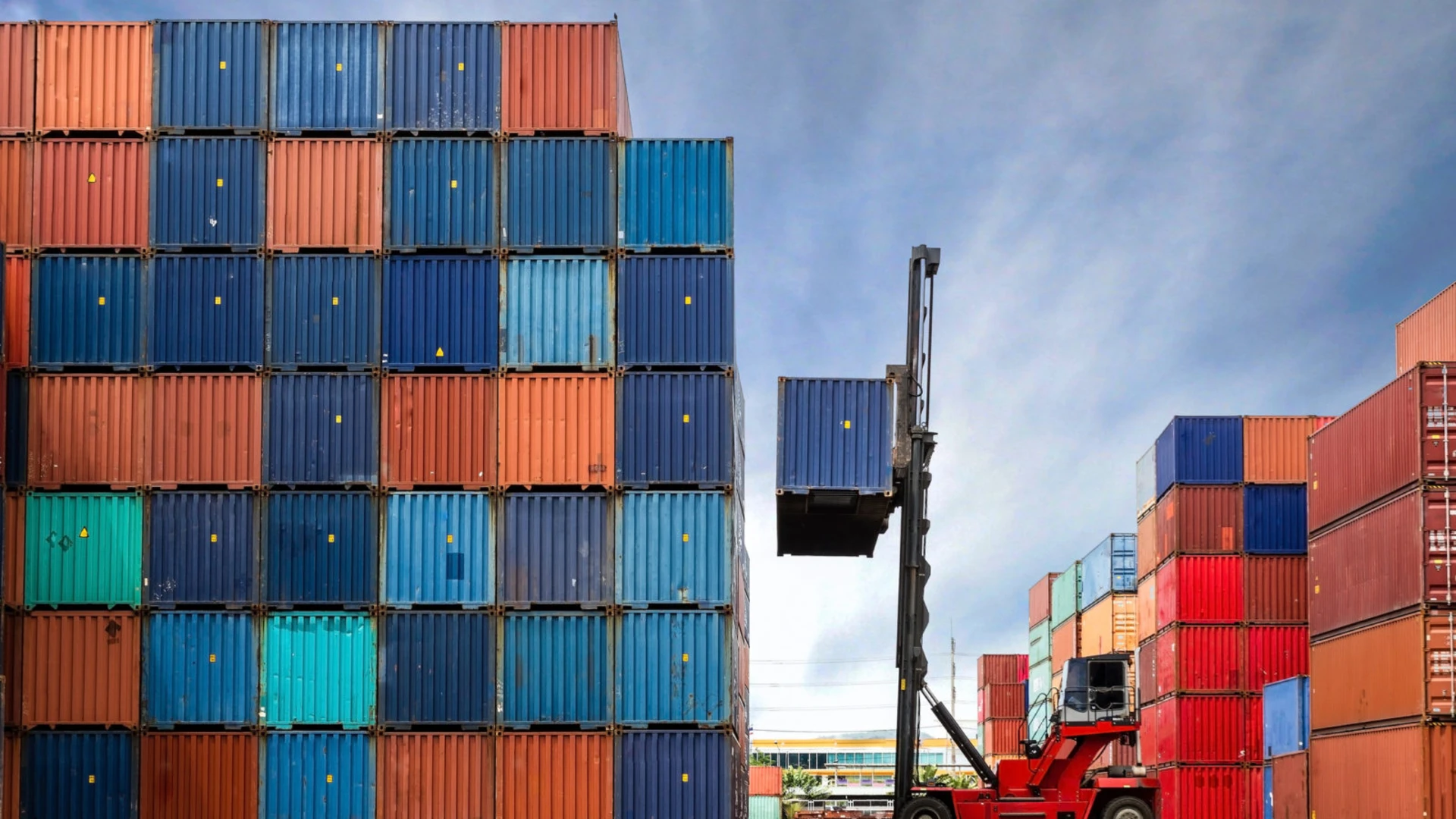
When Dick Schoof, the former Prime Minister of the Netherlands, took to the stage at Davos earlier this year, his message was clear: Supply chains need to be put on the political table. Just-in-time may have made economic sense, he argued, but from a resilience and security standpoint, it didn't. His call to action – to invest and build back redundancy, increase autonomy and decrease dependency – captured a shift already well underway. The future, he said, needed to focus on agility versus fragility.
That resilience costs, a topic we explored in our recent Trade Trends webinar.
Trade volumes are not declining; they are growing with trend. What is changing is the architecture. Since Russia's invasion of Ukraine, there is a higher probability that trade now occurs within geopolitically aligned blocs than between them. That’s a stark reversal of what came before. Regionalisation, friend-shoring, and the roles played by connector countries are structural features of a new landscape where geopolitics sits over economics, and where trade restrictions, subsidies, tariffs, and non-tariff barriers are in the news constantly. The result is a resilience agenda: resilience over efficiency, supply chain redesign in a post-COVID world. And it has a direct working capital implication.
You cannot redesign the physical supply chain without redesigning the financial supply chain, and treasury needs a seat at the table.
The geography of supply chains and the geography of cash move together. Supply chain design decisions change where inventory, receivables, payables and liquidity sit across a corporate ecosystem. When companies redesign for resilience, the working capital implications emerge across four areas.
The cost of resilience may appear on the balance sheet before it appears in procurement pricing.
To illustrate, consider a fictitious €5 billion multinational manufacturer with a baseline cash conversion cycle of 50 days and a 15% disruption probability. Under a resilience-first scenario, the cash conversion cycle extends to 90 days, tying up approximately €345 million in additional working capital through a combination of increased inventory and safety stock, shorter payment terms due to new or smaller suppliers and longer sourcing routes. The upside: disruption probability falls to 8%. An optimised resilience model retains the same inventory posture and the same 8% disruption protection, but applies term discipline and a mix of working capital solutions, reducing the net funding requirement to €67 million, mitigating approximately 74% of the gross increase.
You cannot redesign the physical supply chain without redesigning the financial supply chain. Treasury needs to be involved when the supply chain architecture is designed, not after procurement and operations have already created the working capital requirement.
Resilience has a price. The strategic opportunity is to decide deliberately where that price sits, rather than allowing it to accumulate by default on the balance sheet.
Watch the full Trade Trends webinar with Richard Hayes, Chief Strategist in Transaction Banking.
Watch the webinar

The Corporate Insights newsletter sums up the top business insights and ideas from Nordea experts and beyond. The newsletter is for business leaders and professionals, ambitious entrepreneurs and for anyone who is interested in the latest financial developments.
Read more
Explainer
Need a brush-up on the ins and outs of debt financing? Here's what you need to know.
Read more
Transaction banking
Secondary sanctions are reshaping how companies assess risk across counterparties, supply chains and financial networks. Treasury has a key role to play. Based on a Treasury Trends webinar with Richard Hayes, Chief Strategist, Transaction Banking.
Read more
Payments
Nordic businesses need to prepare for payment system changes, including the end of unstructured addresses and ISO 20022 version upgrades. Early preparation is crucial for a seamless transition.
Read more