Seven ways to engage suppliers
1. Train – build capability across suppliers and value chains
Many suppliers, especially smaller ones, lack the resources or knowledge to reduce emissions. Companies can offer training, tools and guidance on:
- Carbon accounting and data collection
- Energy efficiency and renewable energy transition
- Sector best practices
- Process optimisation, waste reduction and circularity
2. Guide – set clear expectations and requirements
Define measurable targets aligned with recognised frameworks:
- Supplier climate targets and codes of conduct
- Management system requirements (e.g., ISO 14001)
- Minimum performance criteria (e.g., zero tailpipe delivery, recycled content quotas)
- Climate requirements in procurement contracts and tenders
Practical examples of requirements in procurement contracts include: implementing emission reduction initiatives, disclosing climate data, setting science-based emission reduction targets, complying with regulatory requirements, implementing waste reduction or circularity initiatives, purchasing renewable energy as well as reporting and reducing product-level emissions.
3. Share – improve transparency and decision-making
Data is the foundation of Scope 3 management. Digital tools and traceability solutions can improve visibility. Leading firms share:
- Emissions methodologies
- Benchmarks and best practices
- Digital tools for tracking sustainability performance (data, reports)
- Self-assessment systems
4. Collaborate – drive joint innovation
The most impactful reductions often come from joint initiatives with suppliers. Collaboration leverages supplier innovation and technological capabilities:
- Redesign products to reduce material intensity
- Develop low-carbon materials or processes
- Use industrial symbiosis (one company’s waste becomes another’s resource)
- Co-invest in R&D for low-carbon technologies
5. Monitor – track performance and ensure progress
Continuous monitoring ensures commitments translate into action:
- Risk assessments prioritising high-impact suppliers
- Site-level data collection and audits
- Tracking corrective actions and improvements
6. Incentivise – align economics with emissions reductions
Shift sustainability from a compliance exercise to a commercial opportunity. Suppliers respond to incentives:
- Link contracts and order volumes to emissions performance
- Provide preferred supplier status and awards schemes
- Offer improved payment, subsidy and finance conditions
- Offer long-term agreements for high-performing suppliers
7. Select – work with lower-emission and innovative suppliers
Supplier selection is one of the most powerful levers. Research shows that suppliers with strong innovation capabilities are often better positioned to absorb and reduce emissions in the value chain. When strategy allows:
- Switch to suppliers with low emissions intensity
- Partner with suppliers investing in eco-innovation
- Shift activities to suppliers that deliver emissions reductions more efficiently
- Sanction suppliers not engaging in the transition
The path forward
Progress on Scope 3 is often hindered by fragmented supplier emissions data, weak enforcement of supplier requirements, limited integration of CO₂ tracking into core systems, and maturity gaps between large firms and SMEs. Incentives for low-emission performance remain scarce, procurement functions lack clear accountability for climate targets, and supplier readiness varies widely, particularly outside Europe, underscoring the need for stronger integration between sustainability and procurement and more structured implementation.
Yet Scope 3 is where the largest impact lies. Reducing Scope 3 emissions requires a mindset shift: companies must actively manage them across the value chain, not just measure and disclose them.
The opportunity is clear. By combining training, guidance, collaboration, monitoring, incentives and smart sourcing decisions, firms can turn their supply chains into a driver of climate performance. Supplier engagement already enables firms to reduce a reported 43 MtCO2e, while a third of firms see climate factors impacting strategies and financial plans.
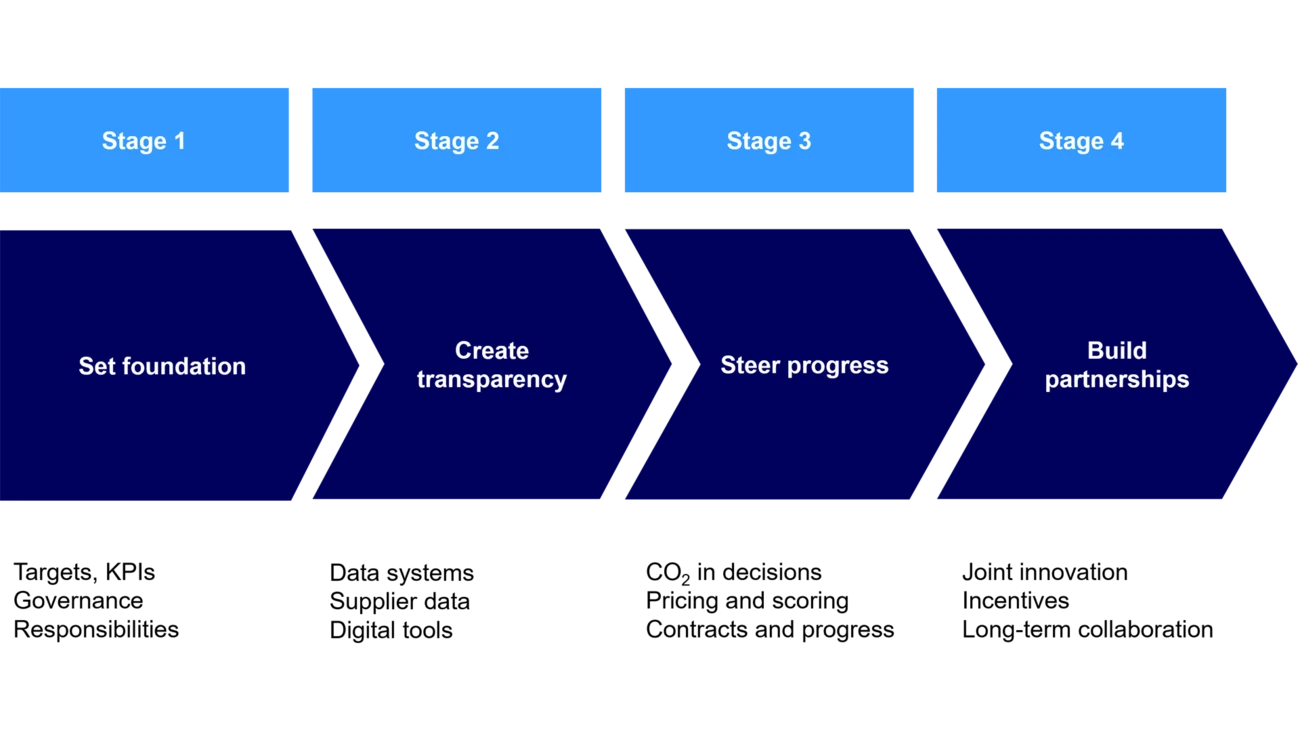
The companies that succeed will treat suppliers as partners, invest in engagement, and leverage decarbonisation innovation across the entire value chain.