
- Name:
- Helge J. Pedersen
- Title:
- Nordea Group Chief Economist
3 min to read
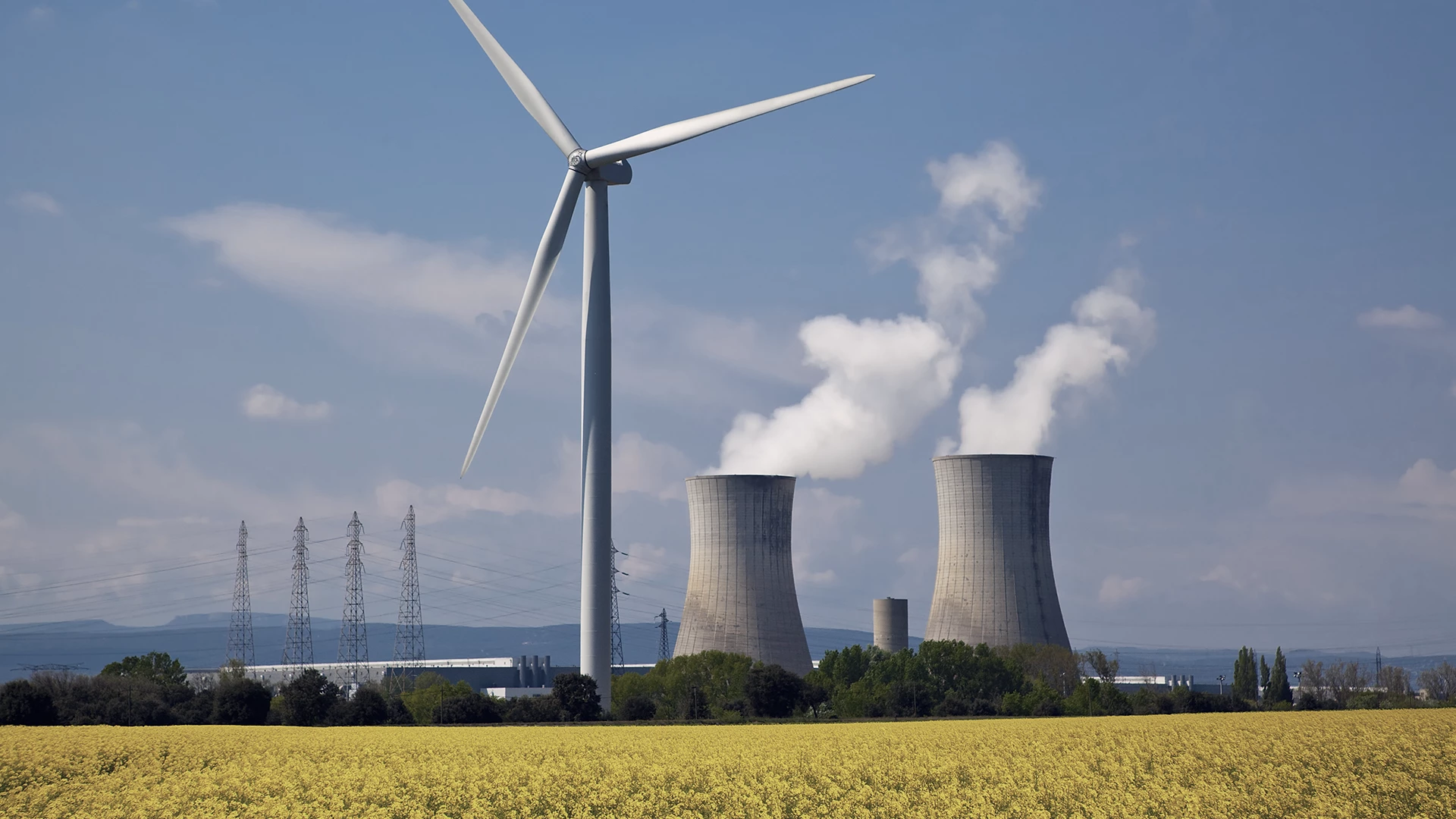
Energy prices have risen significantly, but diversified energy supply and lower energy consumption limit the risk of economic collapse. Nuclear power and renewable energy come into focus in the EU's future energy policy.
Although a two-week ceasefire has fortunately been agreed upon between the USA, Israel, and Iran, it does not change the fact that the war in the Middle East has begun to leave its mark on the world economy. First and foremost in the form of significant increases in energy prices, but there has also been focus on the risk of shortages of other important input materials for industry and agriculture such as fertilizer, helium, sulfur and aluminum. These are also products that are manufactured on a large scale in the Middle East, but which have not been able to reach the world market as a result of the closure of the Strait of Hormuz.
At the same time, confidence indicators have begun to fall. This applies to both business, but especially to households, which have again begun to worry about purchasing power. The situation in 2022, when the energy crisis brought inflation up to double-digit levels, still remains in the memory of most people.
However, it probably won't get that bad. In March, inflation in the eurozone thus came out at 2.5%. This was a significant increase from the month before, when it was at 1.9%, but still far below the level in 2022, when oil prices were even higher than today, and when not least the price of natural gas went completely wild. At that time, it peaked for a short period just under 350 euros per MWh, and the EU had to introduce a maximum price of 180 euros per MWh in almost panic mode. In comparison, the natural gas price in Europe is currently at 'only' about 50 euros per MWh. This is high and hits European companies and households, but not necessarily to an extent that leads to a deep economic downturn or calls for fiscal easing. And certainly not when it is taken into account that household savings are at record highs, unemployment is low, and billions of euros are already being pumped into infrastructure projects and not least defense.
But of course there is always a risk that things will go worse than expected, and the economies also risk being hit by developments in the financial markets, where the war has also left its mark in the form of falling stock prices and rising interest rates. Especially the Asian stock markets have been exposed, because the countries in the region are very dependent on energy imports from the Middle East. The Danish elite index OMXC25 has performed relatively well in comparison. When interest rates have risen, this is due not least to the central banks' announcement that they are ready to counter increasing inflation expectations with higher monetary policy rates. Because they also have 2022, when rates were raised far too late, in fresh memory.
The risk of an economic setback like then is therefore limited, just as the long-term consequences will be less serious, because central banks today pursue a far more active and inflation-fighting monetary policy than was the case in the 1970s.
It has also not gone unnoticed that the EU's Energy Commissioner, Dan Jørgensen, recently warned that we potentially face the worst energy crisis ever. That is, with greater consequences than during the energy crises of the 1970s and most recently in 2022. Something which I doubt, however. When the situation in the 1970s became as serious as it was, this was due not least to the fact that oil was then the dominant energy source. For Denmark's part, oil thus accounted for almost 90% of the energy supply. Today, the energy supply has become far more diversified, and in Denmark more than half of energy production now comes from renewable energy sources.
At the same time, energy consumption in companies and households has fallen significantly. This means that the oil price would have to go all the way up to around 400 USD per barrel to be comparable to the price in 1979, when corrected for energy intensity and inflation development. The risk of an economic setback like then is therefore limited, just as the long-term consequences will be less serious, because central banks today pursue a far more active and inflation-fighting monetary policy than was the case in the 1970s.
And compared to the situation in the wake of Russia's invasion of Ukraine in February 2022, there is, as mentioned, a long way up to the levels for natural gas prices that were applicable then, just as the price of, for example, agricultural commodities has not risen significantly.
But that is not to say that it cannot end up going horribly wrong if the war continues and results in significant destruction of production facilities in the region. And one thing is certain: There has been a tectonic break in the geopolitical structures in recent years. Therefore, supply security becomes the key word for Europe's energy policy in the coming decades. This means in practice both a continued expansion of renewable energy sources, but also a new focus on nuclear power. Including the so-called Small Modular Reactors (SMRs), which are smaller factory-built nuclear reactors that, together with traditional nuclear reactors, will play a key role in a "flexible, safe and efficient" European energy system.
Whether they will also be built on Danish soil, only the future can tell. Until then, we must prepare ourselves for the fact that tensions in the Middle East and other flashpoints will continue to be able to leave their mark on everyday life for companies and households also in our part of the world.
Stay ahead of the curve with our expert economic insights and forecasts. Get the latest analysis on global and Nordic markets delivered straight to your inbox.
Read more
Insights
At Nordea’s upcoming AAA Seminar, two former EU Commissioners will explore what Europe must do to strengthen its financial sector.
Read more
Fraud
Fraud schemes are becoming more sophisticated. How well do you know the warning signs? Six practical questions about the threats facing businesses today. Test your knowledge and strengthen your defenses.
Read more
Corporate insights
The Supreme Court’s decision to overturn IEEPA tariffs marks a shift in US trade policy, moving from unpredictable emergency measures to a more structured, longer-term elevated tariff environment that will reshape global trade relationships.
Read more