Beklager...

Denne siden findes ikke på norsk

Bli værende på denne siden | Fortsett til en lignende side på norsk

Key takeaways:

  • The ETS proposal adjusts the decarbonisation trajectory and extends the allocation of free allowances in exchange for greater investment.
     
  • EU industry will be required to reach net zero by approximately mid-century rather than 2039.
     
  • The Electrification Action Plan aims to double electrification rates from 23% to 46% by 2040.

The European Commission in July presented its revision of the Emission Trading System (ETS) alongside an "Electrification Action Plan" designed to accelerate Europe's electrification. The ETS proposal adjusts the system's decarbonisation trajectory and extends the period of free allowances allocation in exchange for greater investment in industrial decarbonisation. While these changes may reduce competitive pressure for some EU industry players, they come at the cost of undermining long-term regulatory certainty. The Electrification Action Plan represents a welcome strategic focus on electrification, aiming to double electrification rates from today's 23% to 46% by 2040 while reducing electricity prices across the bloc.

Proposed ETS Reform

The ETS reform introduces several measures to reduce decarbonisation pressure on EU industry:

Linear Reduction Factor (LRF): For 2031-2035, the Commission proposes updating the LRF to 3.7% from the originally planned 4.4%, with 1.7% proposed for 2036-2040. This means EU industry will be required to reach net zero by approximately mid-century rather than 2039 as originally targeted.

Free allocation: Free allocation of allowances will continue beyond 2030. For sectors covered by the Carbon Border Adjustment Mechanism (CBAM), the reduction of free allocation will be slowed and the phase-out extended until 2038. 80% of the amount of free allowances will be allocated to companies with plans to invest in decarbonisation in Europe, with the remaining 20% allocated only upon verification that decarbonisation investments have been successfully implemented, and that the corresponding significant emission reduction has been achieved.

International offsets: Offsetting emissions up to 2% using high-quality international carbon credits will be allowed, providing extra margin, especially in 2036-2040, when emission reduction in Europe will become more challenging.

Investments: An ETS Investment Booster will be available before 2030 as the first phase of the EUR 100 billion funded Industrial Decarbonisation Bank. Member States will be required to spend at least 50% of their national ETS revenues on investments in climate priority areas, adding up to more than EUR 100bn in investments before 2030, according to the Commission.

Market Stability Reserve (MSR): The Commission also proposes a reform of the MSR to strengthen market stability and predictability for investments, maintain liquidity and reduce excessive price volatility.
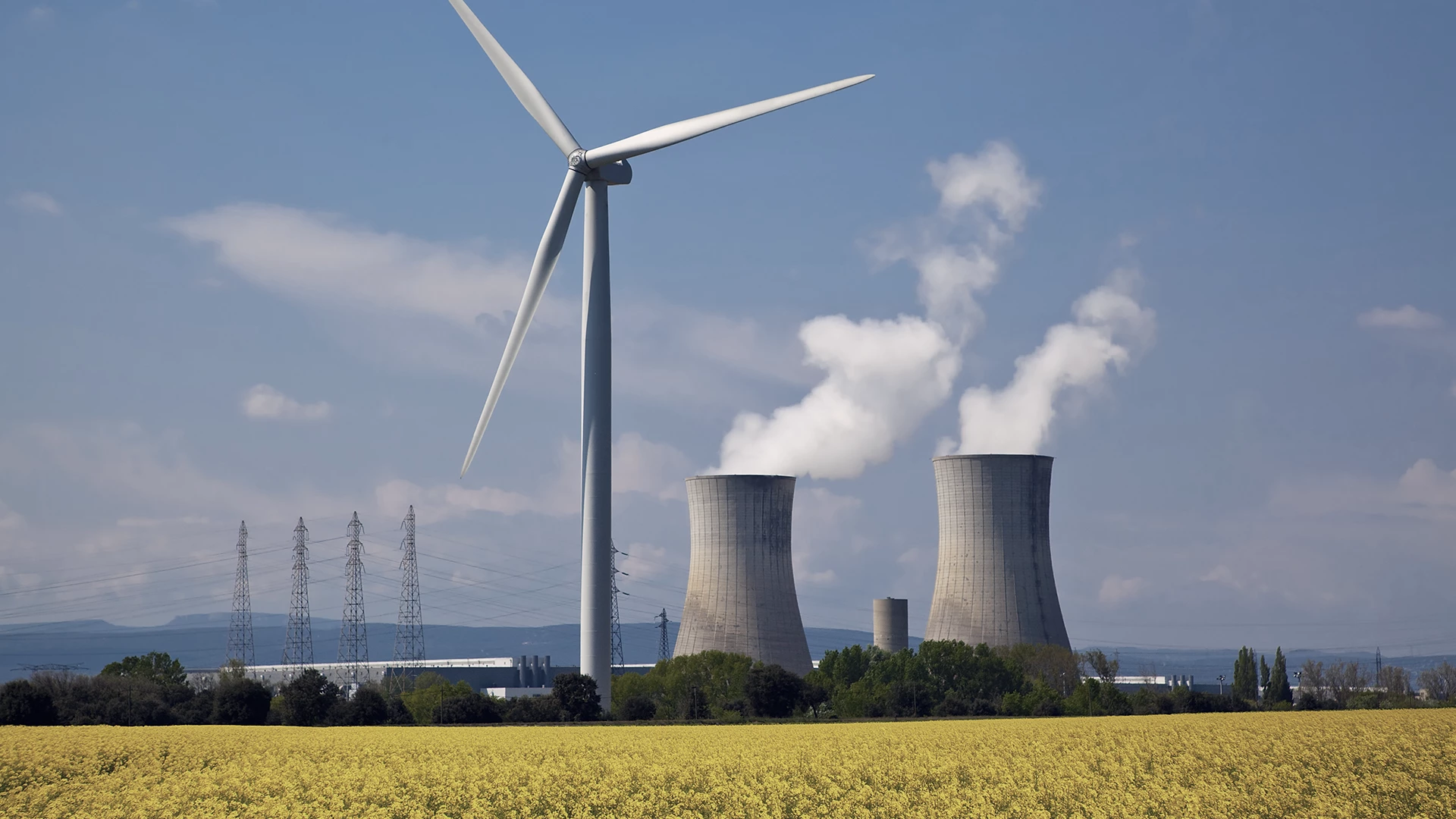

The Electrification Action Plan aims to double electrification rates from today's 23% to 46% by 2040.

Electrification Action Plan

Against the backdrop of recent geopolitical shocks, the Commission aims to decrease reliance on energy imports and strengthen European competitiveness. An electrification target of 46% by 2040 is proposed, compared to the current level of 23%.

Fossil subsidies and electricity/gas prices: The Commission will propose phasing out fossil fuel subsidies as part of the post-2030 Energy Union package, with an explicit target that the national electricity/gas price ratio should be maximum 2.5 for households and 2 for industry by 2030.

Heat pumps: The Commission has set a target to increase heat pump installation rates to around 4 million per year by 2030, compared to 2.4 million in 2025.

Road transport and nuclear: In road transportation, the Commission sets a KPI that, by 2040, sufficient grid connections for publicly accessible heavy-duty vehicle recharging and depot charging will be deployed to enable 40% of EU trucks to run on battery electric propulsion. The Commission also stated it will support cross-border cooperation of countries for faster nuclear reactor licensing decisions, but did not attach a specific KPI to this ambition.

ETS 2

The ETS2 (covering road transport and building heating) is excluded from the scope of this proposal and will become fully operational in 2028, with application review due by 2029. Any assessment of the feasibility of integrating the sectors under ETS2 into the EU ETS is due by 2031.

Author

Name:
Marco Kisic
Title:
Head of ESG Research, Equities
After reading this article, is your perception of Nordea? (Required)
* Required fields are shown with an asterisk.
European Energy's Kassø Power-to-X facility beside solar park

Customers in focus

Financing the next generation of energy

The collaboration between Nordea and European Energy shows how long-term financial partnerships enable complex renewable energy projects, from solar parks to commercial-scale e-methanol production.

Read more
Container Ship on ocean

Trade finance

How trade polarisation is reshaping global commerce

Global trade isn’t dying; it’s transforming. And for Nordic businesses embedded in international supply chains, understanding this shift is crucial.

Read more
Windmill in a yellow field

Sustainable finance

CIP acquires Ørsted renewable energy platform in a EUR 1.4bn deal with Nordea providing funding

Copenhagen Infrastructure Partners acquires Ørsted's onshore renewables portfolio in one of Europe's largest renewable energy platform financings.

Read more