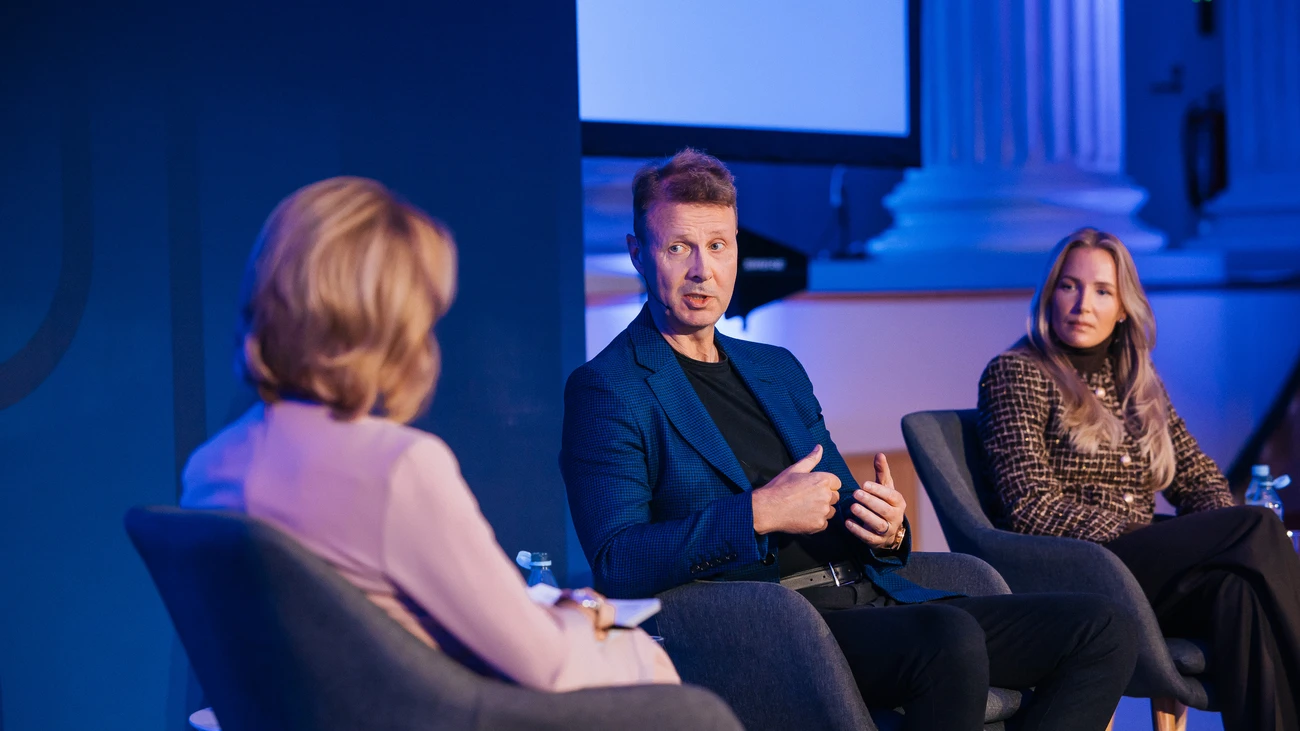
Venture capital firm Maki.vc CEO Pauliina Martikainen-Rahnu noted that scale-ups should not be expected to deliver profits too soon. For investors, a defensible competitive advantage and the potential for international growth are more important. That growth must nevertheless be based on a business model that can become profitable over time.
For investors, Europe’s transformation can open up long-term opportunities, but investment decisions still require careful assessment of a company’s business model, competitive advantage, valuation and risks.
European capital needs to be put to work to finance growth
Europe does not lack capital. The challenge is to channel more of it into financing growth. The Nordic Compass alliance is shifting the discussion towards solutions: a joint growth fund, more integrated capital markets and a greater role for pension assets could help companies scale up in the Nordic countries by giving them access to a larger home market.
The same challenge applies across Europe. Although the intra-EU market comprises 450 million consumers, its fragmentation makes it more difficult for companies to grow. In the EIB survey, 74% of Europe’s most innovative companies said that this fragmentation is an obstacle to business opportunities.
For investors, the objective is not to favour European or Nordic companies simply because of where they are based. Rather, it is to help the region’s best companies grow into larger, more globally competitive investment opportunities.
Long-term, patient private capital influences what kinds of companies emerge in Europe and where they are able to scale up. Just as importantly, Europe needs to make better use of the capital it already has to finance European growth.
Europe does not need to reinvent its strengths
At the same time, investors need to take a fresh look at diversification. Alongside geography and sectors, they need to consider the dependencies companies share on energy, technology, financing and supply chains. A portfolio may appear diversified even though the companies included in it are exposed to the same disruptions.
Resilience has therefore become part of what makes a high-quality investment. A company’s ability to withstand geopolitical and economic changes also affects its long-term prospects for growth and returns.
This could create opportunities for Europe. The next success story may be found in sectors where Europe already has strong research capabilities, industrial expertise and established companies. For example, exports of low-carbon technologies grew by 65% between 2017 and 2023, and the EU is among the leading regions globally for patents in this field. Security, energy, infrastructure and technology also face substantial long-term investment needs.
However, significant investment needs or a strategically important sector do not in themselves make a company a good investment. Investors still need to assess whether a company can turn growing demand into a profitable business, how sustainable its competitive advantage is and whether its valuation offers an attractive investment opportunity.
Europe’s opportunity lies in turning its existing strengths into world-class businesses. The next major European innovation may already exist. The crucial question is whether it can grow into a large, globally competitive company.
Rizvan Samaletdin
Head of Private Banking Finland