- Name:
- Richard Hayes
- Title:
- Chief Strategist in Transaction Banking
Sivua ei ole saatavilla suomeksi
Pysy sivulla | Siirry aiheeseen liittyvälle suomenkieliselle sivulle3 min to read
The era of hyper-efficient, lean supply chains is over. In today’s geopolitically volatile world, businesses are discovering that true agility comes not from speed alone, but from building resilience and strategic flexibility into their global networks.
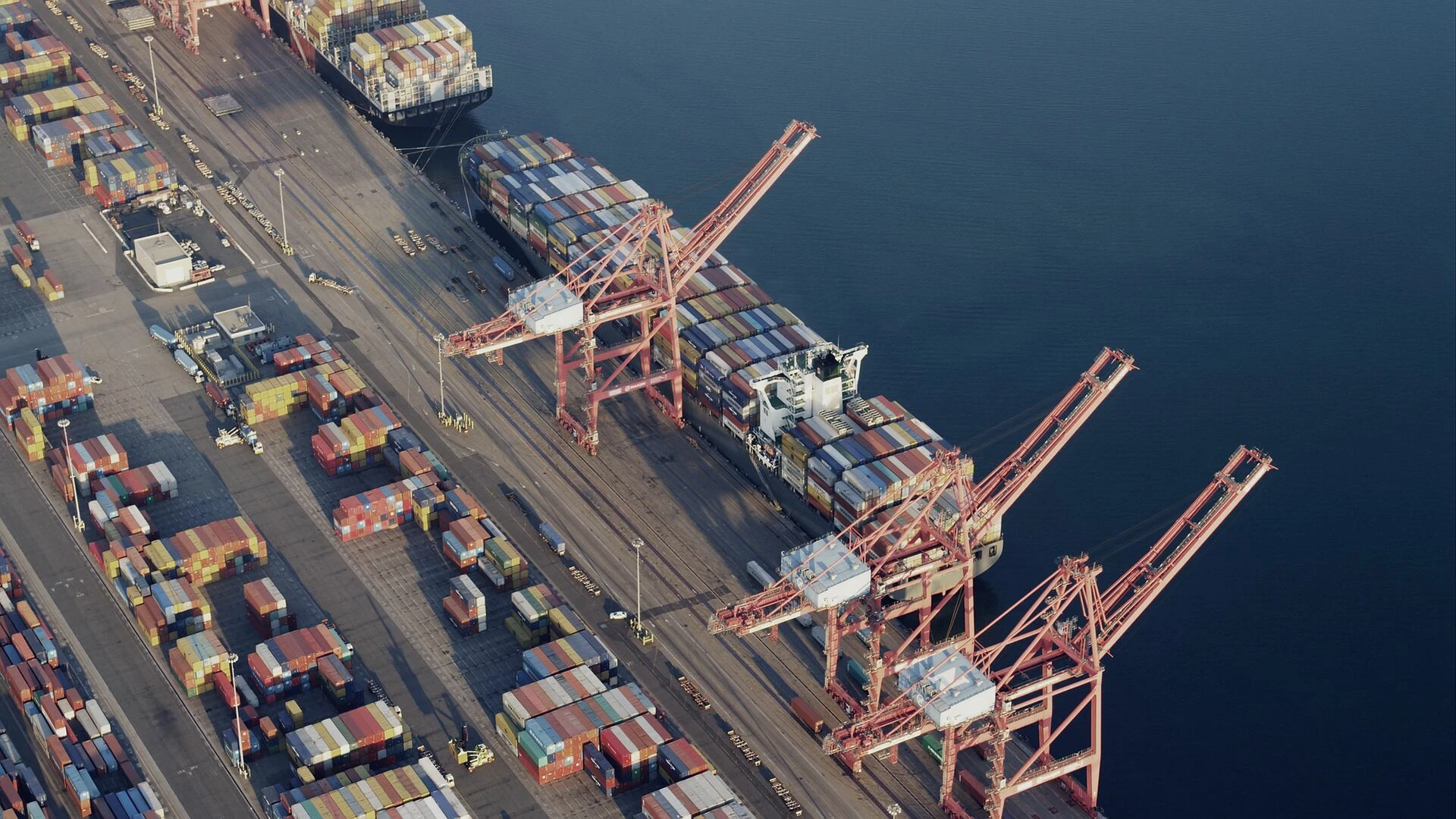
Global supply chains are fundamentally transforming in response to today’s geopolitically challenging environment. The shift represents more than just a trend; it’s a strategic imperative for businesses operating in an increasingly multipolar world. We explored this topic in our recent Trade Trends webinar and lay out some of the key takeaways below.
The traditional model of “lean, fast, flexible” supply chains that dominated pre-2020 thinking has given way to a new paradigm focused on redundancy, buffers and shock tolerance. What previously appeared as “sleek, polished, hyper-efficient global machines” were actually the system’s major vulnerabilities: Agility without guardrails created fragility rather than strength.
We identify three critical factors reshaping global trade:
The multipolar world: This rewires who we trade with, as businesses diversify away from single-country dependencies towards trusted partner networks and strategic alliances.
Economic battlegrounds: These reshape how we trade, with tariffs, industrial policy and strategic autonomy becoming central considerations in supply chain decisions.
Emergent geopolitical shocks: Events like the Red Sea disruptions redefine whether trade flows at all, turning smooth global highways into contested choke points with unpredictable detours.
Recent supply chain pressure data from the Federal Reserve Bank of New York reveals a modest retightening since mid-2023, although nowhere near COVID-era crisis levels. More tellingly, trade flow analysis shows the emergence of "China plus many" strategies, with countries like Vietnam, Mexico and ASEAN nations increasingly serving as intermediate assembly platforms for Chinese components destined for Western markets.
This isn't deglobalisation—it's re-engineering. China is moving upstream in value chains while other regions handle final assembly, creating more complex but potentially more resilient supply networks.
This isn't deglobalisation—it's re-engineering. China is moving upstream in value chains while other regions handle final assembly, creating more complex but potentially more resilient supply networks.
The transformation requires a fundamental shift in corporate thinking. Supply chains are now viewed as strategic assets rather than cost centers, with inventory becoming a buffer against uncertainty rather than a burden on balance sheets.
We recommend a “supply chain resilience” pyramid that has three key layers: foundational liquidity management, strategic supply chain architecture and long-term disruption preparedness. Treasury functions play a crucial role as architects of this new optionality, managing everything from multi-currency exposures to working capital requirements for dual sourcing.
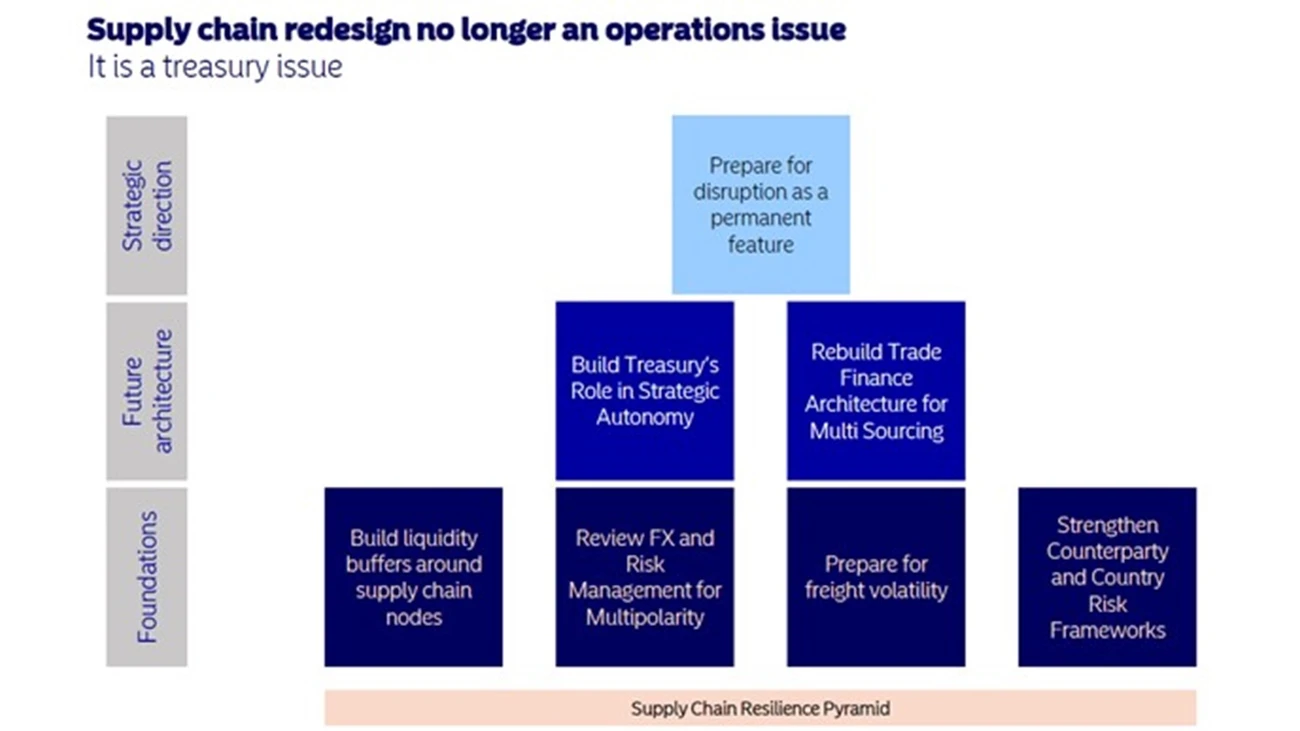
As political leaders from across Europe and beyond emphasise supply chain autonomy and strategic resilience, businesses must prepare for a world where disruption is a permanent feature. The goal isn't isolation from global trade but rather building trusted, diversified networks that can withstand geopolitical shocks while maintaining competitive advantage.
The message is clear: in today's volatile environment, the most resilient supply chains aren't necessarily the most efficient, they're the most adaptable.

The Corporate Insights newsletter sums up the top business insights and ideas from Nordea experts and beyond. The newsletter is for business leaders and professionals, ambitious entrepreneurs and for anyone who is interested in the latest financial developments.
Read more
Sustainability
Companies that proactively engage with their Scope 3 emissions are finding opportunities to deliver business value beyond compliance, from more strategic procurement decisions to greater supply chain resilience.
Read more
Sustainability
The strategic rationale for renewable energy and electrification has never been clearer for the EU, now that the second energy crisis in four years has reminded us of the value of energy self-sufficiency.
Read more
Tech & AI
Over two days, Nordea colleagues working with payments and financial transactions turned AI curiosity into working solutions. The focus was clear: solve real daily challenges, not just explore cool tech.
Read more