Did you know?
The Nordic countries provide a solid foundation for Nordea’s growth.
They are among the most open and resilient economies in the world, and consistently rank among the highest for per capita GDP.
Siden findes desværre ikke på dansk
Bliv på siden | Fortsæt til en relateret side på danskThe Nordic region stands out for its economic resilience, innovation capacity and stable financial system – factors that continue to attract capital and support long term-growth.

The Nordics offer a unique foundation for success, in both good and challenging times. Strong economies, resilient societies and a culture of trust and innovation create an environment where growth and stability go hand in hand. These qualities make the region’s financial markets some of the most attractive in Europe.
Their economic strength is underpinned by high levels of trust, a culture of learning and entrepreneurship, and strong social safety nets. Together, these factors create lasting political and economic stability, and enable the region to handle global shocks better than many others.
Innovation runs deep in the Nordic countries. They are highly digital societies and quick to adopt new technologies. The region’s largest firms – many of them Nordea customers – compete on quality and innovation rather than size alone. This approach has proven successful: over the past two decades, Nordic companies have outperformed their peers in the US, Europe and Asia in terms of total shareholder return.
The region’s secure and steady business environment is further supported by a reliable, profitable and stable banking sector. Nordic financial institutions are well capitalised, have a long history of prudent risk management, and have been quick to embrace digital innovation and climate action compared with many other parts of the world.
At Nordea, we derive strength from our pan-Nordic business model and very well diversified lending portfolio, characteristics which have contributed to us becoming one of Europe’s financial industry leaders.
The Nordic countries provide a solid foundation for Nordea’s growth.
They are among the most open and resilient economies in the world, and consistently rank among the highest for per capita GDP.
In 2025 the Nordic economies, like many others, continued to face headwinds from global uncertainty. Inflation and interest rates stabilised at lower levels, helping consumers regain purchasing power, but the anticipated recovery in economic activity was slower than expected, held back by persistent geopolitical tensions and trade disruptions.
Despite continued international efforts to end the conflict, Russia’s full-scale war in Ukraine showed few signs of resolution, keeping security and energy high on the agenda in Europe. Meanwhile, rising trade barriers added to the uncertainty as US tariffs on trading partners increased significantly. Despite being export dependent, the Nordic economies have experienced only a limited impact, with businesses adjusting well to the changes.
Looking ahead, while sentiment remains cautious, the fundamentals of the Nordic economies are solid. If inflation stays contained and interest rates hold steady, all four of our home markets can expect to post robust economic growth in 2026 and 2027, supported by stronger household consumption. This could also help strengthen labour markets in Finland and Sweden, where unemployment remains relatively high.
Still, the outlook hinges on global developments. Geopolitical tensions, trade policy and developments in major economies will continue to shape the pace and strength of the Nordic rebound.
Corporate insights
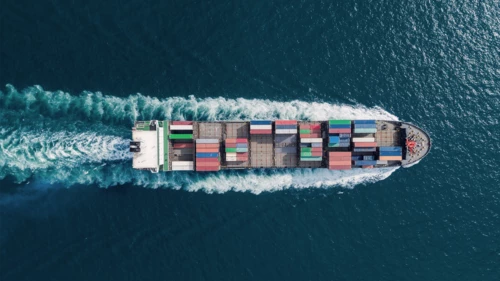
The landmark EU-Mercosur deal eliminates 91% of tariff lines for EU exports, creating major opportunities for Nordic companies while requiring careful risk management.
Read more
Economy
NATO’s new defense spending target will more than double European military budgets by 2035, with significant economic implications, clients heard at a recent Nordea event on Arctic security policy.
Read more
Private economy
Did you know how unequal many financial areas still are for women? Here's a list of facts that might surprise you.
Read more