
- Name:
- Jan von Gerich
- Title:
- Chief Analyst
Tariff uncertainty has increased again after the Supreme Court found a big part of the US tariffs illegal. New tariffs quickly followed, but it would be premature to expect recent developments to materially alter the economic and market outlook.

In a long-awaited decision, the US Supreme Court finally ruled against the tariffs, including reciprocal tariffs, Donald Trump imposed under the International Emergency Economic Powers Act (IEEPA). The ruling was largely expected, but the 6-3 vote illustrated that it was far from unanimous. The decision does not address tariffs imposed under different sections of US legislation, such as the sectoral tariffs on items like cars, nor does it address whether the tariff revenue collected so far needs to be repaid.
President Trump immediately announced a new temporary 10% baseline tariff under a different section of the US trade act and soon after announced that the rate would rise to 15%. The 10% rate came into effect earlier this week and can remain in force for a maximum of 150 days unless Congress approves an extension.
The short-term winners in the new regime include countries with high tariff rates, such as China, while the losers are the ones that enjoyed a 10% tariff regime earlier, such as the UK.
Assuming the new rate rises to 15%, the average effective tariff rate will fall only by a few percentage points compared with the IEEPA tariffs, according to estimates by the Yale Budget Lab.
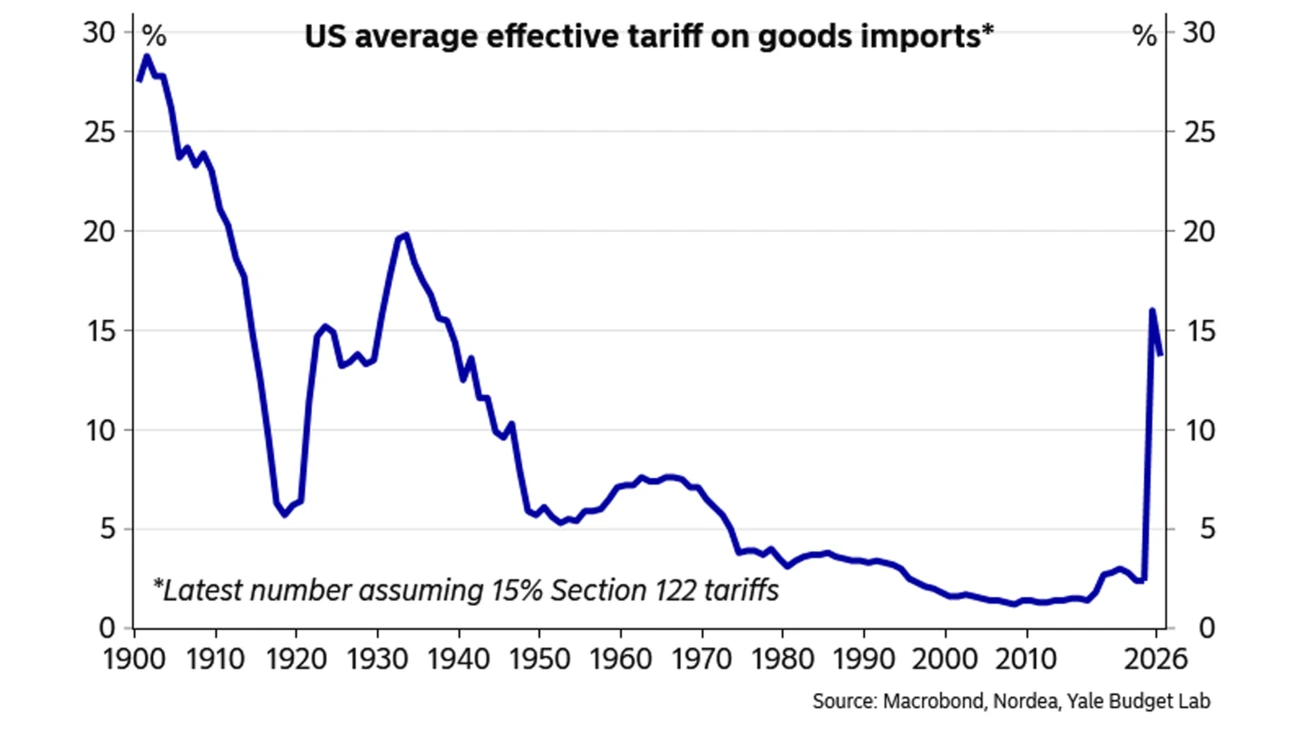
The tariff saga will no doubt continue, and new sectoral tariffs are likely going forward, at least to offset the new tariffs expiring after 150 days, as it looks unlikely Congress would vote to continue them. What exactly the new tariff regime will look like remains unclear, and even though the near-term tariff level has fallen slightly, general uncertainty has again increased. The impact of the decision on the trade agreements reached also remains unclear at this point.
The market reaction to the court decision was rather muted, suggesting that the outlook has not changed materially. Even though uncertainty has increased, the impact on economic performance will not necessarily be that large. Last year, the economy weathered uncertainty much better than feared, while the impact on inflation proved to be less severe than initially estimated. It would thus be premature to make any major changes to economic or market forecasts.
Even though uncertainty has increased, the impact on economic performance will not necessarily be that large.
The Fed took a more balanced stance towards the labour market risks already at the January meeting and can afford to retain a wait-and-see attitude for now. We do not expect any further cuts from the central bank, including when Kevin Warsh is set to take over from Jerome Powell. Risks remain tilted towards further rate cuts, though.
In the euro area, the recent tariff changes present some downside risks given increased uncertainty, but the impact could prove to be limited. After all, also the euro-area economy defied the more negative forecasts last year when tariff uncertainty was at its highest. We remain comfortable with our ECB forecast of there being no rate moves this year as recent data raise hopes that also the manufacturing sector is gradually doing better.
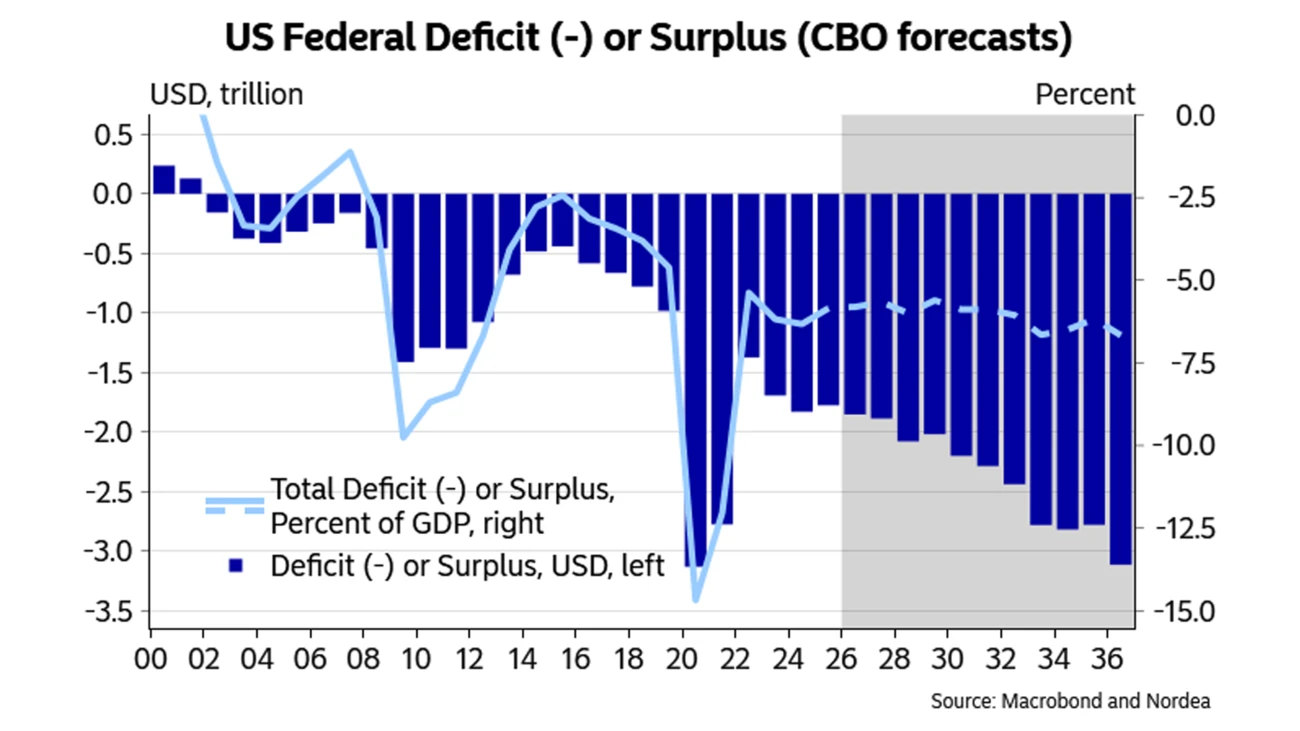
The potential tariff repayments could also impact the outlook for longer yields. While it was never clear whether the tariff revenue would be used to finance some of the deficit, the likely impact is an increase in the deficit – another factor supporting our call for higher Treasury yields – though not for a long time. It could take years for lower courts to rule on the tariff repayment cases, which are already measured in thousands, according to The Wall Street Journal.

The Corporate Insights newsletter sums up the top business insights and ideas from Nordea experts and beyond. The newsletter is for business leaders and professionals, ambitious entrepreneurs and for anyone who is interested in the latest financial developments.
Read more
Economy
The unstable conditions continue to dominate the forecasts, and nothing suggests an imminent shift.
Read more
Markets and investment
Ever wondered what banks or other financial institutions do with your money when you save or invest? Here is an explanation of asset management and Nordea’s role as an asset manager.
Read more
Economic Outlook
Despite trade tensions and geopolitical turmoil, Danish exports have surged in recent years. Much of this growth stems from exports of goods produced outside Denmark’s borders.
Read more