Anteeksi...

Sivua ei ole saatavilla suomeksi

Pysy sivulla | Siirry aiheeseen liittyvälle suomenkieliselle sivulle

Transition in action

Company: Wallenius Wilhelmsen 

Industry: Shipping and logistics 

Headquarter location: Oslo, Norway 

Wallenius Wilhelmsen specialises in roll-on/roll-off (RoRo) shipping and vehicle logistics, managing the distribution of cars, trucks, rolling equipment and breakbulk for customers around the world. With a fleet of around 125 vessels, the company serves 15 trade routes across six continents, supported by an extensive inland distribution network, 66 processing centres and eight marine terminals. As a major player in shipping and logistics, the company has a significant environmental impact, particularly on the climate. For years, Wallenius Wilhelmsen has been committed to reducing its carbon footprint and is now accelerating those efforts with the aim of achieving net-zero emissions by 2040.

Find out more about sustainability at Wallenius Wilhelmsen
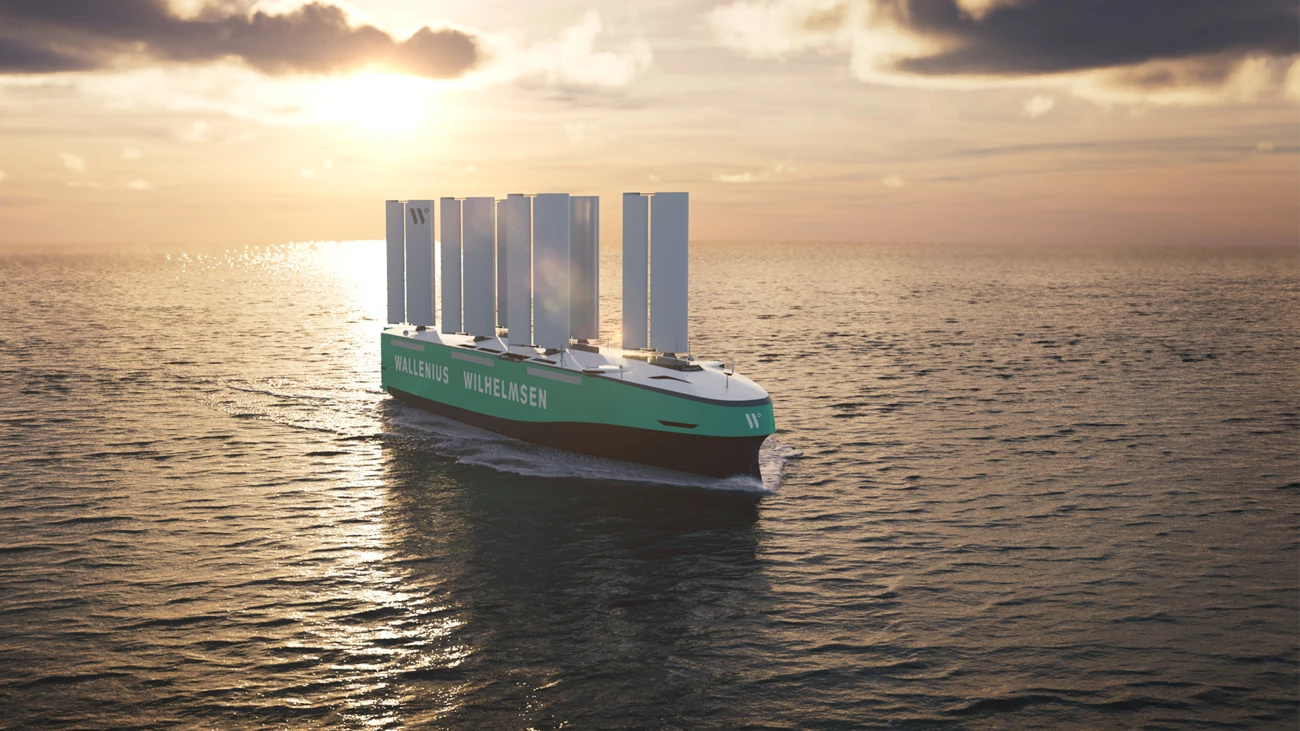

Wallenius Wilhelmsen's wind-powered RoRo vessel. Photo credit: Wallenius Wilhelmsen
 

Wallenius Wilhelmsen’s key sustainability initiatives 

To succeed in reaching net-zero by 2040, the company plans to use a multitude of initiatives. Key among those are: 


Alternative fuels

The transition from fossil fuels to low-carbon alternatives, such as biofuel and methanol, is projected to be the most significant contributor to the company’s emission reduction efforts to 2040. 

Technical and operational improvements

Substantial technical and operational improvements to the current fleet will also help drive the decarbonisation effort. These range from engine upgrades and wind-assisted propulsion systems to maximized vessel utilization and speed optimisation.  

New vessels

New methanol dual-fuel vessels under order will offer enhanced fuel efficiency and flexibility. 


Transitioning to a fossil-free future is challenging, but essential. Climate change requires new technologies, infrastructure, low-carbon fuels, energy-efficient operations, and partnerships. The cost of achieving net-zero is significant – but insignificant compared to doing nothing. 

Lasse Kristoffersen, CEO at Wallenius Wilhelmsen


Financing linked to sustainability targets

Wallenius Wilhelmsen released its new Sustainable Financing Framework in February 2025, covering both green financing and sustainability-linked financing aligned with its net-zero by 2040 target.  

The company established the framework to be used in both the bond- and bank market, and the green use-of-proceeds are aligned with the EU Taxonomy’s substantial contribution criteria. The company says it plans to allocate the green financing to new dual-fuel capable vessels that comply with the EU Taxonomy. 

The sustainability-linked financing will be linked to the company’s ambitious sustainability strategy, where the emissions reduction targets are validated by the Science Based Targets initiative (SBTi).  

The framework received a strong second-party opinion from S&P Global Ratings. 

We believe that decarbonization represents one of the greatest opportunities of our time. Through our green and sustainability-linked financing framework, we invite our investors and lenders to join us on the journey toward net-zero.

Lasse Kristoffersen, CEO at Wallenius Wilhelmsen 

Nordea served as sole structuring advisor on the framework. 

We would like to thank Nordea for the valuable discussions in developing our new Sustainable Financing framework that we are extremely proud of.

Anette Rønnov, Chief Sustainability Officer at Wallenius Wilhelmsen

See Nordea's announcement on LinkedIn
 
After reading this article, is your perception of Nordea? (Required)
* Required fields are shown with an asterisk.
Sustainable choice - green housing loans

Sector insights

Sweden’s new building energy rules: What has changed and how property owners should prepare

Sweden’s implementation of the EU’s revised Energy Performance of Buildings Directive (EPBD) changes how building energy performance is measured, rated and regulated, with real consequences for non-residential property owners.

Read more
Windturbines along curving road

Sustainability

Crossing 1.5°C: Assessing Nordic climate targets and delivery

Nordic companies remain firmly committed to addressing climate change and are delivering well on their Scope 1 and 2 emissions. However, our annual review of climate targets and progress across a universe of approximately 330 Nordic companies reveals a persistent gap between ambition and delivery on Scope 3 emissions.

Read more
Industrial shops at sea

Corporate insights

International trade in the age of geoeconomics

Governments are increasingly using trade, tariffs and sanctions to advance strategic objectives. For Nordic companies, understanding the shift is becoming essential to managing risk and identifying opportunities for growth.

Read more