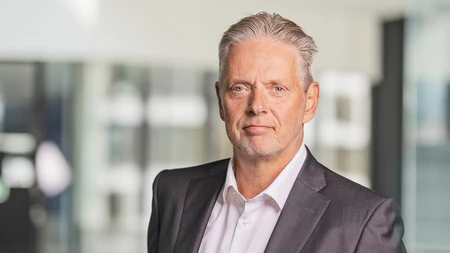
- Name:
- Helge J. Pedersen
- Title:
- Nordea Group Chief Economist
Sivua ei ole saatavilla suomeksi
Pysy sivulla | Siirry aiheeseen liittyvälle suomenkieliselle sivulleThe unstable conditions continue to dominate the forecasts, and nothing suggests an imminent shift.
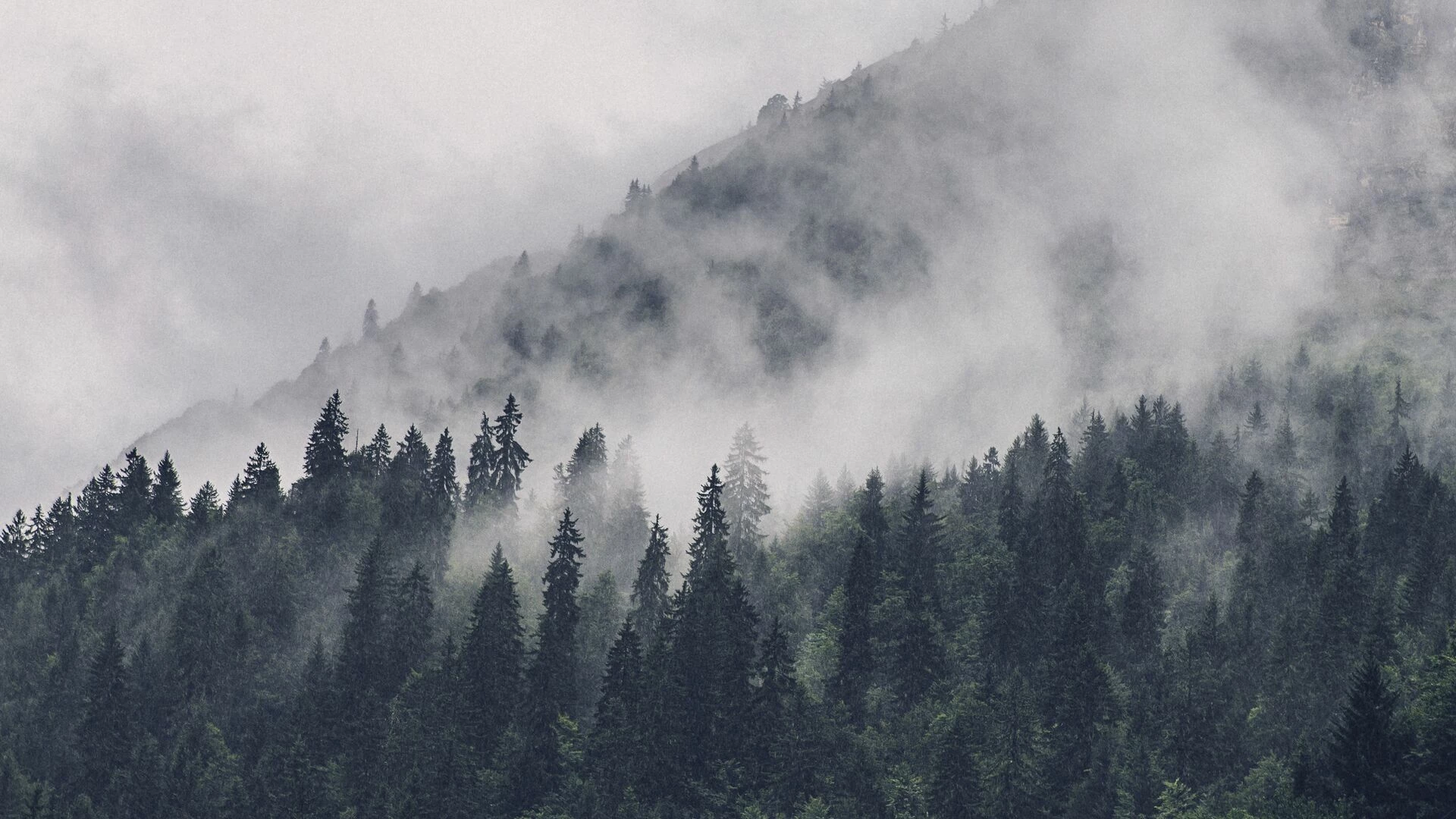
The Economic Weather Forecast has gradually become a regular headline in many of my presentations on Danish and international economics. Not because it promises precise predictions, but because it captures something fundamental: The economy is affected, like the weather, by forces we can only partially control, and which rarely move linearly.
Right now, the favorite metaphor is: 'Cold winds blow from the east, while foggy and unstable weather drifts in from the west'. This is the picture of the current international situation, where geopolitical tensions and economic uncertainty increasingly set the agenda.
This was most recently illustrated by threats of significant punitive tariffs against a number of European countries. As is well known, the decision was quickly withdrawn, which in isolation is good news for the economic outlook – both from a global and Danish perspective.
But the course of events underscores a more serious trend: The rules-based international cooperation that has been the foundation of the world economy since the end of World War II is under pressure. Instead, we have gotten a more unpredictable landscape, where political decisions are increasingly made ad hoc – and often communicated via social media.
Uncertainty also applies to the free trade agreement between the EU and Mercosur countries, which after 25 years of negotiations was finally signed on January 17 in Asunción by EU Commission President Ursula von der Leyen and representatives from Brazil, Argentina, Paraguay, and Uruguay.
The agreement will create one of the world's largest trading zones with around 700 million consumers. At the same time, it sends a clear geopolitical signal that multilateralism is still alive, and that there are still regions that actively choose cooperation and a rules-based world order.
The problem is simply that the agreement was rejected by a narrow majority in the European Parliament just days after the ceremonial signing in Paraguay's capital. The parliamentary majority wants the EU Court of Justice to assess whether the approval process has followed the rules. The arguments range from climate and environmental concerns to fears that European agriculture will be pressured by cheaper South American food products.
The consequence is that the agreement risks being postponed for months – perhaps years – which in no way promotes the EU's own credibility as an economic partner or supports growth prospects, either in the short or long term.
When uncertainty grows, savings also increase. It is therefore not surprising that the savings rate today is at a record high – both in Denmark and in large parts of Europe.
However, the EU's efforts to form new trade and partnership alliances in a time of great uncertainty are fundamentally intact. This is also underscored by the free trade agreement that the EU signed with India a few days later. The agreement opens the door for European companies to the world's fourth-largest economy with the world's largest population. An agreement that could potentially have very far-reaching significance, as EU exports to India have so far been relatively low compared to exports elsewhere, which is partly due to very high tariff rates that will largely be reduced or completely abolished over a period of years. However, this agreement must now also be ratified by EU countries, the European Parliament, and India before it can enter into force. This is expected to happen within approximately one year.
The uncertain international conditions can also be felt at home. The Danish economy is affected both directly through export companies' operating conditions and indirectly through household behavior. Consumer confidence remains at a very low level – and this can largely be explained by two factors.
First, the still high food prices, which give many people the experience that inflation is higher than it actually is. Second, a more diffuse but deeply rooted uncertainty about the future, nourished by daily reports of war, geopolitical unrest, and the need to "prep."
When uncertainty grows, savings also increase. It is therefore not surprising that the savings rate today is at a record high – both in Denmark and in large parts of Europe. The war in Ukraine, the energy crisis, and high food prices have left lasting marks on consumer behavior.
This can also be seen in our actual consumption. Nordea's consumption barometer shows, among other things, that Danes increasingly choose hotel stays at home over flights abroad. Perhaps we seek what is close in uncertain times.
At the same time, we pamper ourselves – though in an affordable way. Revenue in hair and beauty salons set a record last year and ended up as the high jumper on our hit list for 2025. This fits well with classical behavioral economics and phenomena like the lipstick effect: When the world feels uncertain, we hold back on big luxury purchases – but allow ourselves the small ones that function as self-indulgence and "everyday luxury."
Economically speaking, the weather remains changeable. And the outlook? It will remain characterized by shifting winds, low visibility, and the need to navigate with care for the foreseeable future.
Stay ahead of the curve with our expert economic insights and forecasts. Get the latest analysis on global and Nordic markets delivered straight to your inbox.
Read more
Sustainable finance
Nordea’s Renewable Energy & Infrastructure Financing initiative supports pioneering clean energy ventures, from the world’s first commercial e-methanol plant to offshore wind, solar parks and digital infrastructure.
Read more
Insights
At Norway’s northernmost Nordea office in Tromsø, Business Banking plays a central role in supporting economic activity across some of the country’s most expansive and diverse regions.
Read more
Sustainability
Two decades ago, China saw in the energy transition the opportunity to leapfrog into a new technology era. We examine the scale of China's efforts, and explore what policies the EU could adopt in a scenario of increased trade assertiveness.
Read more