
- Name:
- Mons Lunde
- Title:
- Sustainability Business Analyst
Den här sidan finns tyvärr inte på svenska.
Stanna kvar på sidan | Gå till en relaterad sida på svenskaFollowing extensive industry feedback, the European Commission is proposing clarifications to the EU Taxonomy’s Climate Delegated Act to make compliance more practical and consistent across sectors. The draft changes are open for consultation until 14 April, with implementation expected from 1 January 2027.

The European Commission is suggesting updates to the EU Taxonomy’s technical screening criteria through a new Delegated Act that amends the Climate Delegated Act alongside a separate Delegated Act amending the Environmental Delegated Act. The two delegated acts form part of a broader usability review aimed at enhancing the Taxonomy’s practical implementation. The goal is not to reopen the Taxonomy’s core policy choices, but to update the criteria to make them clear, coherent and workable in practice without lowering environmental ambition.
The draft acts are open for feedback until 14 April, and changes are expected to enter into force 20 days after publication in the Official Journal of the European Union, with the application date: 1 January 2027.
Feedback from companies shows that proving Taxonomy alignment has been overly complex and duplicative, creating substantial administrative burdens. This review clarifies provisions, streamlines steps, and improves internal consistency across environmental objectives and sectors. The criteria are being updated to reflect the latest EU legislative developments, scientific evidence, and implementation experience. More substantive changes to EU Taxonomy reporting were introduced last year through the Omnibus Sustainability Package negotiations. These changes narrowed the scope of mandatory reporting to undertakings with more than EUR 450 million in turnover and over 1,000 employees. In addition, companies may now exclude eligible revenue, CapEx or OpEx from disclosure when it represents less than 10% of the total for each respective category.
While these changes mean that fewer companies are required to disclose Taxonomy KPIs, Taxonomy alignment remains critical for companies seeking access to sustainable finance and maintaining market credibility. Furthermore, the proposed revision of the Sustainable Finance Disclosure Regulation (SFDR) introduces taxonomy‑based criteria for classifying financial products as ESG, transition, or sustainable, which may also increase the importance of Taxonomy-alignment.
The following section provides a sector-by-sector overview of the proposed changes to the Climate Delegate Act and their implications.
The proposed updates to the EU Taxonomy introduce limited changes and should primarily be understood as a clarification and operationalisation of existing criteria rather than a revision of the overarching policy direction. The European Commission has been explicit that the objective is not to alter the Taxonomy’s fundamental environmental ambition, but to make the criteria clearer, more consistent and easier to apply in practice.
The inclusion of new economic activities, as well as more substantial revisions to the technical screening criteria that require further technical analysis or policy consideration, will be addressed in subsequent initiatives.

Register below for the latest insights from Nordea’s Sustainable Finance Advisory team direct to your mailbox.
Read more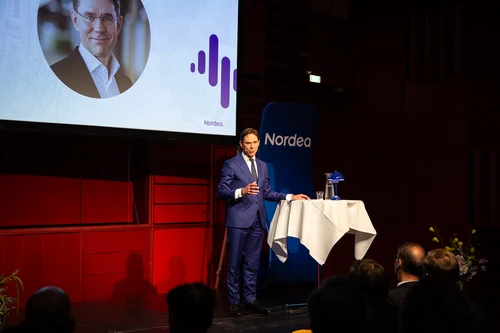
Insights
At Nordea’s upcoming AAA Seminar, two former EU Commissioners will explore what Europe must do to strengthen its financial sector.
Read more
Fraud
Fraud schemes are becoming more sophisticated. How well do you know the warning signs? Six practical questions about the threats facing businesses today. Test your knowledge and strengthen your defenses.
Read more
Corporate insights
The Supreme Court’s decision to overturn IEEPA tariffs marks a shift in US trade policy, moving from unpredictable emergency measures to a more structured, longer-term elevated tariff environment that will reshape global trade relationships.
Read more