Beklager...

Siden findes desværre ikke på dansk

Bliv på siden | Fortsæt til en relateret side på dansk

Ville Sointu, Chief Strategist and Senior Expert in Transaction Banking at Nordea, has been at the forefront of these developments, working with the European Central Bank on the digital euro project. Ahead of his presentation at Treasury 360° Nordic, we sat down with Sointu to explore the realities behind the hype and what corporate treasurers can expect from this emerging landscape.

His perspective is refreshingly pragmatic: while the technology is promising, the path forward is more evolutionary than revolutionary, with significant hurdles still to overcome.


Your presentation poses the fundamental question: evolution or revolution? Where do you stand on digital currencies?

Sointu: Spoiler alert – it's definitely evolution. Whenever people start talking about revolutions, they tend to overestimate the impact in the short term and underestimate it in the long term. You cannot revolutionize the financial system without taking into account what has already been done.

The digital currency space started from cryptocurrencies and Bitcoin, creating non-regulated networks for value transfer. Now it's approaching the financial system through relevant regulation and banking community interest. By definition, it's connected to what we have done in the past.

The Nordics are often seen as early adopters of digital financial services. What makes this region unique?

Sointu: We are in a unique position, almost counter-intuitively. Because we are already so digital when it comes to money and payments, some benefits of digital currencies are not automatically relevant in Nordic markets. We can already pay each other in real time with no problems using digital methods anywhere.

The value proposition of digital currencies historically has been to fill digitalization gaps in societies. Because these gaps are much smaller in the Nordics, the utility becomes a more nuanced conversation. We also have different currencies in each Nordic country – Finland has the euro while others have sovereign currencies, creating interesting FX considerations.

Can you walk us through the differences between digital euros, stablecoins and tokenized deposits?

Sointu: We can divide digital currencies into two categories: public money and private money. Public money is always a liability of the central bank. Private money sits on balance sheets of private institutions.

For European citizens today, if I want public money in my pocket, the only way is to withdraw physical cash from an ATM. Central bank digital currency projects are trying to solve this by creating a digital version of physical cash that works online.

Stablecoins are private money – liabilities of companies issuing them on public blockchains. Anyone with a computer and internet connection can connect to these blockchains. Originally, this filled a gap for cryptocurrency exchanges that couldn't get banking access.

Tokenized deposits are the bank version. Banks issue tokens against regular deposits that you can use on blockchain networks. The key difference is that tokenized deposits work on closed, permissioned networks where banks know each participant, ensuring compliance with anti-money laundering regulations.


We are in a unique position, almost counter-intuitively. Because we are already so digital when it comes to money and payments, some benefits of digital currencies are not automatically relevant in Nordic markets. 

Ville Sointu, Chief Strategist for Transaction Banking, Nordea Bank

Ville Sointu
 

From a corporate treasurer's perspective, which applications are generating genuine business interest?

Sointu: The question of use cases is elusive, especially with stablecoins. There's this notion that stablecoins can reduce transaction costs and enable cheaper cross-border payments.

That's technically true, but here's the reality: if I use a euro stablecoin issued in Europe and send it to someone in India, that person can do absolutely nothing with it there. They need to convert it to something usable through "off-ramping."

This creates FX transactions on both sides. You end up with extra conversion costs, plus the stablecoin transaction still needs compliance monitoring. You need to create conversion infrastructure individually for each market, and there's no universal standard for stablecoins. This infrastructure is largely missing today.

With tokenized deposits, compliance problems are largely solved because they're on permissioned networks. The challenge is scaling – every party worldwide needs to be onboarded to the same network, and these remain very regional.

What's your realistic timeline for widespread adoption?

Sointu: For central bank digital currencies in Europe, it's straightforward – we expect the digital euro by 2030, the ECB's communicated timeline. If the law passes this year, we'll start implementing it as a regulatory requirement.

For stablecoins and tokenized deposits, it's very early days. Ninety percent of stablecoin transactions are still cryptocurrency-related. Conventional practical use cases beyond cryptocurrency are essentially non-existent. I would be very surprised if we saw mainstream adoption before 2030 because of fragmentation and compliance questions.

What are the biggest hurdles for adoption in the Nordics?

Sointu: For central bank digital currencies, the main barrier is convincing people this is better than what we have today, especially in the Nordics. It doesn't solve particular day-to-day payment problems.

There are good political and strategic reasons – it's a public sector option and purely European solution. It provides interoperability benefits, like instantly paying someone in Greece using just their phone number. But the barrier is utility – the benefits are mostly political and strategic, which aren't automatically understandable by regular citizens.

For stablecoins, we have multiple barriers. Financial crime prevention on public blockchains isn't sufficient yet. Public blockchains have data protection issues and aren't really decentralised – they're governed by limited groups of people.

Any final thoughts?

Sointu: I use a casino analogy to explain digital currencies. When you enter a casino, you convert your bank money into casino chips. Inside the casino, everything works fantastically – transactions are fast, low-friction, everyone uses the same chips.

But when you leave and want coffee at a cafe across the street, they won't accept your casino chips. You need to convert back to real money. It's exactly the same with stablecoins and tokenized deposits – everything works great inside the "casino," but as soon as you step into real life, you face conversion questions.

The real question becomes: how big is your casino, how extensive is your contract network, and how much time do people want to spend inside your particular ecosystem?


About Ville Sointu

Ville Sointu is the Chief Strategist for Transaction Banking at Nordea Bank. During his 25-year career in financial services, he has contributed to a number of key industry and policy organisations, including the ECB, EBF, OECD and EBA. In his free time, he enjoys co-hosting the 'Fintech Daydreaming' podcast.

Digital banking
Insights
After reading this article, is your perception of Nordea?
Feet on stage

Events

What’s next for Nordic treasury management? Find out at Treasury 360°

Market volatility, technological disruption and evolving risk landscapes are reshaping treasury priorities. Join Nordea’s experts at Treasury 360° Nordic to learn how leading corporations are adapting their strategies.

Read more
Petteri Änkilä, Head of Large Corporates & Institutions, Nordea

Our people

Meet our people: Petteri Änkilä, Head of Large Corporates & Institutions

From childhood dreams of becoming a fighter pilot to leading one of Nordea’s four business areas, Petteri Änkilä’s journey reflects a willingness to embrace new challenges. In this interview, he shares his thoughts on customer focus, the road to 2030 and why trust-based relationships remain at the heart of corporate banking.

Read more
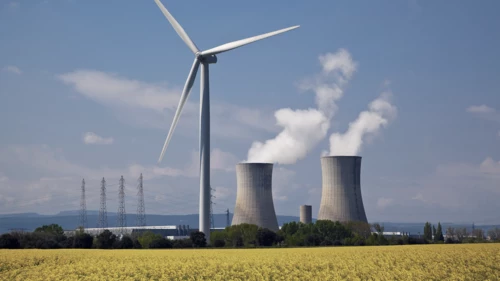
Nuclear power plant behind a windmill

Economy

Chief Economist's Corner: The Middle East war shapes EU's future energy policy

Energy prices have risen significantly, but diversified energy supply and lower energy consumption limit the risk of economic collapse. Nuclear power and renewable energy come into focus in the EU's future energy policy.

Read more