Beklager...

Siden findes desværre ikke på dansk

Bliv på siden | Fortsæt til en relateret side på dansk

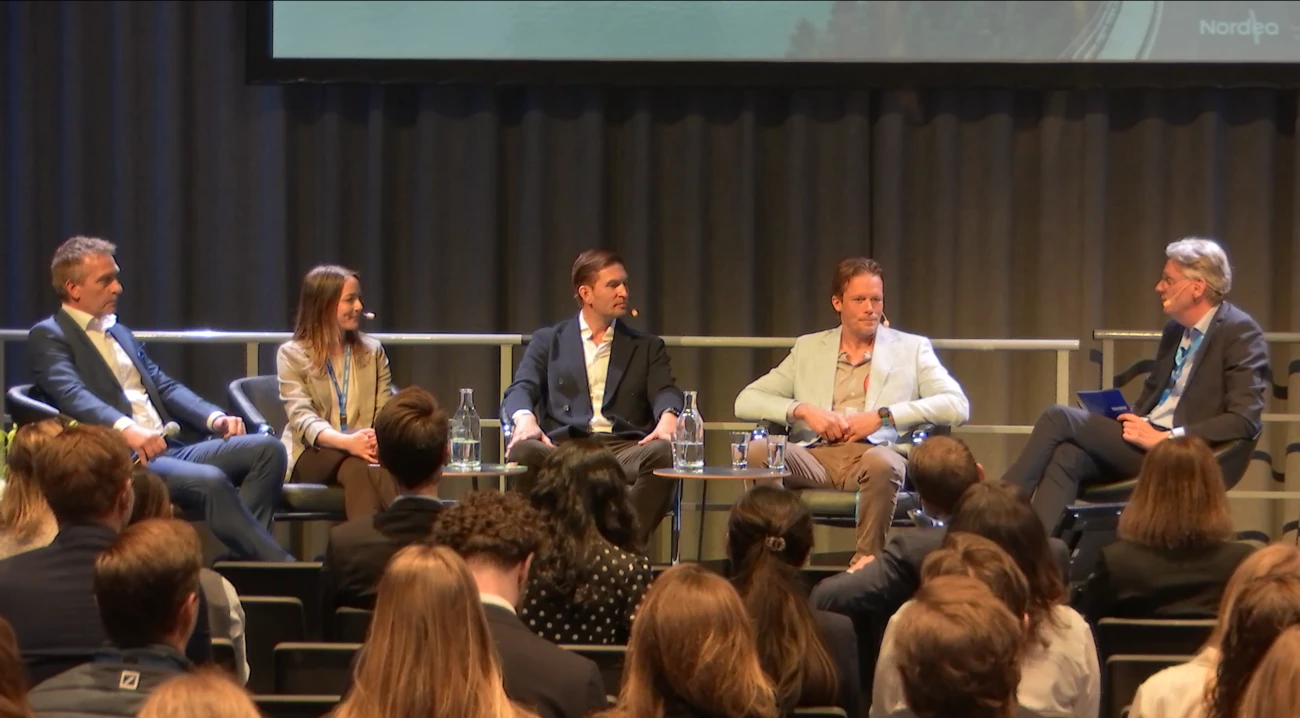
At a recent Treasury360 Nordic conference, Nordea's Johan Trocmé moderated a panel on FX risk management with treasury leaders from AB Volvo, Volvo Cars, Lantmännen, and Stockholm Exergi. The conversation revealed different approaches to FX risk management – and a shared sense that the world is anything but predictable.

No one-size-fits-all approach

The two Volvos on the panel illustrated the range of approaches. Volvo Cars hedges actively and over the long term. 

“We want to lower the volatility in EBIT from FX,” said Marcus Alfredson, Senior Dealer at Volvo Cars. He added that historically thin margins in the European automotive industry, as well as what competitors are doing, make hedging a strategic necessity.

By contrast, AB Volvo, which focuses on heavy-duty trucks, buses and construction equipment, has chosen not to hedge at all. 

“The main reason was to make everyone in the organisation that’s exposed to FX stay alert at all times, and not hide behind any old FX hedges, believing the market will correct itself and we would be able to sell our exposures at a better rate,” explained John Simonsson, Senior Dealer, Foreign Exchange at Volvo Treasury AB. The group’s financial strength and ability to reprice products in the market supports this stance.

For Lantmännen, the goal is margin protection and predictability: “If we set a fixed price list for a year, we want to protect that so that FX isn’t affecting it,” said Marie-Therese Bäcknäs, Front Office and Sustainable Finance Manager at the large agricultural cooperative. 

All companies are different, and the purpose of the hedging needs to be clearly determined.

Niklas Muhrbeck, Head of Treasury at Stockholm Exergi

Figuring out why before how

A recurring theme was the importance of defining the why before deciding the how. Niklas Muhrbeck of Stockholm Exergi offered an example. The company took an investment decision to build what it describes as one of the world's largest carbon capture facilities in central Stockholm, a EUR 1.2 billion project over four years, with the majority of costs in euros. "In order to take that decision, we and the board decided to completely hedge all FX exposures in this huge project," he said.

He also emphasised a broader principle: "All companies are different, and the purpose of the hedging needs to be clearly determined."

Hidden challenges

Organisational and operational hurdles came up repeatedly. At Lantmännen, the challenge is spreading FX awareness across a highly decentralised group. "Putting all of this information from small entities together into one big net exposure for treasury to handle, that's maybe the biggest challenge," said Bäcknäs.

Volvo Cars mentioned the cost of carry on long-dated hedges as a recurring internal debate. "We try to explain it's like you buy insurance for your car. Even if your car hasn't crashed in 10 years, it's hard to question why you had it. It’s a cost you need to have in order to reduce risk," said Alfredson.

Asked what it would take to shift strategy, the panellists were candid. John Simonsson from AB Volvo acknowledged past "double whammies" – order books vanishing overnight while currencies moved sharply – but saw no clear trigger for change. Muhrbeck pointed to a potential shift in Stockholm Exergi's debt currency mix, or even Swedish euro adoption, as structural game-changers.

The panel closed with near-unanimous agreement on one thing: a stable, low-volatility world is not something any of them are counting on.

Nordea's Johan Trocmé moderated a panel on FX risk management with treasury leaders from AB Volvo, Volvo Cars, Lantmännen, and Stockholm Exergi at Treasury360 Nordic. Photo: Treasury360
 
After reading this article, is your perception of Nordea? (Required)
* Required fields are shown with an asterisk.
Solar energy field and wind turbines seen from the air during sunrise

Sustainability

Turning climate ambition into action

As companies move towards a lower-carbon economy, many are asking what a climate transition plan looks like in practice. At Nordea, we support customers through dialogue, advice and financing solutions tailored to their needs.

Read more
Three people shaking hands in a warehouse

Trade finance

Strengthening supplier relationships with Supply Chain Financing - Nordic launch

A working capital solution from Nordea enables companies to support their suppliers with early payment of approved invoices, while improving liquidity, predictability and resilience across the supply chain.

Read more
Smiling woman using laptop

Payments

Navigating payment changes: ISO 20022 and address requirements in 2026

Nordic businesses have less than a year to prepare for payment system changes, including the end of unstructured addresses and ISO 20022 version upgrades. Early preparation is crucial for a seamless transition.

Read more