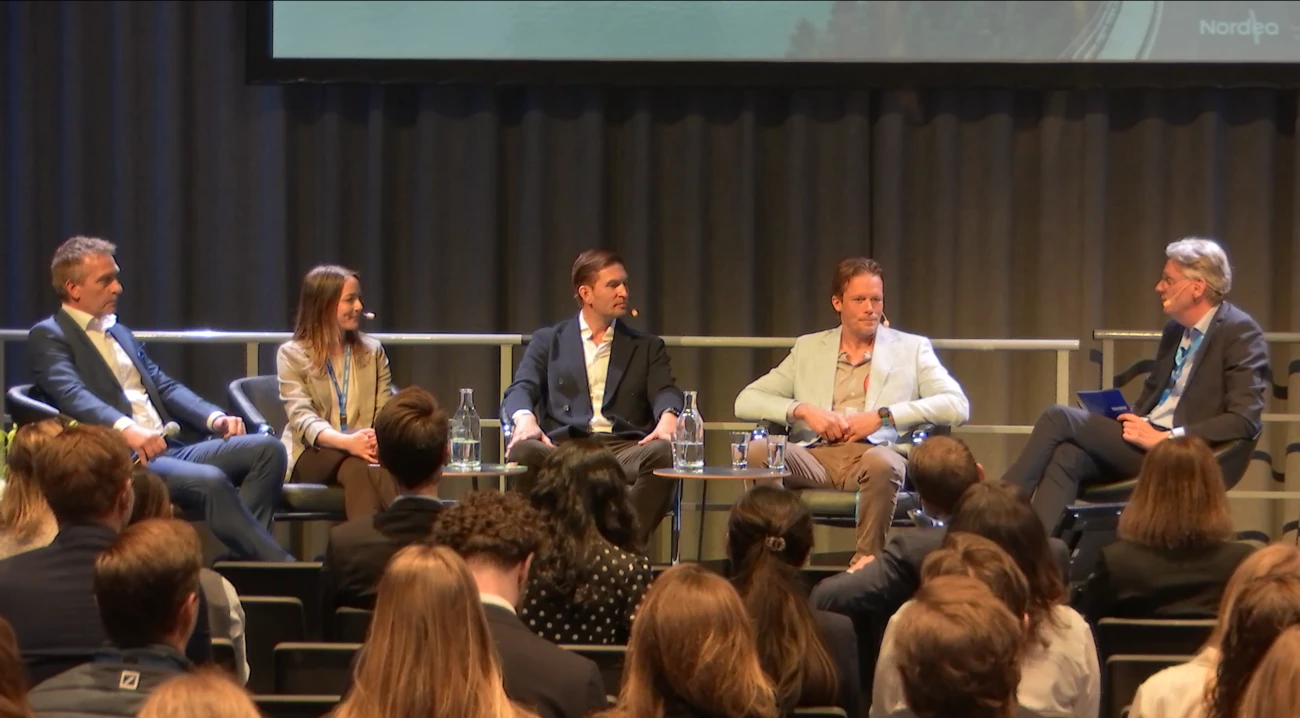
At a recent Treasury360 Nordic conference, Nordea's Johan Trocmé moderated a panel on FX risk management with treasury leaders from AB Volvo, Volvo Cars, Lantmännen, and Stockholm Exergi. The conversation revealed different approaches to FX risk management – and a shared sense that the world is anything but predictable.
No one-size-fits-all approach
The two Volvos on the panel illustrated the range of approaches. Volvo Cars hedges actively and over the long term.
“We want to lower the volatility in EBIT from FX,” said Marcus Alfredson, Senior Dealer at Volvo Cars. He added that historically thin margins in the European automotive industry, as well as what competitors are doing, make hedging a strategic necessity.
By contrast, AB Volvo, which focuses on heavy-duty trucks, buses and construction equipment, has chosen not to hedge at all.
“The main reason was to make everyone in the organisation that’s exposed to FX stay alert at all times, and not hide behind any old FX hedges, believing the market will correct itself and we would be able to sell our exposures at a better rate,” explained John Simonsson, Senior Dealer, Foreign Exchange at Volvo Treasury AB. The group’s financial strength and ability to reprice products in the market supports this stance.
For Lantmännen, the goal is margin protection and predictability: “If we set a fixed price list for a year, we want to protect that so that FX isn’t affecting it,” said Marie-Therese Bäcknäs, Front Office and Sustainable Finance Manager at the large agricultural cooperative.