
- Name:
- Marco Kisic
- Title:
- Head of ESG Research, Nordea Equities
Den här sidan finns tyvärr inte på svenska.
Stanna kvar på sidan | Gå till en relaterad sida på svenskaMarco Kisic
3 min to read
The strategic rationale for renewable energy and electrification has never been clearer for the EU, now that the second energy crisis in four years has reminded us of the value of energy self-sufficiency. The economic case is also stronger: higher gas and CO2 prices tilt the profitability in favour of system-integrated renewables compared to gas. We believe the conditions are in place to revamp the REPowerEU plan.
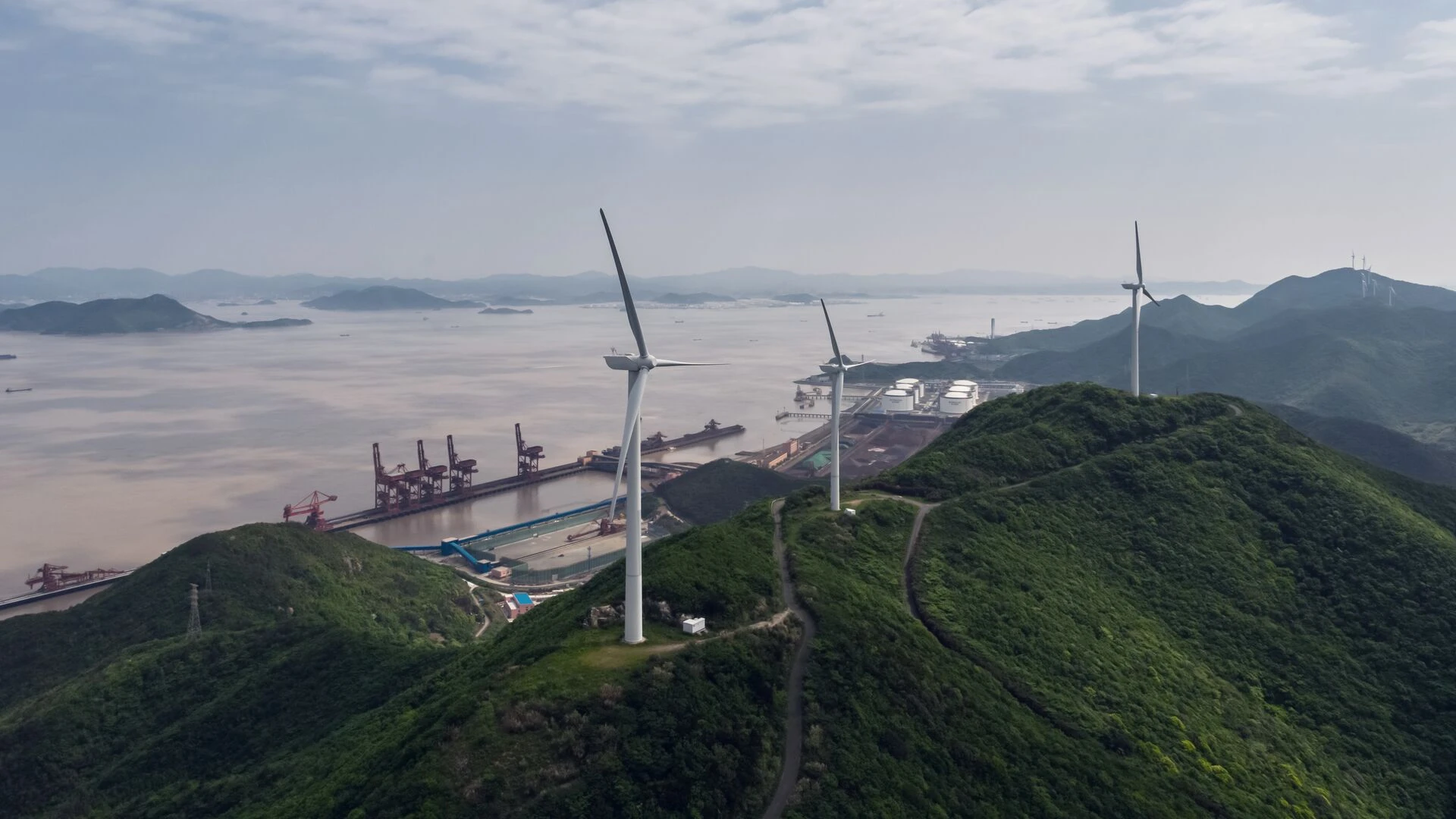
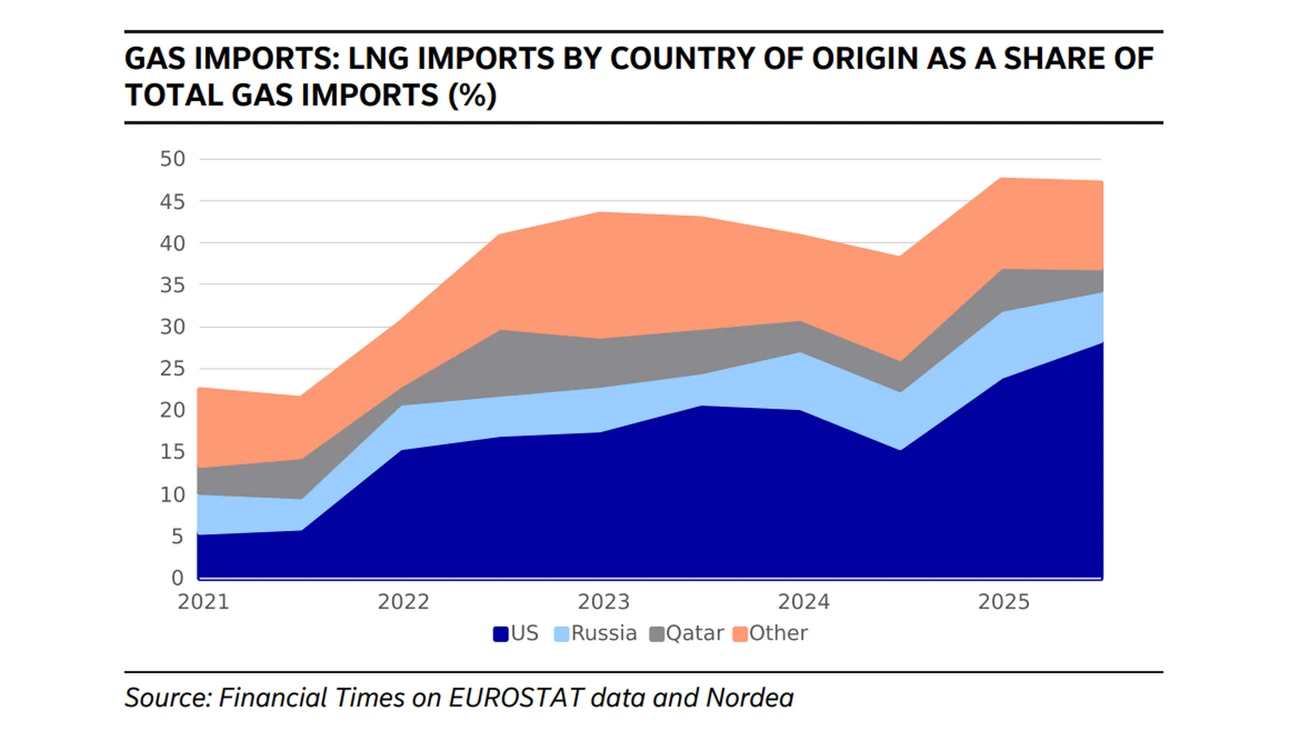
The war in the Middle East could help accelerate Europe’s shift towards low-carbon energy. Since 2022, the EU has swapped out its reliance on Russian gas for reliance on LNG, which will account for ~50% of the gas supply once Russian imports are fully phased out. The Middle East conflict has now exposed a reality that has been unspoken thus far: even globalised LNG is exposed to the risk of major disruptions. The narrative of the "third wave" of LNG depressing prices has turned out to be oversimplified. Rather, with the switch to LNG, the EU has locked in structurally higher prices.
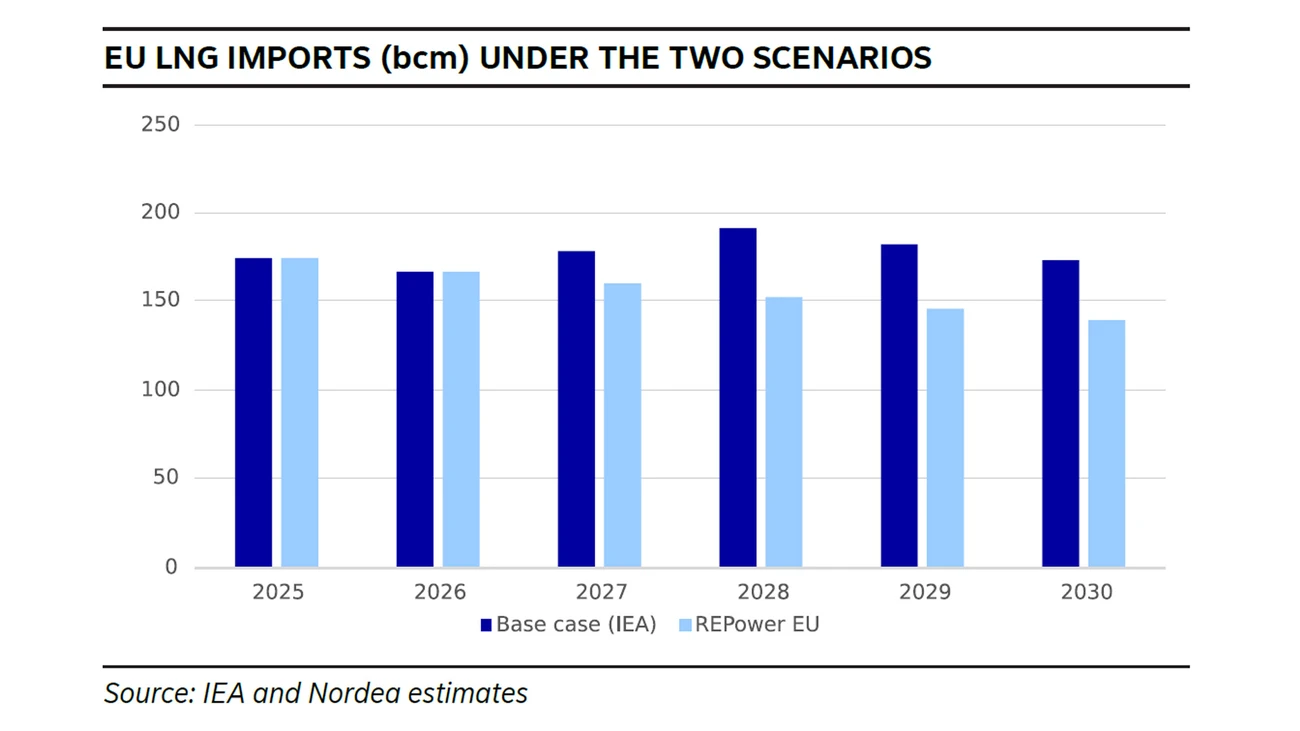
The strategic rationale to accelerate deployment of renewables and electrification has never been clearer in the EU. At present, the bloc is not on track to meet its 2030 REPowerEU targets, the post-Ukraine-war plan to boost renewables in Europe. We estimate that meeting the targets would reduce LNG imports by ~20% compared to the current trajectory, or 35bcm. However, this would require a ~20% increase in yearly renewables additions in 2026-30 compared to the IEA's forecasts.
The case for accelerating renewables is also economic. Higher EU carbon prices will inflate electricity prices in the coming years, discouraging electrification and reinforcing a negative feedback loop. This is already triggering heated discussions around the EU Emissions Trading System (ETS). Higher gas prices exacerbate this dynamic, but at the same time, improve the relative economics of renewables.
We estimate that at current gas and CO2 prices, new wind's levelised cost of electricity is EUR ~20/MWh cheaper than for existing gas, even after including wind's system integration costs. Should this energy crisis build in a volatility premium to gas prices, and if we assume higher CO2 prices, the economics of existing gas clearly turn unfavourable versus wind. At the system level, the penetration of renewables does not shift the marginal pricing mechanism progressively, but rather only when a critical mass is reached. The earlier the EU can reach that threshold, the faster the benefits of low-cost renewables can be transferred to society.
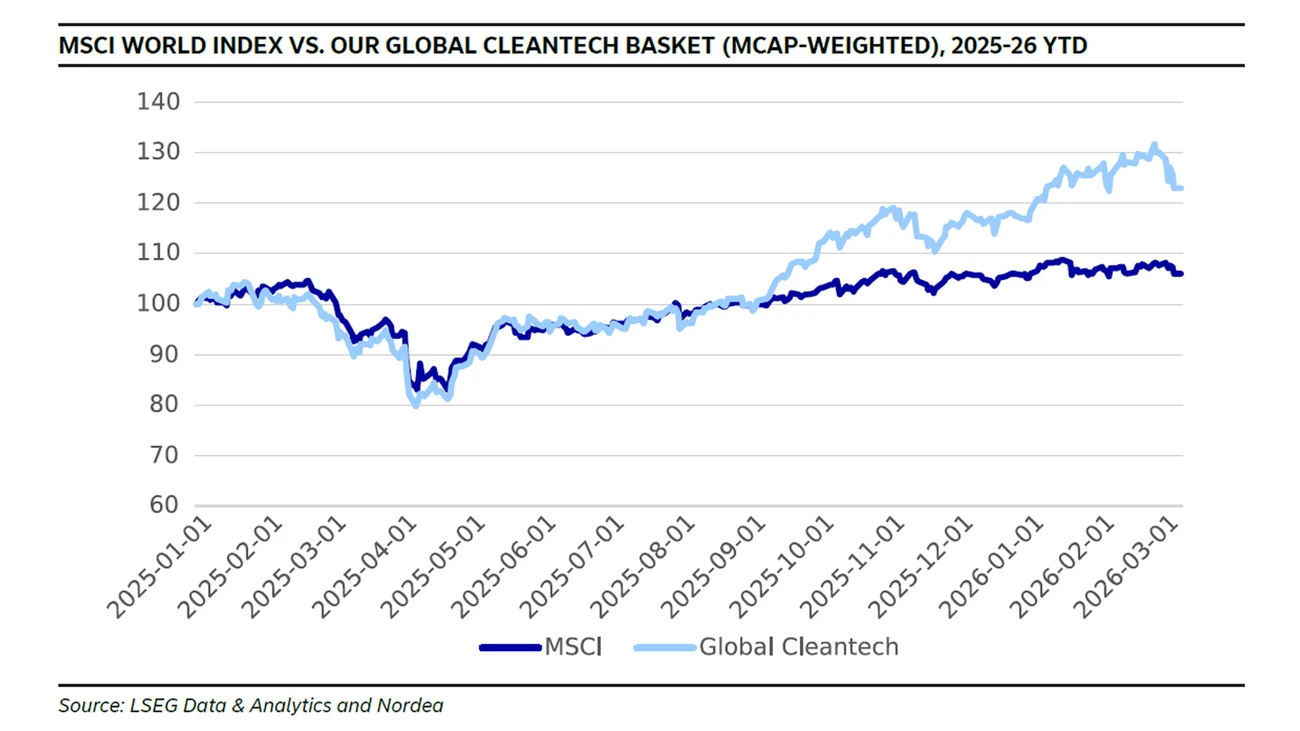
Over the past nine months, our basket of global cleantech stocks has performed stronger than it has done since 2021, and year-to-date it is up 17% versus the MSCI World Index. The war in Iran could create some near-term headwinds linked to inflation, but we view it as unlikely to derail the positive trend. The case for the energy transition, combined with the AI narrative and the Made in EU push, prompts us to remain bullish.

Register below for the latest insights from Nordea’s Sustainable Finance Advisory team direct to your mailbox.
Read more
Tech & AI
Over two days, Nordea colleagues working with payments and financial transactions turned AI curiosity into working solutions. The focus was clear: solve real daily challenges, not just explore cool tech.
Read more
Tech & AI
At the Microsoft AI tour in Stockholm in March 2026, thousands of attendees from a wide range of backgrounds connected with experts, explored tangible business applications, and learned how organisations are using AI to drive real impact.
Read more
FX
Ten years ago, Nordea built AutoFX with a large global corporate, driven by a simple vision: to help corporate treasuries automate daily FX tasks. Today, as we celebrate this milestone, we’re witnessing a shift in how companies approach treasury automation – moving from operational efficiency to strategic enablement.
Read more