Key takeaways:

  • Currency markets are fragmenting due to geopolitical tensions.
     
  • Trapped cash costs are mounting as local regulations make it more difficult to move funds cross-border.
     
  • Treasurers can adapt by investigating regulations early, repatriating cash aggressively and resegmenting currency exposure.
 

Geopolitical tensions are fundamentally reshaping global currency markets. As regional blocs harden and regulatory barriers increase, treasurers face a new reality: liquidity is becoming more complex, more costly and less mobile than at any time in recent decades.

These were the central themes explored by Richard Hayes, Chief Strategist for Transaction Banking at Nordea, and Jana Poulsenova, Head of Emerging Market Solutions, in a recent Treasury Trends webinar on the weaponisation of currencies and FX fragmentation.

The fragmentation of currency markets

For years, treasury operated on the assumption that global markets would become increasingly integrated and efficient. That assumption is now under pressure. 

"Regional blocks are hardening, regulation is becoming more localised, and cross-border flexibility cannot be taken for granted," Richard Hayes explained.

The data underscores the trend. Since 2020, the proportion of trade finance transactions denominated in US dollars has declined, while the Chinese renminbi (RMB) has captured growing market share. RMB trade settlements have surged along key corridors – Russia, ASEAN countries, and the Middle East – driven by geopolitical factors, bilateral agreements and energy contracts.

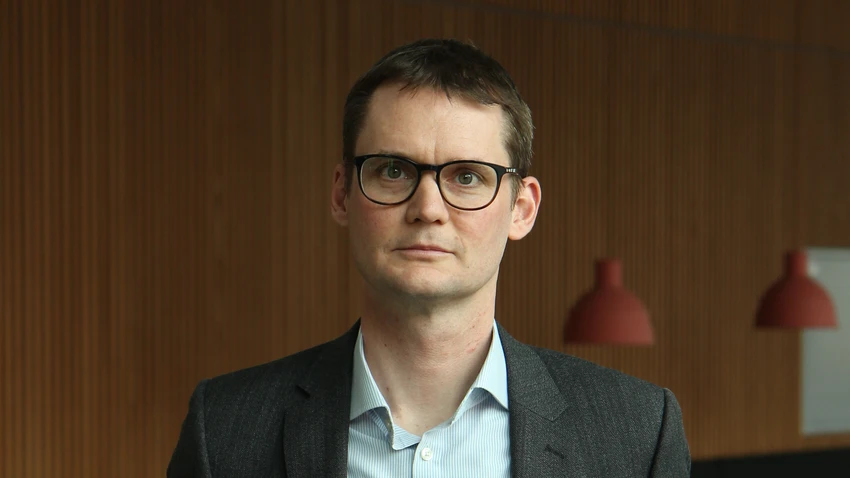
Regional blocks are hardening, regulation is becoming more localised, and cross-border flexibility cannot be taken for granted.

Chief Strategist for Transaction Banking, Nordea

Richard Hayes, Head of Trade Solutions Denmark

Why the dollar is losing ground

The shift away from the dollar isn't purely economic. The 2022 freezing of an estimated $300 billion in Russian foreign exchange reserves and SWIFT sanctions sent shockwaves through emerging markets. Countries like China, Brazil, and India, which did not join Western sanctions, began reassessing their dollar exposure.

"There's a push to avoid dollar banks or routing via the US," Jana Poulsenova noted. "Countries want to operate in their own currencies so they can follow their own monetary policy."

As a result, Nordic companies increasingly face requirements from Chinese counterparties to contract in RMB rather than dollars. "Counterparties are insisting on local currency settlements," she explained. 

The trapped cash problem

This fragmentation creates concrete operational challenges. Payment delays and rejections have become routine. Jana Poulsenova reports receiving "at least one or two questions per day" from clients struggling with settlement issues due to increased screening requirements, complex purpose codes and varying bank procedures.

With higher interest rates, the cost of holding idle cash in restricted markets has become more pronounced. "Treasurers and CFOs want visibility, but also accessibility. Sometimes they achieve visibility but not necessarily flexibility," she added.

Treasurers and CFOs want visibility, but also accessibility. Sometimes they achieve visibility but not necessarily flexibility.

Jana Poulsenova, Head of Emerging Market Solutions, Nordea Markets

Jana Poulsenova

Practical steps for treasurers

The webinar outlined several strategies for managing liquidity in this fragmented landscape:

Investigate currency and capital regulations thoroughly before entering markets, from both local and international perspectives. Repatriate idle cash aggressively. It's easier to send money to subsidiaries than to retrieve it. Accept that some repatriation processes will be manual, particularly for markets like India, China or Brazil.

Resegment currency exposure by understanding which currencies are fully liquid, which are manageable but volatile, and which carry trapped-cash risk. Enhance visibility and scenario planning to distinguish what is truly mobile from what is structurally constrained.

As Richard Hayes concluded: “Treasury cannot assume the same degree of mobility, liquidity and flexibility as before.” In a more fragmented world, treasurers need to be vigilant, be ready to adapt and rethink their assumptions about global liquidity.

Watch the webinar from 18 June 2026

 
Insights
Cash management
After reading this article, is your perception of Nordea? (Required)
* Required fields are shown with an asterisk.
Electric bus charging

Sector insights

The Nordic transition in commercial vehicles: Momentum builds, but adoption remains slow

The transition of Nordic commercial transport towards lower emissions is clearly underway, but it still lags passenger transport. Tightening regulation, low Nordic electricity prices and improving technology are pushing the sector toward electrification, despite significant investment requirements.

Read more
Paris cityscape with Eiffel Tower at sunset

Sustainability

‘Renovation wave’ kicks off – looking to France for clues

The deadline for national transposition of the EU’s Energy Performance of Buildings Directive (EPBD) has passed, and countries are now legally responsible for the regulation’s renovation targets. We have reviewed trends in France, the most notable EPBD early-adopter, to get clues about potential future impact.

Read more
Energy storage OX2

Insights

OX2: Combining wind and battery storage to strengthen the Nordic energy system

Nordea recently supported OX2 in securing project financing for two co-located battery energy storage systems with a combined capacity of 235 MW/470 MWh, integrated with the company's new onshore wind portfolio in Finland.

Read more