Economic growth was healthy in the first half of the year, but the outlook going forward is clearly weaker. Higher interest rates will continue to put pressure on consumers, and residential construction. Demand for exports has also deteriorated as global economic growth has slowed down.
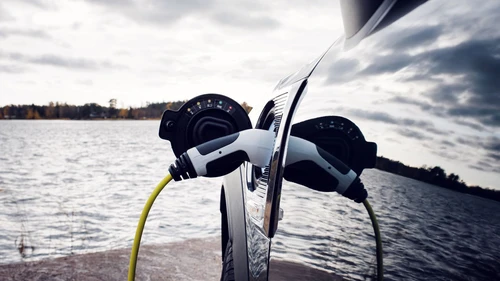
As part of the ambition to reduce greenhouse gas emissions, vehicle taxation has been significantly changed. This has led to a sharp rise in the fleet of electric cars, while the number of diesel cars has declined. Despite this increase, there is still a long way to go to fulfil the ambition of one million zero- and low-emission cars on Danish roads in 2030.
Get the Nordea Economic Outlook straight from our chief economist
Join us for the release of the Nordea Economic Outlook on 6 September. Register for the webinar with our chief economist for an inside look at Nordea’s latest forecasts.
The NOK has plunged over the past year. The usual NOK drivers, such as oil prices and stock market performance, explain little. The main factor is likely a clearly narrower interest rate differential between Norway and our biggest trading partners. Norges Bank’s NOK sales on behalf of the government has added to the weakening since the autumn.
The Norwegian economy has shown greater resilience to higher rates and inflation than expected. Household consumption and housing prices have held up and unemployment has remained record low. Real wage growth and higher activity in the oil sector help underpin a high activity level also going forward.
Nordea chief economist: Inflation more stubborn than expected
The global economy got off to a good start in 2023, driven by a sharp fall in energy prices, strong labour markets and the reopening of the Chinese economy. This doesn’t mean that growth prospects have improved significantly since the winter, though. Inflation is still high, and monetary policy must be tightened further.
The volume of money in the Swedish economy has increased much faster than in previous years. At the same time, inflation is higher than it has been for decades. The relationship between money supply and inflation has been questioned for a long time, but now it is seen in a new light.
Decrease in savings to boost consumption in Finland
Household purchasing power has weakened significantly over the past year. However, households have maintained their spending by tapping into their savings.
The Swedish economy is showing some resilience. Especially the labour market has been stable. But there are still major challenges. Not least, households are struggling with high inflation and increasing interest rates with reduced spending as a result.
The economy has surprised positively in the first months of the year, but the outlook for the rest of the year is clearly weaker. The rise in prices and interest rates will continue to put pressure on consumers, and lower housing demand will decrease the volume of construction.
After tough negotiations the labour market parties have managed to reach a new collective agreement for the private sector – calling off the risk of a long and costly conflict. Moreover, the agreement will likely make it possible for wage earners to regain lost purchasing power.
After a period at full steam, the Danish economy is preparing for a soft landing. Household spending has been limited by high inflation, and the construction industry especially is being affected by high interest rates.