
- Name:
- Helge J. Pedersen
- Title:
- Nordea Group Chief Economist
Denne siden findes ikke på norsk
Bli værende på denne siden | Fortsett til en lignende side på norsk4 min to read
The world, and not least Europe, is undergoing a historic rearmament. It will be expensive, but could lead to economic growth in the long term.
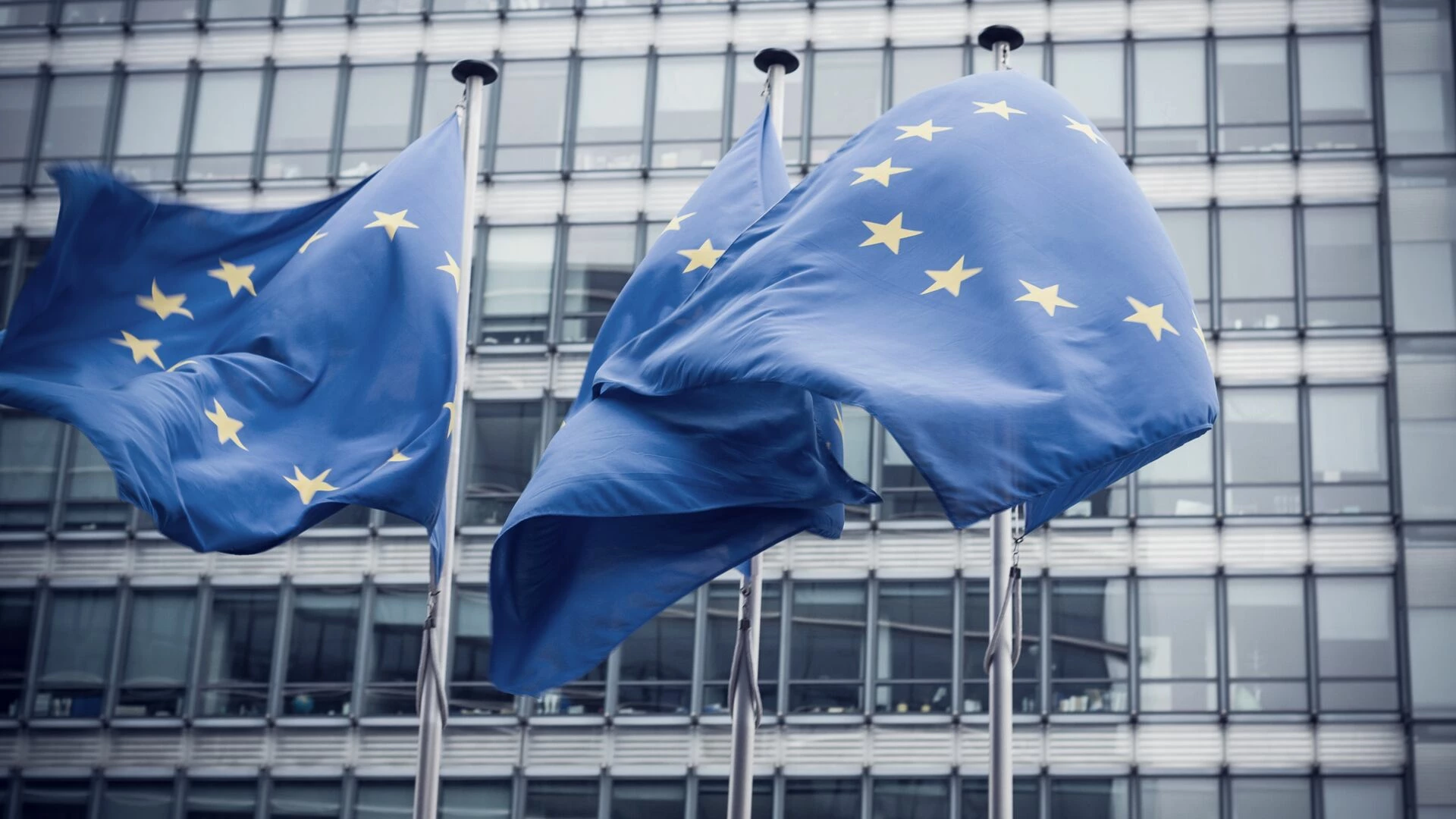
After decades of declining defense budgets, the world has now entered a new era of rearmament. The war in Ukraine, growing great power rivalry, and uncertainty about US security guarantees have sent defense spending markedly higher in Europe. And since the NATO summit in June 2025, ambitions have shifted further. The alliance has now set a goal that 5 percent of GDP should go to defense and security-related investments by 2035.
For many European countries, this will be the largest permanent expansion of public spending since the oil crises of the 1970s. For Denmark, it will mean defense-related expenditures of around 150 billion kroner annually. This is, even adjusted for inflation, more than double the levels we had become accustomed to spending on defense after the end of the Cold War over 35 years ago.
For many European countries, this will be the largest permanent expansion of public spending since the oil crises of the 1970s.
Historically, rising defense spending has functioned as classic fiscal stimulus. When the state hires more soldiers, buys weapons, builds barracks, or invests in cyber defense, it creates activity in industry and the labor market. The IMF estimates that the multiplier for defense spending averages close to 1. This means that each extra euro spent on defense raises GDP by approximately one euro in the short term, but the multiplier varies significantly from country to country. If the funds are to be used for personnel, maintenance, and expansion of military infrastructure, it has a different effect on the economy than if, for example, investments are to be made in ammunition, weapons systems, satellites, missiles, or fighter jets. When the latter is the case, there is typically a large import leakage in countries that do not have their own arms industry, such as Denmark and the Netherlands, while arms-producing countries like France, Germany, and Sweden conversely gain greater demand for their military equipment.
At the same time, rising defense spending differs from traditional public investments in that it rarely improves the economy's productivity directly. A new missile system does not necessarily increase the workforce's skills or companies' innovation capacity in the same way as investments in education, green technology, or infrastructure.
This is precisely why the IMF warns about the medium-term consequences. When defense spending rises rapidly, it typically happens through larger budget deficits. IMF analyses show that major rearmament periods on average worsen public deficits by 2.6 percent of GDP and increase public debt by around 7 percentage points over a few years. In the short term, the EU has now allowed debt-ridden countries to activate the so-called escape clause and debt-finance rising defense expenditures, but in the long run, many countries will be forced to either raise taxes or reduce other public spending.
Rising defense spending differs from traditional public investments in that it rarely improves the economy's productivity directly.
Denmark is in a relatively favorable position with surpluses in public finances, low debt, and low interest expenses. Therefore, Denmark has also been able to accelerate rearmament faster than many other NATO countries. But even at home, it will have great significance that the spending target has been raised from 2 percent to 5 percent of GDP. An extra percentage point of GDP corresponds to around 30 billion kroner annually. The change thus potentially entails additional expenditures of around 90 billion kroner per year compared to the previous NATO target. This corresponds to five to six new fully built super hospitals or more than a new Fehmarn Belt tunnel per year!
At the same time, there is a latent risk that rearmament leads to both higher inflation and higher interest rates. The IMF thus emphasizes that defense buildup typically pushes prices up temporarily, especially in economies with already high capacity utilization. And this is actually the case in present-day Europe, where labor markets are historically tight. This can lift wages and thus inflation further. If financing simultaneously takes place through larger budget deficits, bond markets may demand higher interest rates to finance the rising government debt. This can in turn hit corporate investments as well as the housing market and private consumption hard.
Nevertheless, Europe's rearmament can also become a catalyst for a new industrial policy and future growth. Many governments now want to strengthen European production of ammunition, AI, satellites, cyber defense, and advanced technologies. And historically, military research has often had significant civilian spillover effects. Thus, both the internet, GPS, and many other central technologies have emerged from the defense sector.
If investments are targeted at research and high technology, the development might even be utilised to further lift productivity and competitiveness in Europe. Something that the Draghi report highlighted as a necessary, but not sufficient, condition for Europe not to be completely overtaken by China and the USA in the long term.
Stay ahead of the curve with our expert economic insights and forecasts. Get the latest analysis on global and Nordic markets delivered straight to your inbox.
Read more
Sustainable banking
Head of Responsible Investments Eric Pedersen and ESG Director, Climate & Nature Renée Tengberg explains why engaging on methane emissions reductions matters from an investor perspective.
Read more
Economic Outlook
The war in the Middle East challenges the resilience of international and Danish economies, but the foundation for continued growth is quite solid.
Read more
Economic Outlook
The overall impact of the Middle East conflict on activity in the Norwegian economy is likely to be limited. Even so, the outlook is somewhat weaker than in previous forecasts because of higher, not lower, interest rates.
Read more