The euro area has room to surprise to the upside
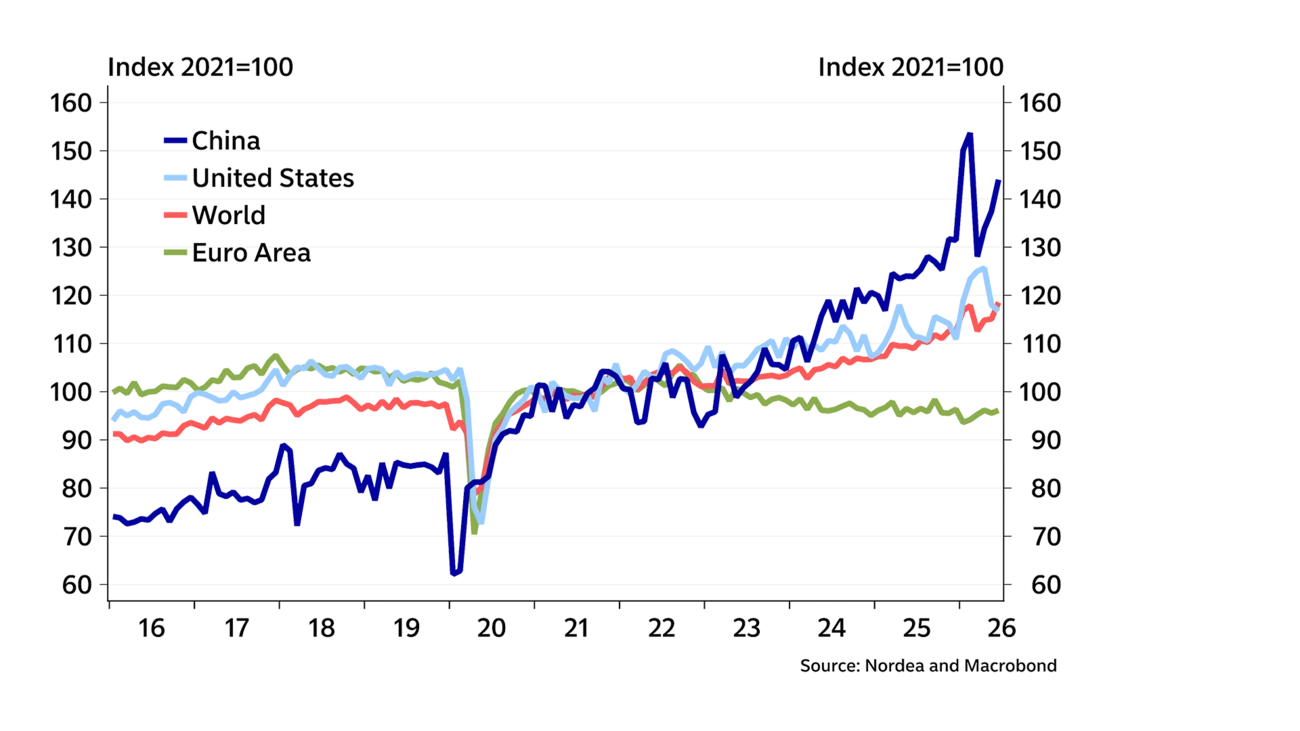
Growth in the euro area has remained positive, although economic performance has lagged that of the US and China for many years. Euro area households continue to be cautious and save a relatively large share of their income, while corporate investment remains subdued. The region is losing global market share, and the coming quarters are likely to be challenging given weak real income growth and its dependence on imported energy. Over a somewhat longer horizon, however, both households and businesses could begin to catch up with their international counterparts. We therefore remain optimistic that growth will stay above 1% in the coming years. To support real income growth and improve the long-term growth outlook, it is essential to pursue structural reforms that strengthen the single market and facilitate the adoption of new technologies. This would boost productivity growth and real incomes.
A series of rate hikes ahead
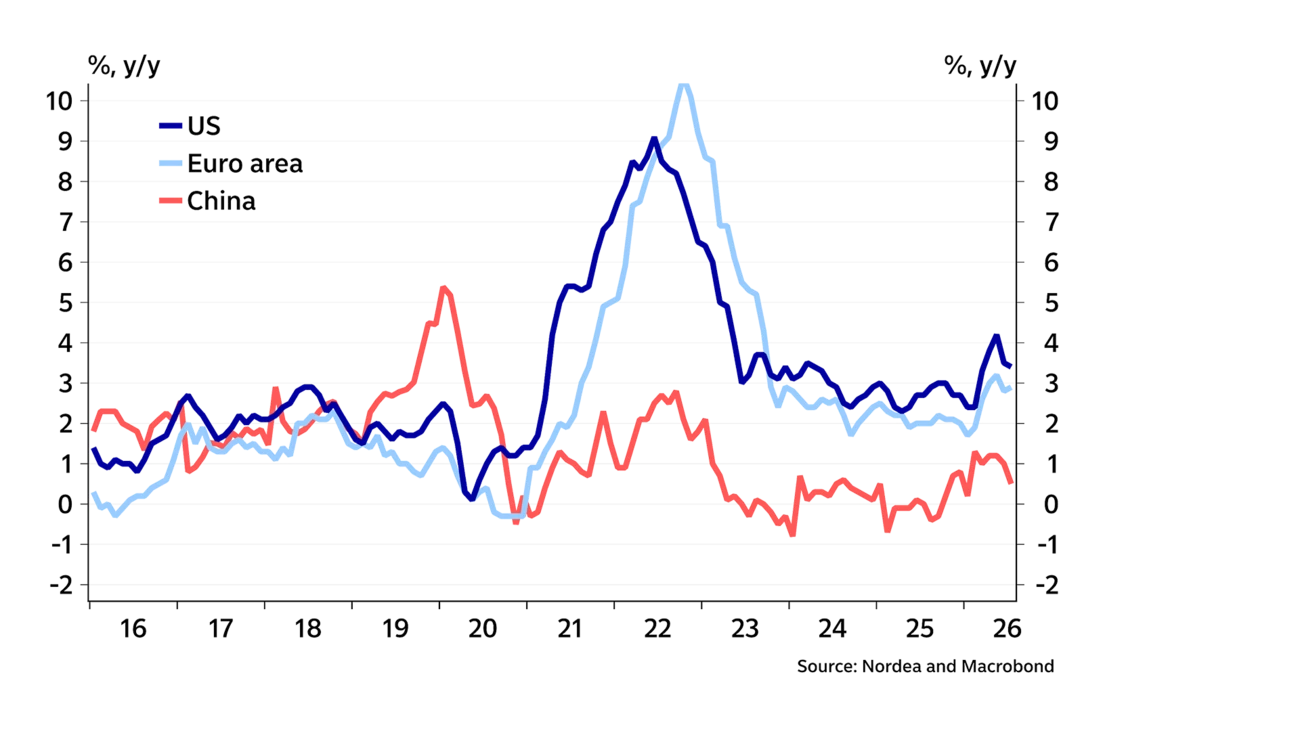
We expect to see a series of rate hikes from both the ECB and the Fed. The Fed has been on hold throughout this year, but we expect the strong domestic economy and inflation remaining above target to pressure the central bank to tighten policy again in the autumn. The ECB’s rate hikes, in turn, are prompted to a large extent by the upside price pressures created by higher energy prices, but we expect these pressures to broaden and keep the central bank on a hiking path for longer. We see three 25bp rate increases ahead from both the ECB and the Fed, though uncertainty around these forecasts remains elevated.
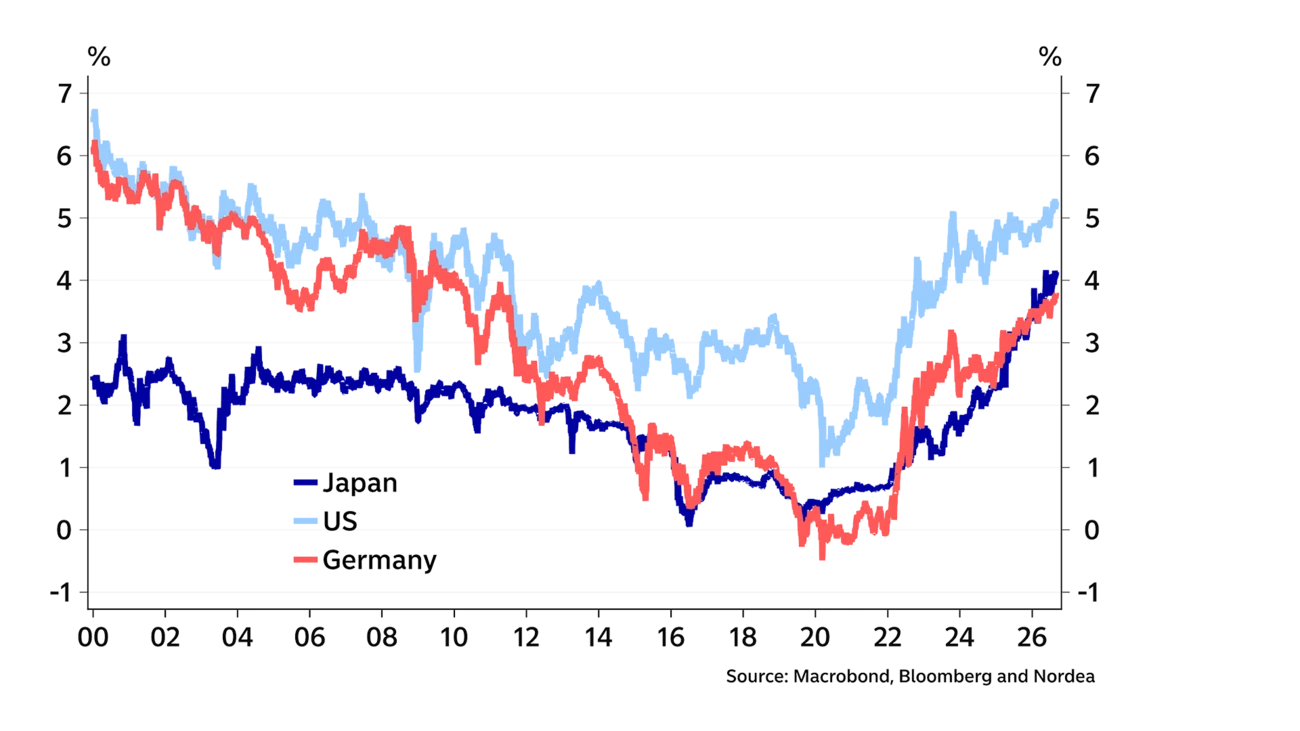
While interest rate expectations have fluctuated in recent months, longer bond yields have continued to grind higher. We have argued for quite some time that the term premia embedded in longer yields were too low, given the lower bond holdings of central banks and huge issuance volumes on the back of continued large public-sector deficits. Recent moves suggest the return of term premia is continuing, and we see further upside potential for longer yields.
So far, the moves have been orderly and done some of the work for central bankers seeking to tighten financial conditions. However, market dynamics could easily change, and yields might start to move more rapidly, which would worry central banks and governments while also hurting the economic outlook. The risks of major swings in interest rate markets therefore remain large.
A somewhat weaker USD path still ahead
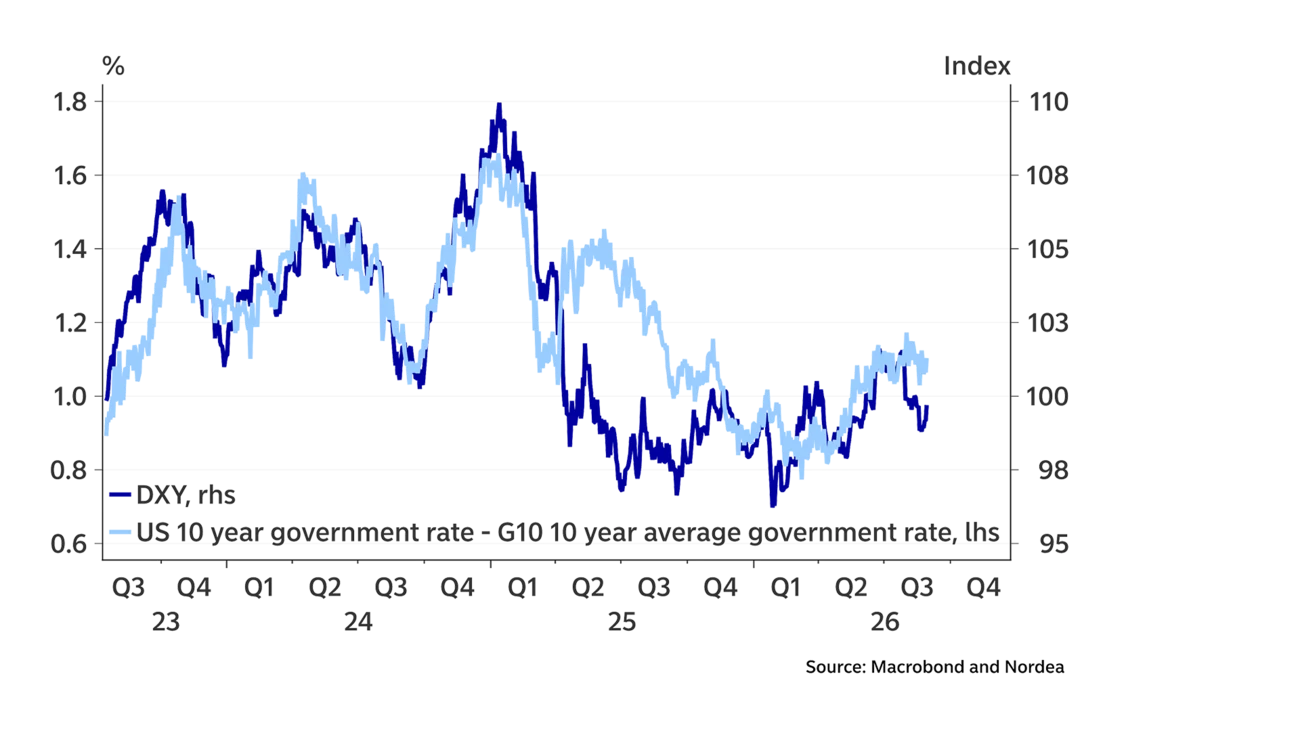
The dollar's 2025 struggles have not given way to a comeback, but rather to sideways trading, with even some marginal strengthening against certain currencies. It is up 1.0% on a trade-weighted basis and 0.9% versus the euro.
GDP GROWTH FORECAST (% Y/Y)
| Year | World New | World Old | US New | US Old | Euro area New | Euro area Old | China New | China Old |
|---|
| 2025 | 3.5 | 3.5 | 2.2 | 2.1 | 1.5 | 1.5 | 5.0 | 5.0 |
| 2026E | 3.1 | 3.1 | 2.2 | 2.3 | 1.0 | 1.0 | 4.5 | 4.5 |
| 2027E | 3.2 | 3.3 | 2.0 | 2.1 | 1.5 | 1.5 | 4.0 | 4.0 |
| 2028E | 3.2 | | 1.8 | | 1.5 | | 4.0 | |