Anteeksi...

Sivua ei ole saatavilla suomeksi

Pysy sivulla | Siirry aiheeseen liittyvälle suomenkieliselle sivulle

Key takeaways:

  • Global growth is boosted by new technologies and has been resilient despite geopolitical tensions and weak real income growth 
  • As long as the Strait of Hormuz remains closed, the risk of significantly higher energy and raw material costs exists   
  • Given the higher than targeted inflation, both the ECB and the Fed are expected to hike rates 
 

Global growth has remained resilient despite elevated geopolitical uncertainty and volatile energy prices. The new driver of growth is rapid technological development, which is boosting fixed asset investment, high-tech production, and global trade. In addition, favourable financial conditions and expansionary fiscal policies in many countries have mitigated the negative effects of higher inflation and interest rates on consumers. Near-term indicators point to continued robust growth.

We expect the positive effects of new technologies to persist throughout our forecast horizon, although, as we have seen before, this kind of transitory period may contain extra volatility. Over a longer horizon, the technological leap naturally raises questions about its broader effects on labour markets and society. 

In the near term, the main downside risk stems from geopolitical tensions in the Middle East. Even though the global economy has so far been flexible and weathered the impact of these disruptions, we cannot rule out the possibility that energy and commodity prices rebound in the event of a prolonged closure of the Strait of Hormuz. However, estimating tipping points in energy markets is extremely challenging. At present, oil inventories remain at a rather high level and oil futures, which are used in our baseline forecasts, continue to point to lower prices.

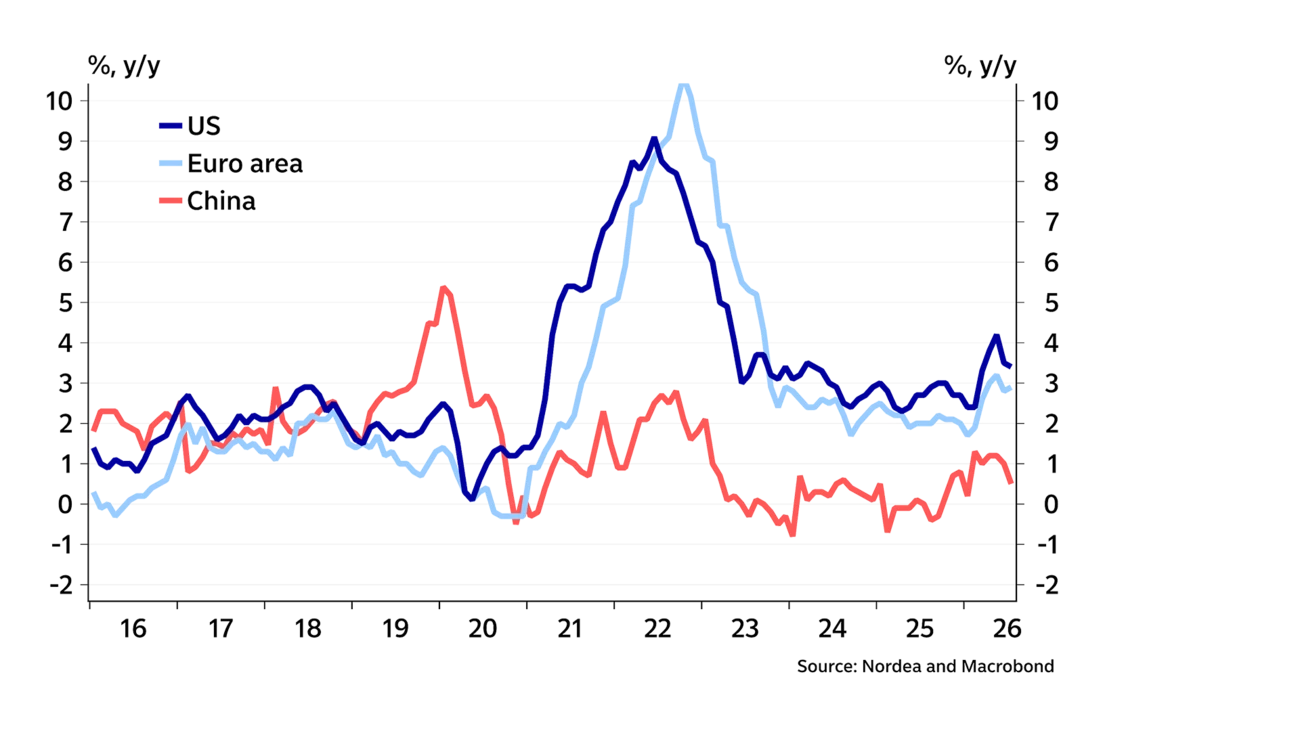
The rise in energy prices has already pushed inflation higher, and it is now above target in all major economies. So far, signs of second-round effects have remained limited. However, if robust growth and elevated cost pressures persist, we expect these effects to emerge and believe that both the ECB and the Fed will raise interest rates further.

3.2%

Expected global GDP growth in 2027

3.5%

Expected German 10-year yield at the end of 2027

83 USD

Expected oil price at the end of 2026

In the US, midterm elections are approaching

The direct economic impact of the midterm elections is likely to be limited. However, the indirect effects, including on peace negotiations in the Middle East, could be substantial if the Republican Party seeks to reduce inflation ahead of the election. So far, higher inflation has not significantly slowed consumption growth, as households have continued to lower their savings rate to compensate for sluggish real income growth. This trend has probably been supported by strong asset prices, which have also encouraged corporates’ fixed asset investment, putting new technologies in the driver's seat of economic growth. These developments also help explain the rapid productivity growth seen in the US economy.

China’s competitiveness remains very strong

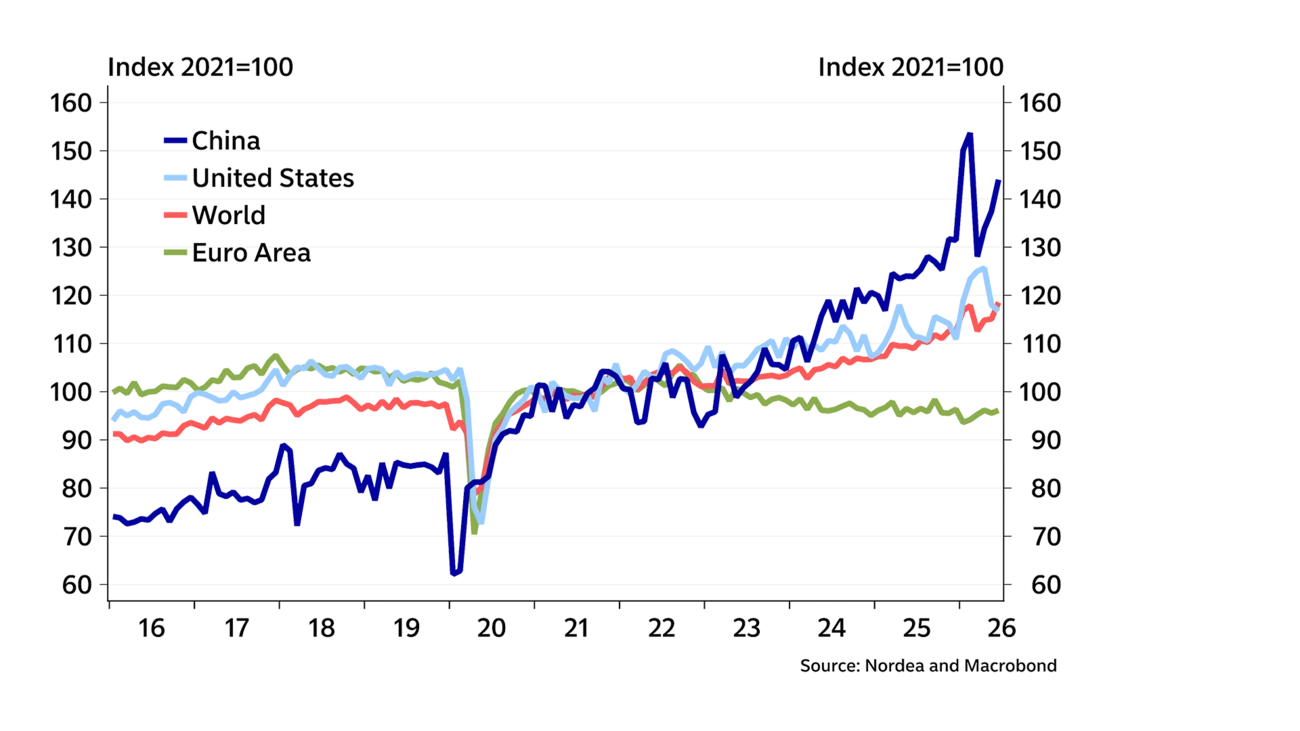
Sectoral differences remain pronounced in China. While exports continue to benefit from China's strong qualitative and quantitative competitiveness, domestic demand is growing only slowly. The labour market is probably much weaker than official statistics suggest and, together with the continued downturn in the housing sector, this has made consumers cautious and kept consumption growth weak relative to reported GDP growth.

The prevailing overcapacity in housing, infrastructure, and many manufacturing industries is keeping fixed asset investment growth in negative territory. As policymakers have not signalled a substantial increase in measures to support domestic demand, we expect the growth momentum to rely heavily on exports.

We remain optimistic that growth will stay above 1% in the coming years. 

The euro area has room to surprise to the upside

Growth in the euro area has remained positive, although economic performance has lagged that of the US and China for many years. Euro area households continue to be cautious and save a relatively large share of their income, while corporate investment remains subdued. The region is losing global market share, and the coming quarters are likely to be challenging given weak real income growth and its dependence on imported energy. Over a somewhat longer horizon, however, both households and businesses could begin to catch up with their international counterparts. We therefore remain optimistic that growth will stay above 1% in the coming years. To support real income growth and improve the long-term growth outlook, it is essential to pursue structural reforms that strengthen the single market and facilitate the adoption of new technologies. This would boost productivity growth and real incomes.

A series of rate hikes ahead

We expect to see a series of rate hikes from both the ECB and the Fed. The Fed has been on hold throughout this year, but we expect the strong domestic economy and inflation remaining above target to pressure the central bank to tighten policy again in the autumn. The ECB’s rate hikes, in turn, are prompted to a large extent by the upside price pressures created by higher energy prices, but we expect these pressures to broaden and keep the central bank on a hiking path for longer. We see three 25bp rate increases ahead from both the ECB and the Fed, though uncertainty around these forecasts remains elevated.

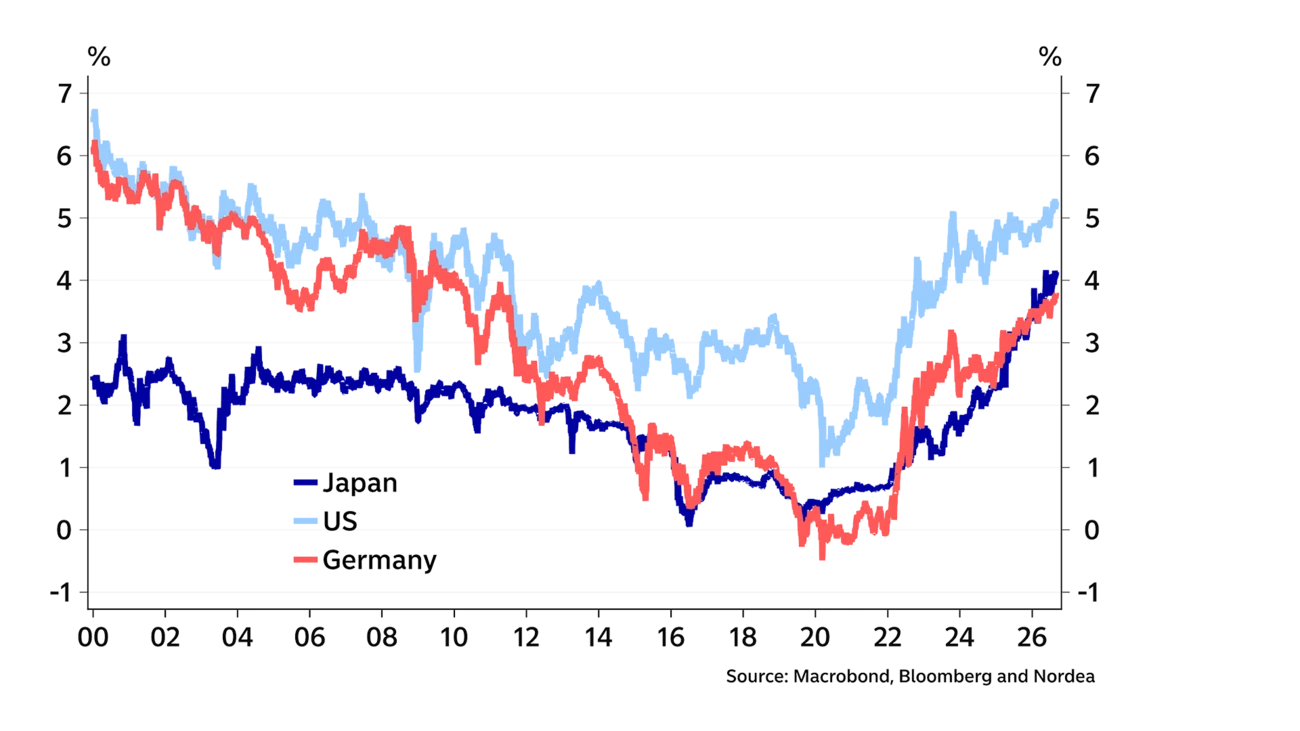
While interest rate expectations have fluctuated in recent months, longer bond yields have continued to grind higher. We have argued for quite some time that the term premia embedded in longer yields were too low, given the lower bond holdings of central banks and huge issuance volumes on the back of continued large public-sector deficits. Recent moves suggest the return of term premia is continuing, and we see further upside potential for longer yields. 

So far, the moves have been orderly and done some of the work for central bankers seeking to tighten financial conditions. However, market dynamics could easily change, and yields might start to move more rapidly, which would worry central banks and governments while also hurting the economic outlook. The risks of major swings in interest rate markets therefore remain large.

A somewhat weaker USD path still ahead

The dollar's 2025 struggles have not given way to a comeback, but rather to sideways trading, with even some marginal strengthening against certain currencies. It is up 1.0% on a trade-weighted basis and 0.9% versus the euro.

GDP GROWTH FORECAST (% Y/Y)

YearWorld NewWorld OldUS NewUS OldEuro area NewEuro area OldChina NewChina Old
20253.53.52.22.11.51.55.05.0
2026E3.13.12.22.31.01.04.54.5
2027E3.23.32.02.11.51.54.04.0
2028E3.2 1.8 1.5 4.0 

A / China continues to gain market share

Export volumes, 2021=100

A / World trade is growing but the euro area is losing its market share.

B / Higher energy prices have increased inflation

Consumer price inflation in the US, the euro area and China (%)

B / High energy prices are the main reason for the recent rise in inflation. As a result, future inflation trends contain a lot of uncertainty.

FOREIGN EXCHANGE RATES, MONETARY POLICY RATES AND BOND YIELDS, END OF PERIOD

YearEUR/USDEUR/NOKEUR/SEKECB: Deposit rate

Fed: Fed funds
target rate

(upper end)

US: 10Y
benchmark
yield
Germany: 10Y
benchmark yield
20251.1711.8310.822.003.754.153.20
2026E1.1611.0011.002.754.254.603.40
2027E1.2010.7510.803.004.505.003.50
2028E1.2310.7510.702.504.005.003.40

C / Longer yields headed higher globally again

30-year government benchmark bond yields

C / Longer bond yields have risen globally to multi-year highs.

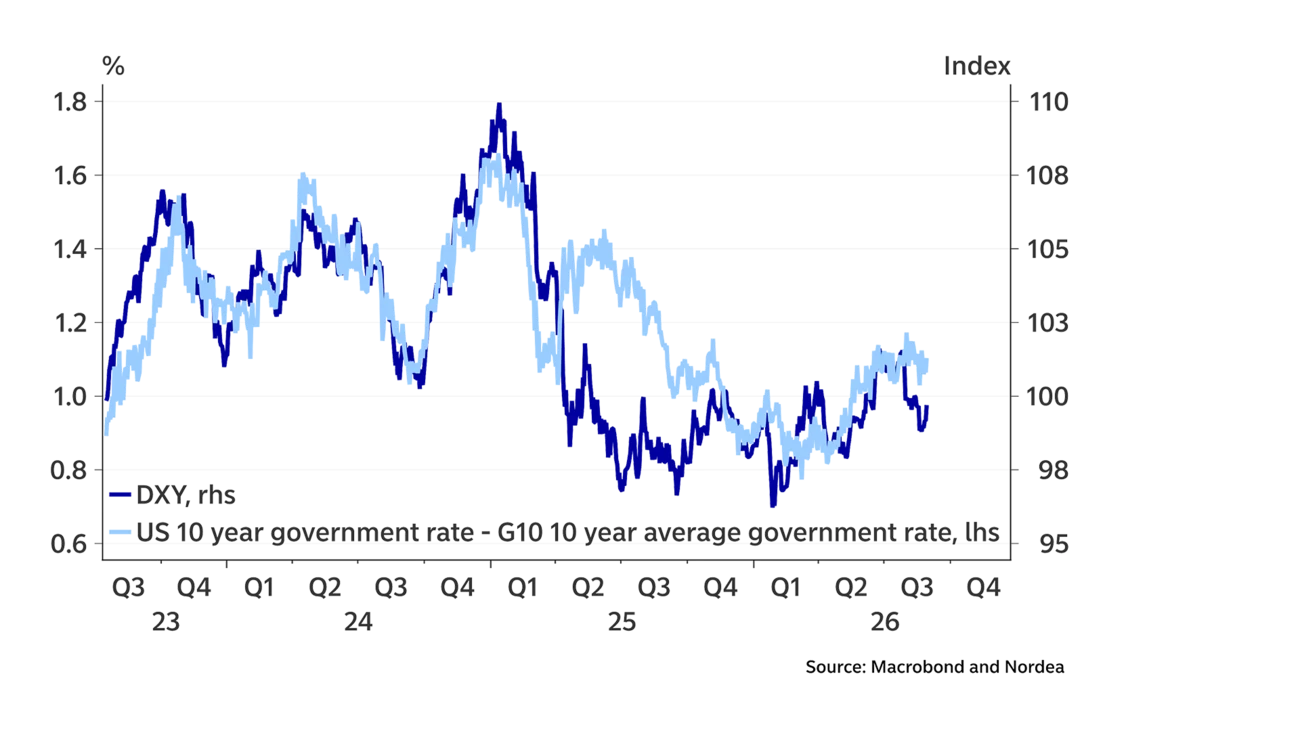
D / Interest rates and the dollar have converged again

Dollar index vs. interest rate differentials

Recently, though, the dollar has been trading lower as tier-1 US data releases have underwhelmed since early July, coming in broadly below expectations and prompting markets to scale back rate hike pricing. A rebound in US activity data could easily revive expectations of Fed tightening, providing renewed support for the dollar in the near term and some counterweight to our longer-term dollar-bearish stance. 

However, we maintain our view that the dollar is likely to weaken next year. Doubts about the US as an investment destination at a time of elevated US asset valuations and heightened policy uncertainty as well as rising fiscal and term-premium concerns could dent the support coming from a relatively resilient US economy.

We expect EUR/USD to hold steady around 1.16 by year-end. While the net change from current levels is minimal, the path is likely to be volatile rather than flat, with bumps along the way, especially with less forward guidance now coming from Kevin Warsh's Fed and the potential for fresh surprises from November's midterm elections. Looking further ahead, we project a prolonged dollar depreciation later in our forecast horizon, pulling EUR/USD up above 1.20 in the coming years.

There are several risks to this negative dollar view, particularly if Middle East tensions persist and keep energy prices elevated for longer. The situation remains unresolved, and could affect exchange rates via a terms-of-trade shock that favours the USD over the EUR, since the euro area is a net energy importer while the US is a net exporter. Additionally, any deterioration in risk appetite would likely drive safe-haven flows into the dollar. Also, continued outperformance of the US economy could keep the dollar stronger than we assume in our baseline path. 

Authors

Name:
Tuuli Koivu
Title:
Nordea Chief Economist, Finland
Name:
Samir Barki
Title:
Nordea FX Strategist
Name:
Jan von Gerich
Title:
Nordea Chief Analyst
After reading this article, is your perception of Nordea? (Required)
* Required fields are shown with an asterisk.
Graf som viser indeks på en tablet

Markets and investment

FX risk management: How Sweden’s large corporates are responding

With currency risk showing no signs of easing, Sweden’s largest corporates are taking markedly different paths to managing FX risk, from full hedging to no hedging at all. Four treasury leaders share how they think about the challenge.

Read more
Solar energy field and wind turbines seen from the air during sunrise

Sustainability

Turning climate ambition into action

As companies move towards a lower-carbon economy, many are asking what a climate transition plan looks like in practice. At Nordea, we support customers through dialogue, advice and financing solutions tailored to their needs.

Read more
Three people shaking hands in a warehouse

Trade finance

Strengthening supplier relationships with Supply Chain Financing - Nordic launch

A working capital solution from Nordea enables companies to support their suppliers with early payment of approved invoices, while improving liquidity, predictability and resilience across the supply chain.

Read more