Beklager...

Siden findes desværre ikke på dansk

Bliv på siden | Fortsæt til en relateret side på dansk

As regulatory pressure increases and global supply chains become more exposed to disruption, sustainability and procurement are no longer evolving on separate tracks. They are beginning to converge.

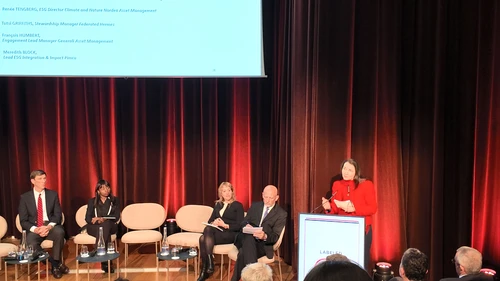
This convergence was a key theme at a recent roundtable that brought together procurement, sustainability and risk management professionals in Oslo, Norway. Rather than presenting fixed answers or best practices, the discussion explored how roles are shifting and why procurement has become a critical interface for managing sustainability risks and translating climate ambition into practice.

This isn’t because procurement has already transformed, but because many of today’s most material sustainability challenges accumulate precisely there.

Regulation as a strategic tool

Rather than treating regulation purely as a compliance burden, the discussion highlighted its potential as a strategic enabler.

Frameworks such as CSRD (Corporate Sustainability Reporting Directive) and VSME (Voluntary Sustainability Reporting Standard for SMEs) force companies to systematically map their value chains, identify material topics and focus their efforts strategically. Used well, this can support better internal decision-making and clearer dialogue with customers, financiers and regulators.

In this context, sustainability reporting is evolving into a tool for understanding risk exposure and opportunities, not just documenting performance.

From cost and availability to governance and risk

A recurring theme in the discussion was how procurement is gradually moving beyond its traditional remit. Several panelists highlighted that the strongest overlap between procurement and sustainability today is not in reporting, but in governance and risk management.

Sustainability was repeatedly framed as a way of understanding long-term risk, including climate risk, regulatory exposure and supply disruption, rather than as a purely reputational or compliance topic.

For many companies, this shift is logical. The majority of their climate footprint, and a significant share of ESG risk, typically sits in the supply chain, outside a company’s own operations. Understanding those dependencies, and how they shape risk exposure as well as business opportunities, requires closer integration between sustainability expertise and procurement decisions.
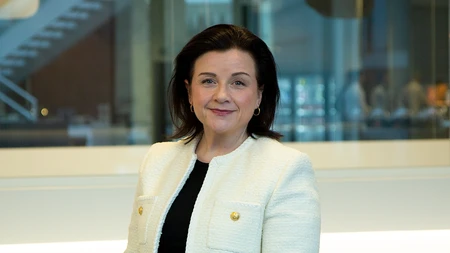
Several panelists highlighted that the strongest overlap between procurement and sustainability today is not in reporting, but in governance and risk management.

Resilience: no single definition, but a clearer direction

Resilience featured prominently in the discussion, though often with an important qualifier: there is no single, universal definition.

What emerged instead was a shared sense of direction. Resilient supply chains are increasingly associated with:

  • transparency beyond tier 1 suppliers,
     
  • structured governance of ESG risks,
     
  • and the ability to manage interdependencies over time.

Panellists did not suggest that resilience always aligns neatly with short-term cost optimisation. Several highlighted a tension between decisions that look beneficial in the near term and those that strengthen the business over a longer horizon.

From this perspective, sustainability becomes closely linked to how risk is priced and managed, rather than something added on top of core business considerations.

From Scope 3 accounting to value-chain action

Much of the conversation centred on Scope 3 emissions, which for many companies represent the largest share of their climate footprint. These emissions are increasingly included in corporate climate targets and transition plans.

While Scope 3 has historically been treated primarily as an accounting challenge, the discussion pointed to a gradual evolution toward action within the value chain. This includes growing interest in insetting—channelling capital and support into suppliers to reduce emissions where they actually occur, and where companies can credibly claim progress against their own climate targets.

Recent developments, including a white paper issued by the GHG Protocol, were cited as potentially important steps in this direction. While still early, they signal a shift toward recognising real-world emission reductions even where attribution, and claiming, is shared across the value chain.

For many companies, particularly those with limited remaining Scope 1 and 2 abatement options, directing capital toward supply-chain decarbonisation may also represent a more cost-efficient path to positive climate impact. For hard-to-abate sectors such as transport, steel and cement, this could be critical, both for enabling meaningful decarbonisation and for creating viable demand for low-carbon products at scale.

Quotes from the panel

“Sustainability is increasingly about pricing long-term risk, not just reporting emissions.”

“Resilient supply chains are less about redundancy and more about transparency, governance and trust.”

“AI won’t fix sustainability challenges on its own. It depends on the quality of underlying data.”

“Procurement may not yet be the sustainability control tower, but it is becoming a critical interface where strategy meets execution.”

Data, AI and the move beyond proxies

The changing role of data was another prominent theme.

Across frameworks, such as CSRD, CBAM (Carbon Border Adjustment Mechanism), packaging regulation and digital product passports, sustainability regulation is moving rapidly from high-level reporting toward product- and material-level information.

Panellists emphasised that while AI will play an important enabling role, it is not a shortcut. AI’s value depends on the availability of high-quality, granular data.

There was broad agreement that companies are slowly beginning to rely less on coarse proxy and spend-based estimates and more on supplier-specific, activity-based data. This does not eliminate uncertainty, but it improves decision-making, and strengthens the use of sustainability information as a strategic input rather than a reporting exercise.

Procurement as an emerging hub

The panel stopped short of suggesting that procurement has already become the sustainability control centre in most organisations. Capabilities and maturity still vary widely. What emerged instead was a logical direction of travel.

As sustainability risks become more financially relevant and regulatory expectations push companies to better understand their value chains, procurement is increasingly positioned as a place where sustainability risk management and the execution of sustainability strategy and climate targets begin to come together.

This evolution is still unfolding and will require collaboration across functions and, in some cases, “coopetition” - collaboration between competitors, as solving value-chain challenges in isolation is unlikely to be efficient or effective.

Looking ahead

Sustainability, resilience and procurement are converging by necessity.

In an environment of increasing regulatory pressure and global volatility, companies that invest in understanding, and governing their value chains are likely to be better prepared for the future.

Procurement may not yet be the hub where sustainability risk management and climate strategy execution fully converge, but the direction is becoming clearer.

At Nordea, we work closely with customers to understand how sustainability risks and value-chain dependencies affect their business, and to support the development and financing of credible transition pathways.

Key takeaways

  • Sustainability and procurement are converging primarily around governance and risk management.
     
  • Resilience is increasingly linked to transparency and structured value-chain oversight, rather than short-term efficiency.
     
  • Scope 3 discussions are shifting from accounting toward value-chain action, including growing interest in insetting.
     
  • Regulatory frameworks such as CSRD, CBAM, ESPR (DPP), R2RD and PPWR are pushing sustainability from corporate-level statements to product-level decisions.
     
  • Better data, not perfect data, is essential for using sustainability insights as decision support.
     
  • Procurement is emerging as a potential hub for executing sustainability strategy and climate targets across the value chain.

Author

Name:
Marianne Bruvoll
Title:
Senior Sustainability Business Analyst
 
After reading this article, is your perception of Nordea? (Required)
* Required fields are shown with an asterisk.
Renee Tengberg at G7 meeting

Sustainable banking

Nordea's methane engagement: pushing energy companies to achieve near-zero methane emissions

Head of Responsible Investments Eric Pedersen and ESG Director, Climate & Nature Renée Tengberg explain why engaging on methane emissions reductions is important from an investor perspective.

Read more
Sea against clear blue sky

Sustainability

Nordea updates guidelines for four key sectors

The four ESG sector guidelines address areas that are critical for European security and resilience.

Read more
Woman trail running near the ocean

Sustainable transition

Nordea makes strong progress towards 2030 climate target with 44% reduction of financed emissions in lending portfolio

Nordea continues to make progress in delivering on our climate commitments and supporting our customers with their transitions. With a 44% reduction in financed emissions across the lending portfolio and EUR 235bn facilitated sustainable financing, we have exceeded our target for 2025 and are on track to meet our 2030 targets.

Read more