When does the dollar story turn?
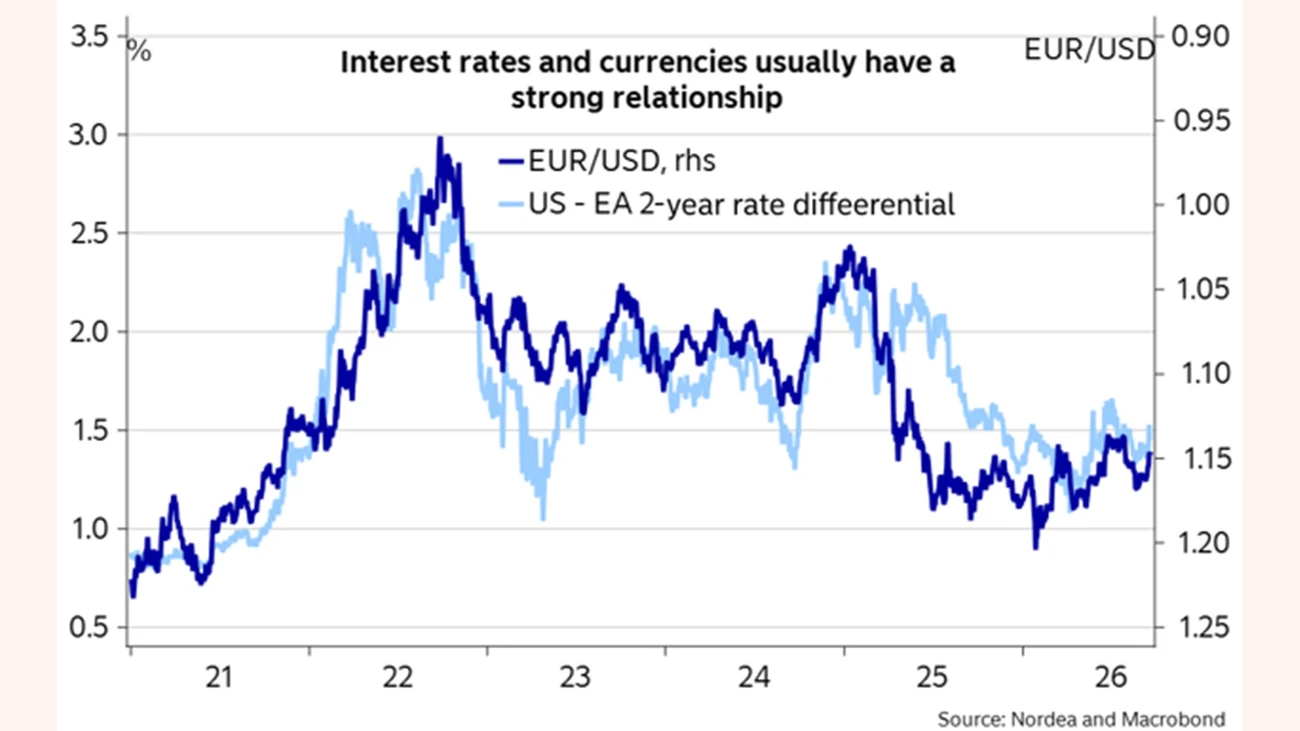
The near-term case for dollar strength is solid, but structural headwinds are building. US public debt is a growing concern, and international portfolios are heavily weighted toward US assets, leaving less room for further valuation-driven inflows.
For now, there is no clear catalyst for a reversal. Growth is holding up, earnings have not disappointed, and AI-driven capital expenditure continues at scale. But the dollar-bullish picture could shift in H2 2027, as US inflation comes off the boil and servicing US debt becomes a priority. The AI boom could also slow later in 2027 or 2028 as leverage builds and the cost of capital rises. In that scenario, falling US rates and diminishing stock market appeal could bring debasement fears and de-dollarisation back to the fore.
The euro area faces its own challenges: geopolitical and trade risks, a lag in AI and critical technologies, and limited progress on deeper fiscal integration. We expect one further ECB rate hike in December and another in Q1 2027, though we see downside risks to that call relative to current market pricing if second-round inflation effects fail to materialise.
NOK: Headwinds building
We expect EUR/NOK to rise to around 11.00 by year-end, pointing to some near-term krone weakness. Three factors are at play:
Oil prices: The positive link between rising oil prices and a stronger krone is becoming less straightforward. Further increases could stoke global inflation fears, push bond yields higher and trigger asset rebalancing that involves krone selling.
Norges Bank flows: The central bank has shifted from net buyer to net seller of NOK, consistent with EUR/NOK moving toward 11.00.
Dollar strength: Broader dollar strength typically weighs on smaller currencies like the krone, representing a near-term headwind.
We see this as a temporary dip rather than a lasting trend, with EUR/NOK declining toward 10.75 through 2027 as the dollar weakens.
SEK: Caught in the crossfire
The EURSEK has depreciated around 25-30 öre in one month, as policy divergence between the ECB and the Riksbank acts as key drag to the SEK.
The short-term outlook for the SEK is highly uncertain. However, favourable domestic conditions and narrowing interest-rate gap between the ECB and Riksbank (we hope) support our view of a SEK strengthening.
This article is based on Nordea's Macro & Markets Forecast Edition. For the full analysis, please refer to the original research report.