Sign up for the Nordea Economic Outlook
Stay ahead of the curve with our expert economic insights and forecasts. Get the latest analysis on global and Nordic markets delivered straight to your inbox.
Read moreSivua ei ole saatavilla suomeksi
Pysy sivulla | Siirry aiheeseen liittyvälle suomenkieliselle sivulleNATO’s new defense spending target will more than double European military budgets by 2035, with significant economic implications, clients heard at a recent Nordea event on Arctic security policy.

Europe is preparing for its largest peacetime defense spending in decades, and the economic implications will be significant, according to experts speaking at a Nordea event for institutional clients on Arctic security policy and the economic outlook.
At the 2025 NATO summit, member countries committed to spending 5% of GDP annually on defense and security-related expenses by 2035 – more than doubling the previous 2% target. The new structure includes 3.5% for core defense obligations and 1.5% for broader security measures.
In 2025, EU defense spending reached just over EUR 380bn (2.1% of GDP), meaning the new target requires a substantial escalation that will fundamentally reshape European economies.
The EU’s ReArmEurope plan, launched in March 2025, provides the economic framework for this buildup:
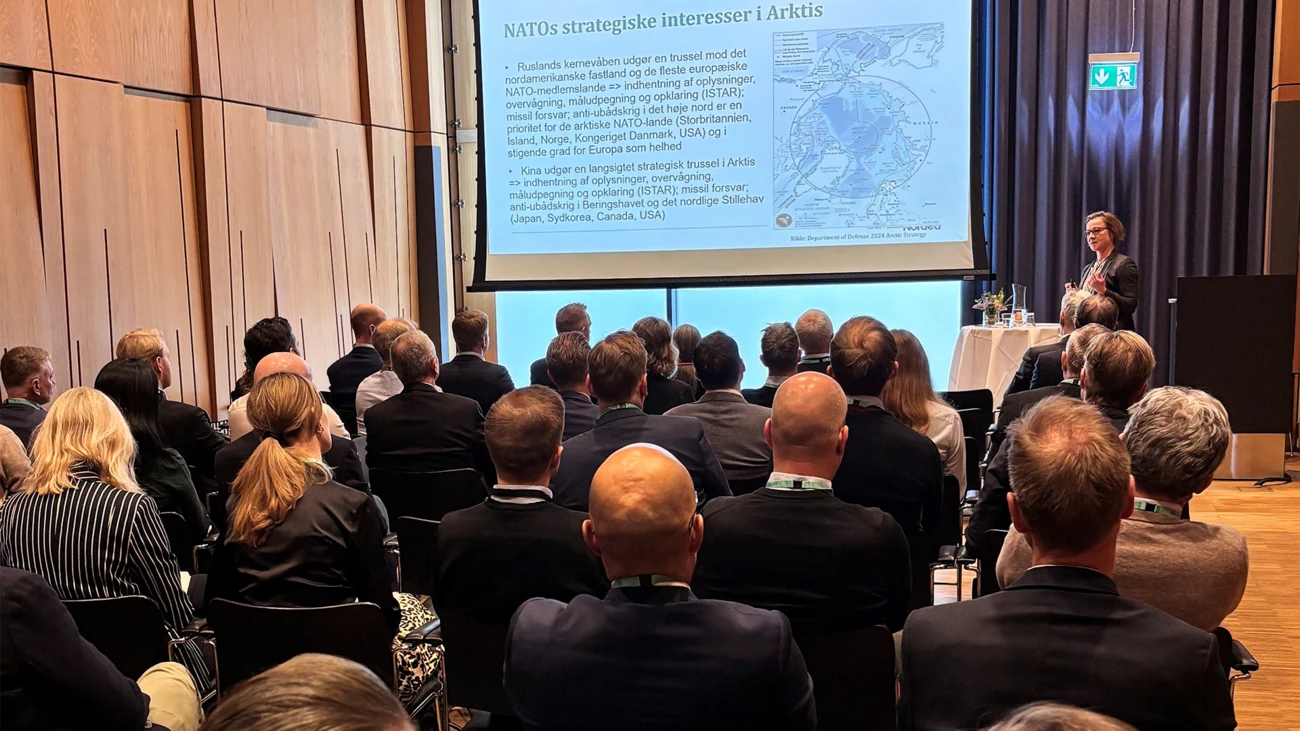
Liselotte Odgaard, Senior Fellow at the Hudson Institute, shared insights on how Arctic security has become a critical front in the great power competition, with significant implications for NATO strategy.
Denmark is making substantial commitments to NATO’s new Arctic Sentry initiative:
These funds will primarily be allocated to new satellite, sensor and radar-based surveillance in East Greenland, ice-hardened patrol ships, drones, maritime patrol aircraft, and strengthened military and dual-use infrastructure.
Nordea’s Group Chief Economist Helge Pedersen outlined how the defense buildup will affect the Danish economy. After 35 years of “peace dividend” savings, Denmark must now dramatically increase spending while managing capacity pressures and inflation risks.
Increased defense spending creates growth, but the economic “multiplier” effect depends on many factors, including funding and capacity pressures. Countries exporting military equipment will see higher economic multipliers than importers.
Denmark can handle the increased costs without additional debt, but fiscal space will shrink significantly, according to Pedersen. The “peace dividend” era is over, and the country faces difficult prioritisation choices ahead. Defense spending may become a new growth engine for the Danish economy, but success depends on managing capacity pressures and financing structures effectively.
Stay ahead of the curve with our expert economic insights and forecasts. Get the latest analysis on global and Nordic markets delivered straight to your inbox.
Read more
Markets and investment
Leading up to MIPIM 2026, Nordea’s Simon Stein reflects on investor sentiment, market trends and where real estate opportunities are emerging.
Read more
Economy
Tariff uncertainty has increased again after the Supreme Court found a big part of the US tariffs illegal. New tariffs quickly followed, but it would be premature to expect recent developments to materially alter the economic and market outlook.
Read more
Corporate insights
Celebrating 10 years of AutoFX at Nordea, as treasury automation evolves from operational efficiency to strategic enablement
Read more