Follow the economy across the Nordic countries and economic changes worldwide.
Economic Outlook
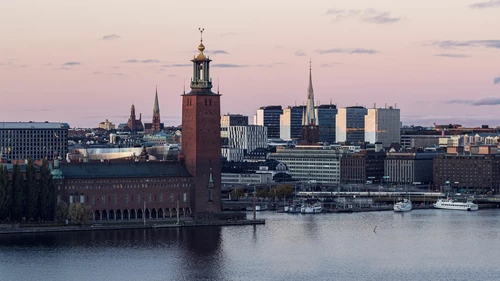
Swedish economic outlook: Searching for equilibrium
After several turbulent years the pieces of the puzzle are gradually falling into place for the Swedish economy. Households’ consumption pattern normalises, export companies’ production will balance with demand and inflation will stabilise at low levels.
How many rate cuts will we get over the next two to three years? Forecasts vary more than usual, mainly because of varying estimates of the normal interest rate. We expect fewer rate cuts and a higher normal interest rate than most.
We are living in an age of historic demographic changes. Changes that place great demands on innovation and reform in Western countries if prosperity is to be maintained, but also changes that lay the foundation for a completely new world order, writes Nordea Group Chief Economist Helge Pedersen.
Over the past year, the annual pace of inflation in Denmark has slowed much faster than in the Euro area. In 2024, this trend is expected to reverse, so that Danish consumer prices again will rise faster than in the Euro area.
High interest rates have sent the Finnish economy into a recession. Mortgage holders and the public sector are adapting their spending to respond to higher interest rates, which has weakened demand but will lead to more balanced finances.
Initial research suggests that using artificial intelligence can significantly improve productivity. Due to its high digital readiness, Finland is in a good position to leverage AI. After all, AI creates an opportunity for Finnish companies to get back on the productivity growth track.
Riksbank governor: On track for cutting interest rates in Sweden
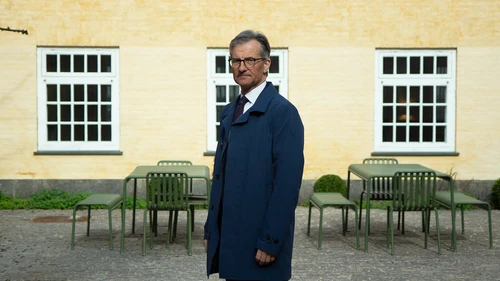
Interest rate cuts appear to be on the horizon in Sweden. But when and how quickly will they come? One of the country's top monetary policymakers, Riksbank Governor Erik Thedéen, shared his insights with Nordea's institutional clients at an event in Copenhagen.
Denmark’s finance minister: ‘We’re not yet out of the woods’
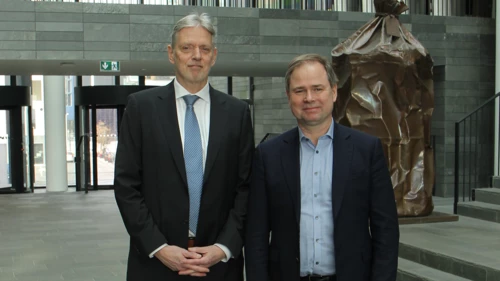
At a recent event for Nordea’s institutional clients, Danish Finance Minister Nicolai Wammen shared the economic outlook and the government’s 2030 reform plan, while Kristine Rasmussen from Danmarks Nationalbank discussed the country’s funding needs in the coming year.
After several years of high growth, Danish economic activity has slowed down. The dampening is expected to be relatively mild and soon to be replaced by renewed progress during this year.
Swedish household debt relative to income is falling for the first time since the mid-1990s – contributing to resilience in the long term, but raising questions about household spending and housing market trends in the near term.
The trend in Denmark is opposite to that of many other countries where large public deficits have taken hold. The solid finances help to ensure stable, low interest rates in Denmark.